







Post-Diwali AQI: Most Polluted Cities & Delhi Smog Crisis
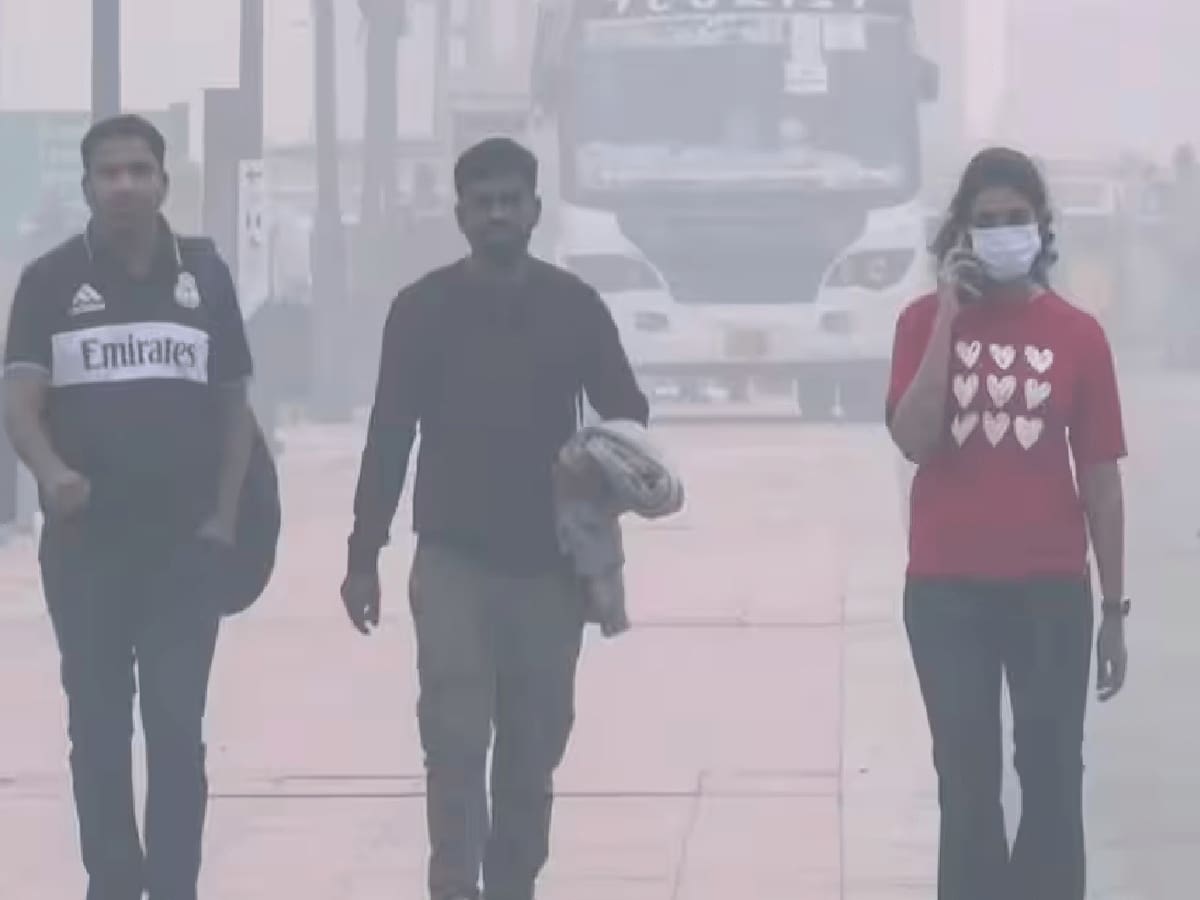
In the wake of nationwide Diwali festivities, the morning of Monday, November 9, 2026, brought a heavy, suffocating blanket of photochemical smog across major urban clusters in India, with the National Capital Region (NCR) and several industrial corridors recording alarming surges in airborne contaminants. Driven by widespread late-evening firecracker emissions, sluggish surface wind speeds, and dropping winter temperatures that trigger thermal inversion, air quality indices across the northern and western belts worsened sharply overnight. Digital sensor networks recorded peak particulate levels crossing hazardous thresholds during early dawn hours, leaving pedestrians, school commuters, and early morning joggers grappling with stinging eyes, throat irritation, and severely reduced visibility. While Delhi once again climbed into the upper tiers of global pollution trackers, regional variations across states presented a nuanced picture: several satellite cities in Uttar Pradesh and Maharashtra’s cultural hub of Pune registered severe to poor readings, while southern metropolitan areas including Bengaluru and Chennai maintained comparatively moderate environments.
Delhi’s Air Crisis: Independent Real-Time Trackers Versus Official CPCB Benchmarks
The divergence between real-time hyper-local sensor platforms and official statutory averages became a central talking point on Monday morning as citizens checked air quality dashboards. Real-time data compiled by independent monitoring portal AQI.in showed particulate spikes rocketing into the hazardous bracket across several dense Delhi localities. By 7:00 AM, instantaneous readings in specific hotspots had briefly spiked past an astonishing 955, gradually settling near 825 by 8:00 AM as surface activity picked up. These localized peaks reflected extreme concentrations of coarse particulate matter (PM10), which touched 607 micrograms per cubic meter—ten times higher than acceptable safe limits. PM10 particles, measuring 10 micrometers or less, comprise abrasive soot, fly ash, construction dust, and pulverized firecracker chemical debris capable of bypassing upper nasal filters and penetrating deeply into bronchial pathways. Consequently, international air trackers placed Delhi as the third most polluted capital globally during the early hours of Monday.
Conversely, the official 24-hour rolling averages maintained by the Central Pollution Control Board (CPCB) offered a slightly lower, yet still deeply concerning, baseline categorized primarily under the 'Very Poor' bracket. The official monitoring station stationed along the high-profile corridor of India Gate and Kartavya Path recorded an AQI of 381. Commuter corridors bridging Delhi and its eastern suburbs reflected matching atmospheric distress: the Delhi-Noida Direct (DND) Flyway corridor posted an AQI of 338, while the residential expanse of Mayur Vihar stood at 337. Meteorological analysts emphasize that while CPCB averages smooth out momentary spikes over a 24-hour moving window to determine regulatory policy, immediate real-time exposure during morning rush hours subjected citizens to hazardous particulate loads that caused immediate respiratory coughing and ocular burning across the capital.
NCR Satellites in Distress: High Particulate Loads in Ghaziabad and Greater Noida
The environmental strain was not confined within the municipal boundaries of Delhi; the wider National Capital Region bore a heavy atmospheric burden as emissions from surrounding industrial zones and residential townships coalesced under stagnant air columns. Satellite cities in western Uttar Pradesh mirrored the toxic conditions seen along the capital’s arterial borders, continuing an annual post-festive trend where regional air remains trapped against the Shivalik foothills.
In Ghaziabad, the industrial and residential heartland directly adjacent to East Delhi, the overall AQI reached 388, with underlying PM10 levels recording 327 micrograms per cubic meter. Further south along the expressway, Greater Noida posted an AQI of 367 alongside a PM10 concentration of 337, putting the entire industrial belt under heavy smog advisories. Local municipal authorities deployed mechanized sweeping trucks and anti-smog water misters across major traffic junctions, but low wind circulation meant that settled particulates were repeatedly kicked back into the air by moving vehicular traffic, prolonging smog persistence well into mid-day.
Beyond the Capital: Pune Surges Past 400 as Mumbai Stays Moderate
One of the most striking outcomes of this post-Diwali environmental assessment was the acute surge recorded in western India, particularly within Maharashtra. Pune, historically celebrated for its pleasant elevated plateau climate, experienced a severe deterioration in atmospheric quality. CPCB and regional monitoring stations recorded Pune's AQI soaring to 432 during the early morning, with localized sensors touching an alarming 462—placing the city at rank 27 on the global index of polluted urban areas and pushing it directly into the CPCB's 'Severe' category.
In sharp contrast, the state’s coastal capital of Mumbai fared significantly better thanks to steady marine breezes that dispersed combustion by-products over the Arabian Sea. Despite scattered haze over eastern suburbs and Bandra Reclamation—where localized CPCB sensors registered a 'Poor' AQI of 231—Mumbai’s overall citywide average stabilized at 156. This placed the financial capital firmly in the 'Moderate' band, representing air that was substantially cleaner than Delhi and noticeably improved compared to previous post-Diwali seasons.
Comparative Metro Rundown: How Major Cities Fared the Morning After
A nationwide survey of the Central Pollution Control Board’s morning dashboard reveals a pronounced geographic contrast between landlocked northern cities and coastal or southern peninsular centers:
-
Pune (Maharashtra): Recorded between 432 and 462, entering the dangerous 'Severe' category due to stagnant valley air and heavy festive emissions.
-
Ghaziabad (Uttar Pradesh): Stood at 388 ('Very Poor'), plagued by elevated PM10 readings crossing 327.
-
Greater Noida (Uttar Pradesh): Touched 367 ('Very Poor'), reflecting widespread regional particulate stagnation across the Yamuna basin.
-
Ahmedabad (Gujarat): Recorded an AQI of 195, remaining on the upper boundary of the 'Moderate' category.
-
Kolkata (West Bengal): Registered an AQI of 189 ('Moderate'), with light riverine breezes helping mitigate festival firework smoke.
-
Chennai (Tamil Nadu): Logged an AQI of 187 ('Moderate'), where intermittent coastal showers aided particulate settling.
-
Hyderabad (Telangana): Recorded an AQI of 179 ('Moderate'), with stable winds preventing localized build-ups.
-
Bengaluru (Karnataka): Maintained an AQI of 175 ('Moderate'), benefiting from its elevated Deccan plateau geography and green cover.
-
Mumbai (Maharashtra): Maintained a citywide average of 156 ('Moderate'), outperforming inland metropolitan rivals.
Health Implications: Decoding the CPCB Air Quality Index Scale
To help the public make informed decisions, the Central Pollution Control Board categorizes ambient air quality into six distinct health bands, each correlating with specific medical impacts:
-
Good (0–50): Represents clean air with minimal health risk to all segments of society.
-
Satisfactory (51–100): May cause minor breathing discomfort to unusually sensitive individuals.
-
Moderate (101–200): Causes breathing discomfort to individuals with lung diseases such as asthma, as well as heart patients, children, and elderly citizens.
-
Poor (201–300): Leads to breathing discomfort for most people on prolonged outdoor exposure, triggering throat dryness and fatigue.
-
Very Poor (301–400): Causes respiratory illnesses upon continued exposure; significantly exacerbates underlying cardiovascular and pulmonary conditions.
-
Severe (401–500): Poses serious health hazards even to healthy individuals, while causing acute medical crises for those with pre-existing cardiopulmonary ailments.
With several regions across northern India and western hubs like Pune recording figures well above 350 to 400, medical practitioners recommend that vulnerable populations—especially young children, pregnant women, and elderly individuals—refrain from strenuous outdoor workouts, wear N95 filtration masks during essential commutes, and utilize indoor air purifiers until meteorological dispersion clears the toxic winter haze.




