







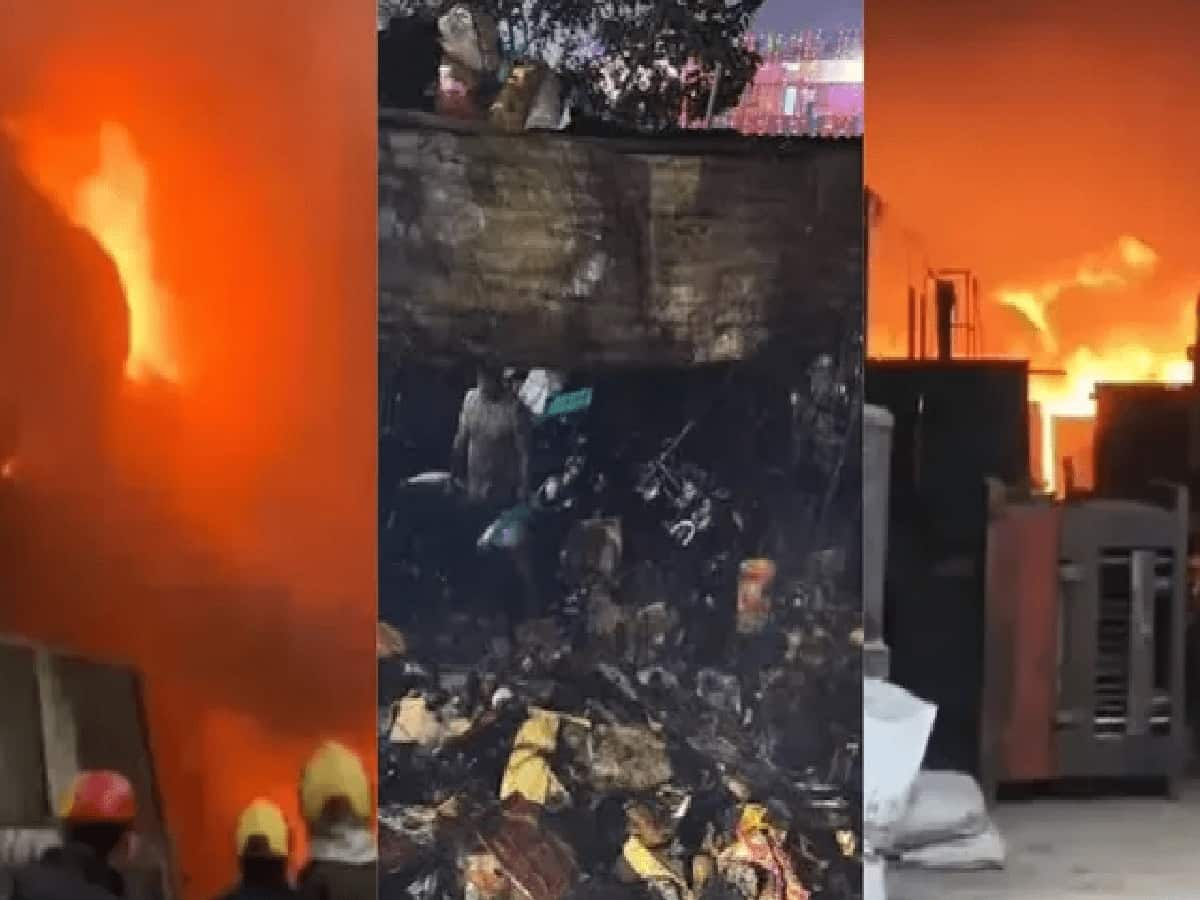
Diwali Fire Emergencies: Blazes Hit Factories Across India
While millions celebrated the festival of lights with traditional diyas and pyrotechnics, emergency control rooms and disaster management authorities across India contended with a surge in fire calls on Sunday night and early Monday morning. From industrial zones in Delhi-NCR and Haryana to commercial hubs in Telangana, Bihar, Maharashtra, and Sikkim, industrial plants, storage godowns, auto showrooms, and scrap facilities caught fire, causing extensive property damage running into crores of rupees. Preliminary inspections conducted by local municipal fire brigades indicate that a combination of electrical short circuits triggered by sudden load fluctuations and stray sparks from aerial fireworks drifting into unprotected storage yards served as primary catalysts. Firefighters worked through the night, deploying dozens of hydraulic tenders and foam crash trucks to contain chemical and plastic blazes fed by synthetic polymers, flammable solvents, and combustible packaging.
Industrial Plants Engulfed: Major Emergencies in Ghaziabad and Najafgarh
The National Capital Region witnessed intense emergency responses as multiple manufacturing clusters reported major structural blazes within hours of each other. In western Uttar Pradesh, a fire tore through the manufacturing unit of Nova Bolt Plastics Company, located in the Vijaynagar Industrial Area of Ghaziabad. The facility, heavily stocked with virgin polypropylene resin, raw chemical plasticizers, and stacks of finished molded chairs, offered immediate fuel to the flames. Dense plumes of toxic black carbon smoke billowed into the night sky, visible from kilometers away along National Highway 9. More than a dozen specialized fire tenders rushed from Kotwali, Sahibabad, and Vaishali fire stations, battling the perimeter for nearly five hours to prevent the fire from leaping to adjacent chemical units. Firefighters set up continuous water curtains and foam barrages to cool the structural pillars, eventually bringing the core blaze under control without reported casualties.
Simultaneously, the Delhi Fire Service (DFS) received a high-priority distress call at 4:22 PM alerting them to a blaze at an expansive garment manufacturing factory in the Nangli Sakrawati industrial stretch of Najafgarh in southwest Delhi. The presence of dense cotton bales, synthetic rayon rolls, and packaging materials accelerated the fire across the multi-story structure. DFS headquarters mobilized 25 fire engines from surrounding operational depots. Emergency crews breached window grilles and utilized breathing apparatus sets to conduct internal search-and-rescue sweeps. Although the property and machinery sustained heavy destruction, the swift evacuation ensured that factory workers and security guards escaped safely before cooling operations commenced.
Manufacturing Belts Suffer Heavy Losses in Haryana and Telangana
In Haryana's industrial belt, a blaze broke out at the North West Industries facility in Phase 1 of the Badi Industrial Area in Sonipat. The plant, which manufactures household electric juicers and mixer grinders, housed extensive inventories of electrical coils, plastic bodies, rubber gaskets, and corrugated packaging boxes. When flames erupted, more than six fire engines from Sonipat, Kundli, and neighboring Panipat districts responded to douse the inferno. Fire department officials noted that illegal roadside encroachments, parked freight trailers, and unauthorized temporary sheds along the fire movement corridors obstructed the transit of heavy multi-axle fire tenders, stretching the containment operation past three hours.
Further south in Telangana, a midnight fire occurred in the Katedan Industrial Area of Rangareddy district on the outskirts of Hyderabad. Authorities suspect that an electrical short circuit inside a plastic granules processing unit ignited nearby stockpiles. The flames quickly leaped across the shared boundary wall to consume a neighboring commercial plywood storage depot packed with timber and chemical bonding resins. Multiple fire engines from Rajendranagar, Chandrayangutta, and Maheshwaram containment stations were mobilized to fight the twin-facility blaze, working through dawn to extinguish deep-seated embers inside the smoldering timber stacks.
Commercial Destruction in Patna Warehouses and Nagpur Auto Showrooms
In Bihar’s capital, Patna, economic losses mounted as fires struck storage infrastructure across commercial precincts. A fire broke out inside the Krishna Steel warehouse located in the Bypass police station limits, destroying electronic equipment, construction-grade steel hardware, and inventory valued at millions of rupees. In another incident within Patna district, stray fireworks drifted onto an open-air scrap collection yard in the Maner riverine belt. The dry wooden pallets, metal filings, and discarded rubber tyres ignited instantly, sending flames into the night air and requiring multiple fire teams to prevent the fire from spreading to nearby residential dwellings.
In Maharashtra's commercial hub of Nagpur, fireworks caused destruction at the Sai Dynamics TVS two-wheeler showroom in Savarkar Nagar, close to Dev Nagar Square. Preliminary reports indicate that a burning rocket firecracker landed directly on the shed structure sheltering inventory. The fiberglass roof ignited, dropping molten fragments onto rows of brand-new mopeds and motorbikes parked below. The flames spread quickly to the lower administrative floor and spare parts storage area, destroying dozens of brand-new two-wheelers and leaving the showroom heavily damaged.
Close Calls in Historic Sikkim Hospital and Fire Safety Audits
Himalayan regions were not entirely spared from festive fire hazards. In South Sikkim, a fire broke out late on Sunday evening within the old hospital complex in the town of Namchi. Constructed in 1975, the historic wooden and masonry structure presented a serious risk of rapid combustion. Local fire stations responded promptly, laying high-pressure booster hose lines that subdued the flames before the fire could spread to adjoining healthcare administrative wings. The Sikkim state government confirmed zero injuries or fatalities and ordered an administrative inquiry into the electrical infrastructure of the legacy premises.
With emergency responders containing dozens of structural fires over a 24-hour festive window, civic authorities and state fire services have renewed calls for strict compliance with the National Building Code. Industrial safety auditors emphasize that factory operators must keep external fire pathways clear of unauthorized encroachments, install functional internal sprinkler systems, and isolate hazardous chemical raw materials away from exterior boundaries. As recovery and insurance loss assessments begin across industrial estates, these incidents serve as a stark reminder of the need for rigorous fire prevention protocols, modern electrical infrastructure, and responsible celebrations during major national festivals.




