







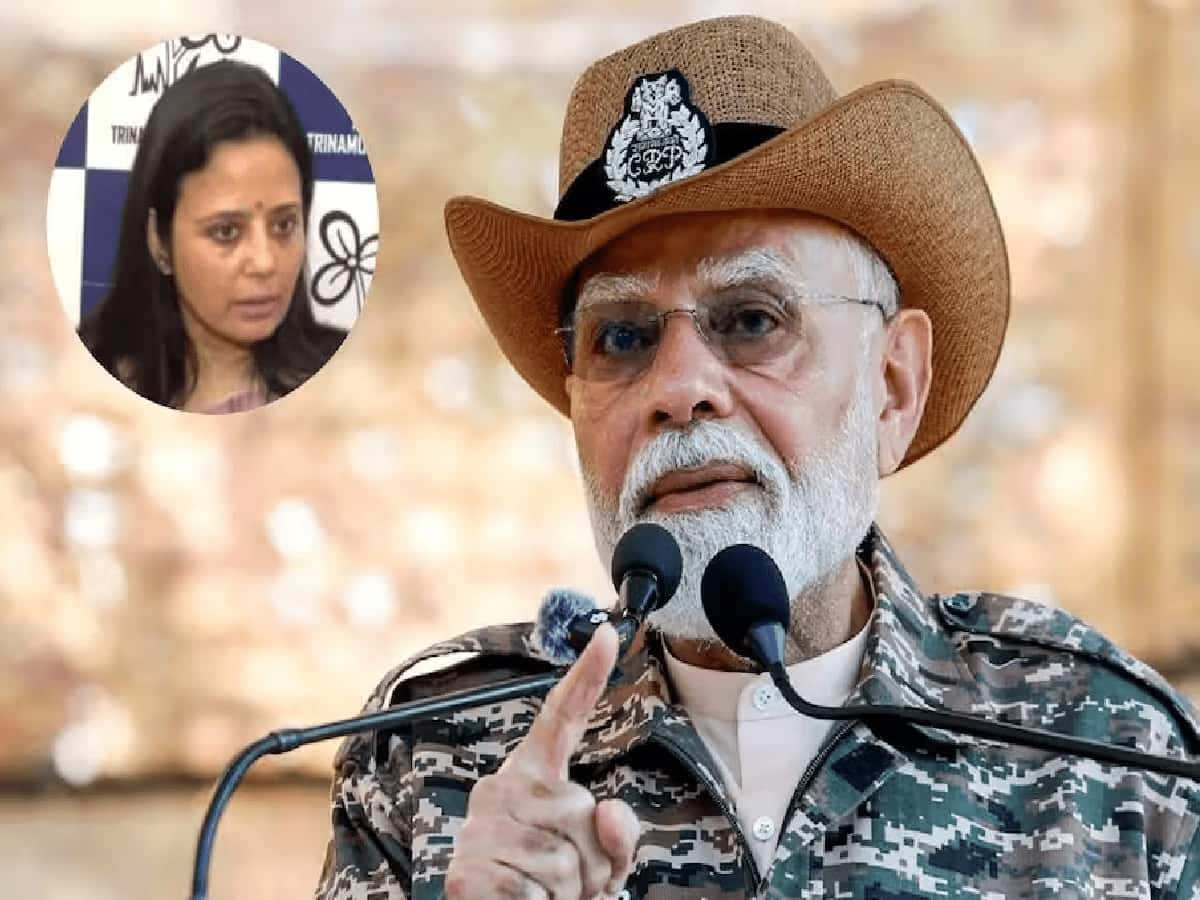
Mahua Moitra Slams PM Modi Over Bastar Diwali Address to Soldiers
A major political controversy erupted on Monday morning, November 9, 2026, after Trinamool Congress (TMC) Lok Sabha Member of Parliament Mahua Moitra launched a fierce public attack against Prime Minister Narendra Modi over his festive address to Central Reserve Police Force (CRPF) personnel in Bastar, Chhattisgarh. Reacting strongly to the Prime Minister’s remarks characterizing political and ideological adversaries as "intellectual Naxalites" who have infiltrated public organizations and civil society, the outspoken parliamentarian condemned the language used before uniform-clad soldiers on Diwali day. Taking to social media to share excerpts of the Prime Minister’s address, Moitra asserted that the head of government had diminished the dignity of the armed forces by introducing partisan rhetoric into an official military gathering. The confrontation has sparked a bitter exchange between the ruling Bharatiya Janata Party (BJP) and the Opposition, reigniting intense debates over the politicization of security forces, the boundaries of executive speech, and the evolving narrative surrounding left-wing extremism in India.
PM Modi's Bastar Speech: Wiping Out Armed Insurgents and New Threats
The controversy originated from Prime Minister Narendra Modi's traditional Diwali visit on Sunday, where he celebrated the festival of lights alongside elite security personnel at the CoBRA operations base in the interior forested belt of Bastar. Addressing jawans from the CRPF, BSF, and ITBP, Prime Minister Modi commended the security forces for achieving decisive tactical breakthroughs against armed Maoist extremism across central India. The Prime Minister declared that decades of sustained counter-insurgency operations have broken the back of rural Naxalism, liberating vast forest districts from extortion and violent intimidation.
However, the Prime Minister went on to sound a cautionary note regarding the ideological remnants of the insurgent movement. He argued that while physical guerrillas wielding firearms have been largely eliminated from dense jungle terrains, a different ideological threat has emerged within urban and institutional spaces:
-
Infiltration of Organizations: The Prime Minister alleged that radicalized individuals have embedded themselves into diverse civic organizations, educational institutions, and political platforms across the country.
-
Undermining the Constitution: PM Modi asserted that these elements continuously incite public sentiment against India's constitutional framework, judiciary, and democratic traditions, operating under the guise of civil rights activism while covertly furthering extremist agendas.
-
A Call for Vigilance: Emphasizing that recent counter-naxal victories must not be viewed as a full stop, the Prime Minister urged the country and security apparatus to remain vigilant, identify institutional sympathizers, and defeat subversive narratives to protect national sovereignty.
Mahua Moitra’s Fiery Rebuttal: 'Take Off the Uniform and Spare the Forces'
Sharing the video footage of Prime Minister Modi's address on her official Instagram handle, TMC MP Mahua Moitra expressed outrage over the messaging delivered to military personnel on Diwali. Criticizing the Prime Minister's demeanor and vocabulary, Moitra characterized the speech as unbefitting the constitutional office of the Prime Minister, arguing that turning a ceremonial festival event with jawans into a political offensive undermines institutional neutrality.
Moitra made several sharp observations targeting the Prime Minister's public conduct:
-
Critique of Military Attire: The Krishnanagar MP asserted that Prime Minister Narendra Modi should stop using military fatigues, camouflage caps, and combat jackets for public relations appearances, stating: "Take off the uniform and cap, pick up your bag, and spare the armed forces."
-
Language and Political Propriety: Pushing back against recurring accusations that opposition leaders use abrasive rhetoric against the ruling establishment, Moitra stated: "It is not my language that is the problem; the real problem lies in his language and the divisive narrative being propagated from a military podium."
-
Depoliticizing the Armed Forces: The Trinamool Congress leader argued that security personnel belong to the entire nation, not to a single political party. She warned that using military platforms to label political dissenters, civil society critics, and opposition parties as "anti-national" or "intellectual Naxalites" endangers the apolitical character of the armed services.
The Broader Political Clash: Ideological Labeling Under Scrutiny
The sharp clash between Mahua Moitra and Prime Minister Modi reflects a deepening fault line in Indian national politics. For the ruling National Democratic Alliance (NDA), invoking the concept of "Urban Naxalism" serves as an administrative justification for scrutinizing non-governmental organizations, foreign-funded advocacy groups, and student activists accused of stalling development projects or challenging state policy. Government leaders maintain that identifying covert ideological networks is vital for internal security, pointing out that armed insurgents historically relied on urban sympathizers for logistics, legal shielding, and propaganda.
Conversely, the Opposition—led by the Trinamool Congress, the Congress, and the Left parties—argues that the term is frequently weaponized to delegitimize constitutional opposition and suppress grassroots protests against environmental degradation, land acquisition, and state excess. Opposition spokespersons argue that equating democratic critique with violent insurgency threatens civil liberties and chills freedom of expression. Moitra’s sharp intervention highlights growing frustration among opposition benches regarding what they view as the steady blurring of lines between the state, the military, and the ruling political party during official state-funded broadcasts.
A Recurring Friction Over National Security Narratives
This latest verbal altercation adds to a long list of confrontations between Mahua Moitra and the central treasury benches. Known for her incisive parliamentary interventions, Moitra has repeatedly targeted the executive on issues concerning federalism, surveillance, corporate cronyism, and national defense expenditures. Following her contentious expulsion from the 17th Lok Sabha over cash-for-query allegations and her subsequent victory in the 2024 general elections from Krishnanagar, Moitra has consistently positioned herself as an unapologetic voice against executive overreach.
The timing of this exchange—arriving immediately after Diwali celebrations and preceding crucial winter legislative sessions—indicates that security policy, institutional decorum, and the treatment of constitutional bodies will remain heated flashpoints between the ruling party and the opposition. While the BJP cadre quickly rallied behind the Prime Minister, defending his Bastar remarks as a candid assessment of unconventional security threats, TMC leaders stood firmly behind Moitra, underscoring that questioning the Prime Minister's choice of words before jawans is a legitimate exercise of parliamentary oversight in a constitutional democracy.




