







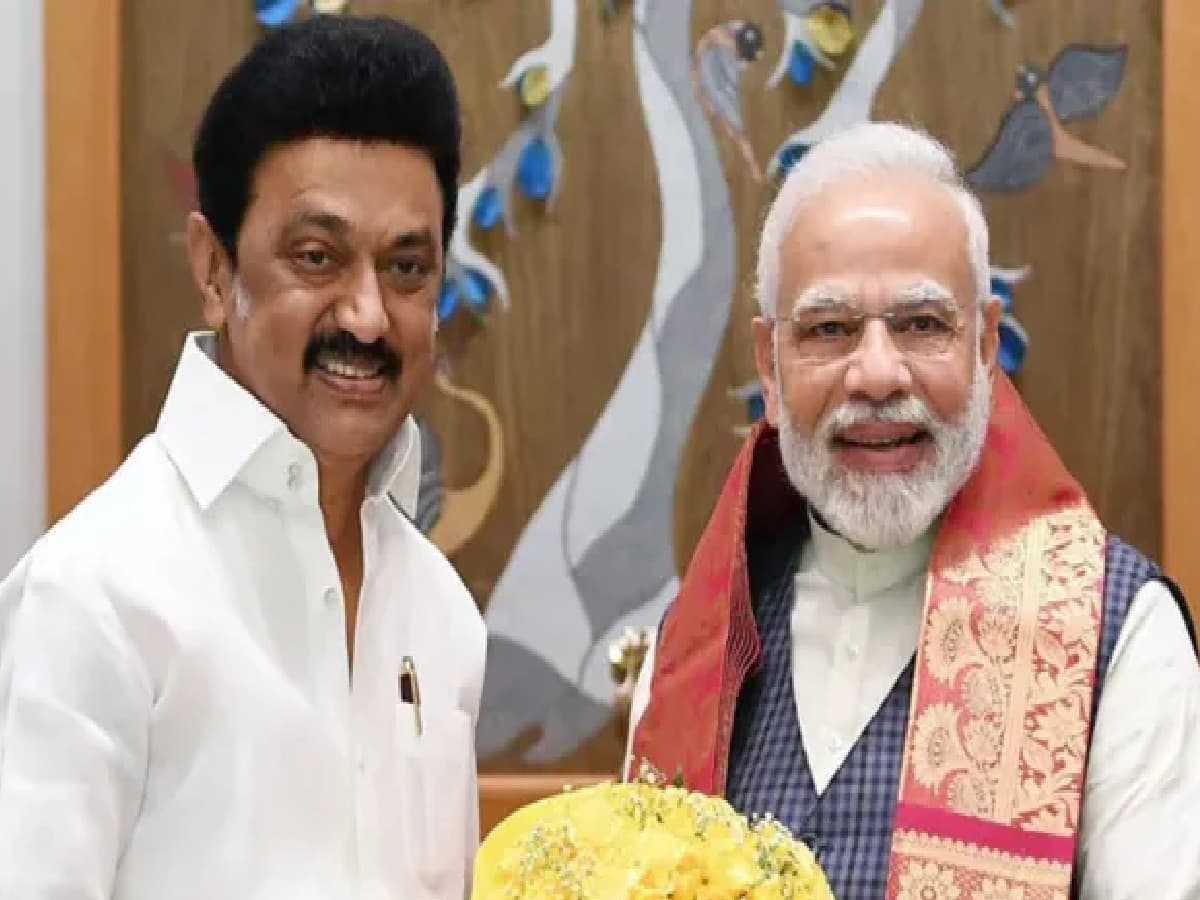
DMK Backs Centre's Delimitation Bill; Stalin Calls It Big Win for TN
The Dravida Munnetra Kazhagam (DMK) formally announced on Saturday that it will support the Union government's revised delimitation legislation in Parliament, with party president M K Stalin hailing the amended framework as a major victory for Tamil Nadu. The decision was ratified through a formal resolution at a meeting of DMK Lok Sabha and Rajya Sabha members chaired by Stalin in Chennai ahead of the special parliamentary session beginning November 30.
Chennai MPs' Meeting Clears Resolution Backing Revised Bill
Convening his party's parliamentary contingent in Chennai on Saturday morning, M K Stalin reviewed the revised draft provisions cleared by the Union Cabinet before securing unanimous approval for a resolution supporting the legislation. Sharing the resolution on social media platform X, the DMK declared its commitment to safeguarding Tamil Nadu's parliamentary representation and upholding the state's federal rights during the upcoming special session in New Delhi.
Stalin instructed DMK parliamentarians to forcefully articulate Tamil Nadu's constitutional position on the floor of both Houses when the bills are taken up for debate. Calling the Centre's revised formulation a decisive outcome of Tamil Nadu's sustained three-year campaign, the DMK chief maintained that the party had secured the state's political voice in Parliament for the next 25 years.
Two Core Demands That Won DMK Support
For months, the DMK had led opposition to population-based constituency redrawing, arguing that southern states would be penalized for successfully stabilizing population growth. According to the DMK leadership, the party agreed to back the amended bill only after New Delhi incorporated two non-negotiable safeguards into the legislative framework:
-
Protection of Tamil Nadu's 7.18% Lok Sabha share: Even as overall parliamentary strength expands, Tamil Nadu's proportional share of 7.18 percent of Lok Sabha seats will remain intact rather than being diluted.
-
Retention of the 1971 Census base: Inter-state seat proportions anchored to the 1971 Census will be preserved alongside a flat 50 percent increase in constituencies across states, effectively freezing relative state shares until 2051.
How the Amended Delimitation Framework Reshapes Parliament
Under the revised constitutional amendment package scheduled for the November 30 special session, a new provision in Article 334A mandates a flat 50 percent increase in Lok Sabha and state legislative assembly seats across states and Union Territories over their existing pre-delimitation strength. By applying a uniform 50 percent expansion while keeping the 1971 Census base intact, the legislation decouples inter-state seat distribution from contemporary population disparities.
The proposed amendment also raises the maximum strength of the Lok Sabha from 550 to 850 elected members—comprising 815 from states and 35 from Union Territories—while increasing the ceiling for state assemblies from 500 to 650. That expansion is designed to facilitate the implementation of one-third reservation for women across Parliament and state legislatures ahead of the 2029 general elections.
Political Impact on Opposition Unity and Tamil Nadu Politics
The DMK's decision carries major consequences both in New Delhi and in Chennai. Because a constitutional amendment requires a two-thirds majority in Parliament, the backing of the DMK's 22 Lok Sabha MPs gives the BJP-led Centre a substantial boost toward passing the bills.
At the same time, the move widens divisions within the national opposition, as Congress leader Rahul Gandhi and several INDIA bloc constituents have vowed to oppose the delimitation bills. Back in Tamil Nadu, the ruling Tamilaga Vettri Kazhagam (TVK) had challenged the DMK to vote against the legislation rather than abstain or support amendments. Dismissing political criticism from rivals, Stalin asserted that neither media speculation nor attacks from political opponents would deter the DMK from locking in written constitutional guarantees that protect Tamil Nadu's long-term parliamentary representation.




