







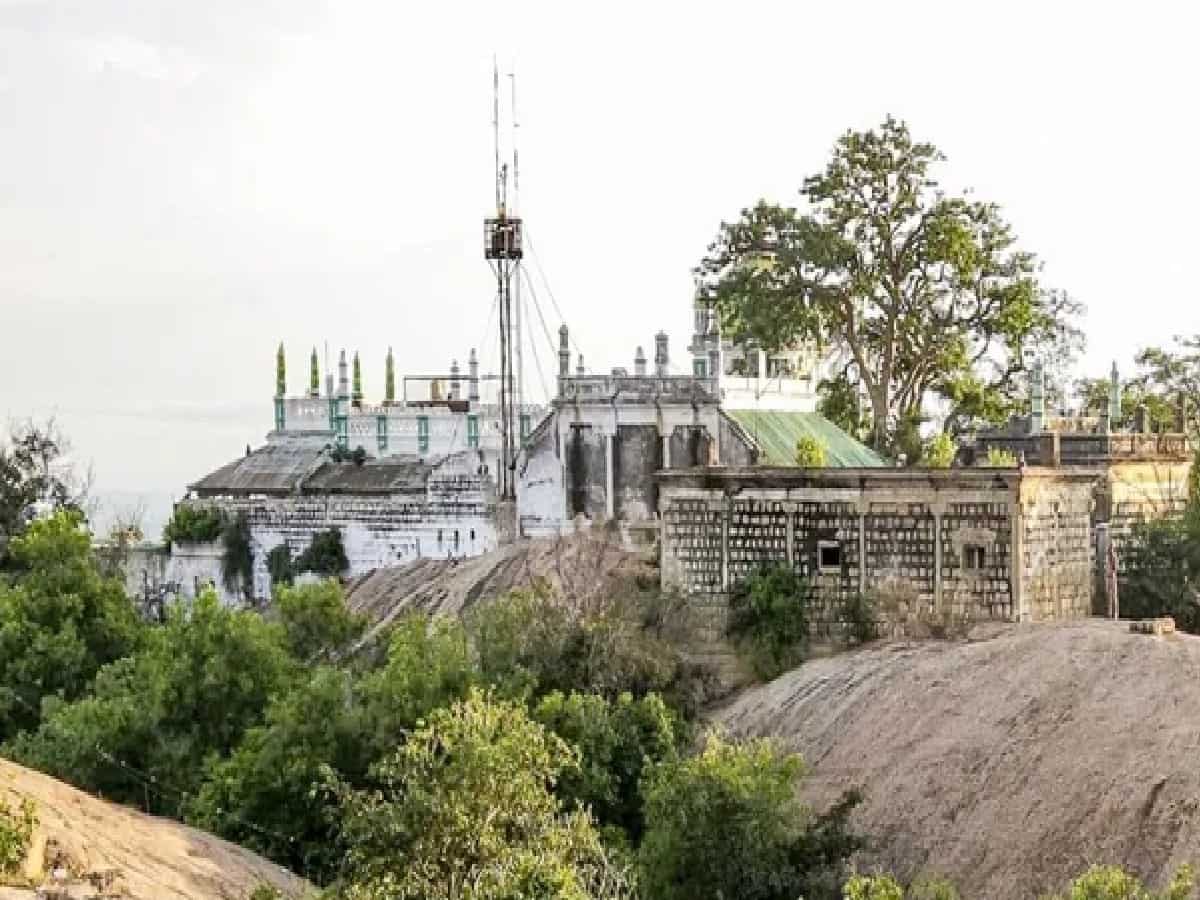
CRPF Deployed at Tirupparankundram Hill Ahead of Deepathoon Lighting
Personnel from the Central Reserve Police Force (CRPF) took position on Tirupparankundram hill in Tamil Nadu's Madurai district on Saturday morning ahead of the court-mandated lighting of the ceremonial Karthigai Deepam at the hilltop Deepathoon stone pillar. The paramilitary deployment follows an explicit directive from the Supreme Court of India, which stepped in to enforce its earlier order after local authorities failed to carry out the ritual at the designated pillar earlier in the week.
CRPF Takes Charge of Security on Tirupparankundram Hill
Acting on instructions passed by the Supreme Court on Friday, a company of CRPF personnel—typically comprising around 100 to 135 troopers—arrived at Tirupparankundram hill in the early hours of Saturday to oversee security, crowd management, and surveillance. Confirming the mobilization to news agency ANI, a senior CRPF officer stated that one company had been stationed on the ground and was awaiting further operational instructions from higher authorities.
By transferring security control of the Arulmigu Subramania Swamy Temple and the entire Tirupparankundram hill to the CRPF, the apex court placed on-site enforcement outside the immediate command of the state police. The move was designed to guarantee peaceful execution of Saturday's ceremony while maintaining strict security buffers around sensitive structures on the hill.
Supreme Court Directs November 28 Ceremony and Devotee Access
During Friday's hearing, a division bench of Justices Aravind Kumar and Vipul M Pancholi directed that the traditional Karthigai Deepam be lit at the Deepathoon stone pillar on Saturday, November 28, at a time finalized in consultation with temple priests, or sthanikars. To ensure the continuity of the sacred festival, the bench instructed that the Deepathoon be ignited using the flame lit at the Ucchi Pillaiyar Mandapam on November 24, provided that flame remained burning.
Alongside authorizing the ritual, the Supreme Court suspended the Board of Trustees of the Arulmigu Subramania Swamy Temple and appointed two retired Madras High Court judges, Justices S Vaidyanathan and V Parthiban, as court receivers to temporarily administer the shrine. The judges also permitted devotees to light lamps on Tirupparankundram hill on Saturday, subject to security regulations including a 50-metre buffer zone around the hilltop Sikandar Badshah Dargah.
Why the Apex Court Flagged Willful Disregard of Its Order
The judicial intervention escalated after the Deepathoon remained unlit on Tuesday, November 24—the main day of the Karthigai Deepam festival—despite clear directions from the Supreme Court. While the traditional Maha Deepam was lit near the Ucchi Pillaiyar Temple as usual, authorities did not light the lamp at the Deepathoon stone pillar even though police personnel had been stationed nearby ahead of the scheduled ceremony.
Taking serious exception to the lapse, the Supreme Court bench observed that the non-implementation amounted to a prima facie case of willful disobedience. The judges noted that the lamp was not lit on November 24 despite explicit apex court orders and an undertaking previously given by the Madurai District Collector before the Madras High Court to ensure compliance. Rejecting attempts to shift blame onto the temple trust, the bench issued show-cause contempt notices to senior state and temple officials and listed the matter for further hearing on December 15, 2026.
Background of the Deepathoon Legal Dispute in Madurai
The legal battle stems from a longstanding dispute over lighting the Karthigai Deepam at the ancient stone pillar known as Deepathoon, which sits atop Tirupparankundram hill—also referred to historically as Sikandarmalai—near the Sikandar Badshah Dargah. On November 20, a Supreme Court bench led by Justice Aravind Kumar had passed an interim order permitting the lamp to be lit at the Deepathoon on November 24 as a strict one-time arrangement.
In granting that initial permission, the apex court had explicitly clarified that the one-time lighting would neither create a binding legal precedent nor adjudicate broader disputes over property ownership, archaeological status, or customary religious rights on the hill. The Tamil Nadu government subsequently filed a review petition challenging the November 20 interim order, arguing in favor of confining the festival lamp to its customary location near the Ucchi Pillaiyar shrine. However, with no stay granted on the review plea and the November 24 ritual left unperformed at the pillar, the Supreme Court stepped in directly on Friday to enforce compliance on November 28 under CRPF protection.




