







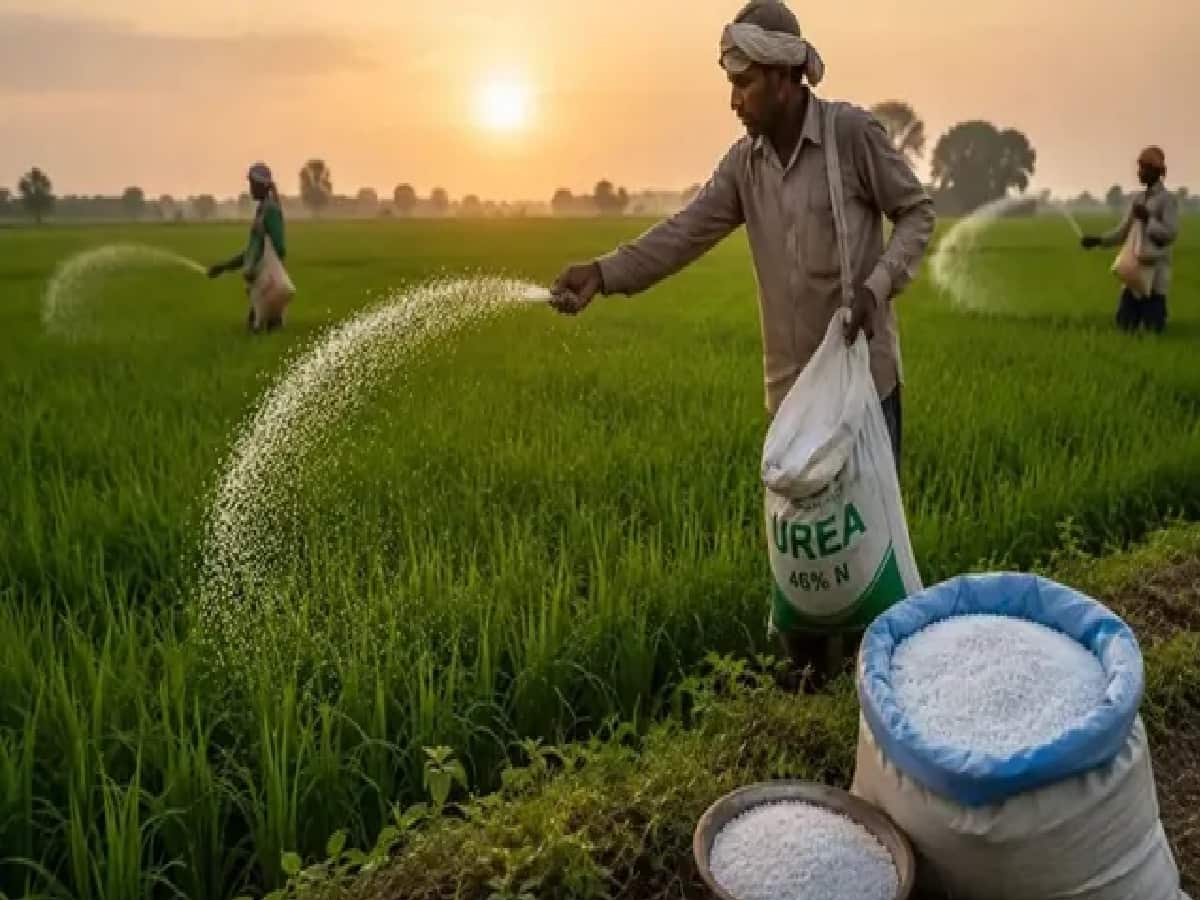
CAG Probes Urea Smuggling & Industrial Diversion in 169 Districts
India's CAG has launched a performance audit across 169 districts in 15 states to probe suspected cross-border smuggling and industrial diversion of subsidised urea.
Concerned over mounting fiscal outlays and sharp anomalies in regional consumption patterns, the Comptroller and Auditor General of India (CAG) has launched a comprehensive nationwide performance audit into fertiliser subsidies, focusing specifically on whether heavily subsidised agricultural urea is being illegally diverted to commercial industries or smuggled across international borders into neighbouring countries. Marking the country’s first pan-India performance audit of the fertiliser subsidy regime since 2011, fieldwork for the two-year investigation began in June 2026 and spans 169 districts across 15 states. Out of these, 149 districts were flagged directly by the central auditor after data revealed urea off-take exceeding both national and respective state averages, while 20 additional districts were incorporated following recommendations from the Union Ministry of Agriculture and domain experts. With the Centre having spent nearly ₹2 lakh crore on fertiliser subsidies in the previous fiscal year and budgeting ₹1.71 lakh crore for the current financial year—an outlay analysts warn could surge significantly amid geopolitical tensions in West Asia—auditors are tracking every link of the supply chain across major agricultural belts from Uttar Pradesh, Bihar, Punjab, and Rajasthan to Gujarat, Tamil Nadu, Karnataka, Madhya Pradesh, and Maharashtra. The audit is scheduled to conclude by mid-2027, with the final report expected to be tabled during the Winter Session of Parliament.
Core Objectives of the CAG's Two-Year Fertiliser Subsidy Audit
Covering both the current and upcoming financial years, the CAG’s investigation is structured to evaluate not only leakage and illegal diversion, but also the broader fiscal and operational efficiency of India’s urea ecosystem. Rather than examining phosphatic and potassic nutrients such as DAP or NPKS, auditors are concentrating exclusively on urea—the most widely used nitrogenous fertiliser in Indian agriculture.
Key terms of reference include verifying whether state-wise demand assessments reflect genuine agronomic requirements, detecting clandestine diversion of agricultural-grade bags into non-agricultural factories, and investigating cross-border smuggling networks. Simultaneously, the CAG is auditing the end-to-end logistics chain—scrutinizing railway and road freight movement, freight subsidy reimbursements, point-of-sale monitoring systems, import planning, and the energy efficiency of 13 selected domestic urea manufacturing plants out of 36 nationwide. Auditors will also assess whether government initiatives aimed at promoting balanced nutrient use and curbing excessive urea dependence are yielding measurable results on the ground.
Why 169 Districts Across 15 States Are Under the Scanner
The selection of the 169 sample districts highlights striking regional spikes in fertiliser consumption. Auditors initially identified 149 districts where per-hectare urea usage surpassed both the national benchmark of roughly 180 kilograms per hectare and individual state averages. Subsequently, 20 more districts spanning Karnataka, Rajasthan, Madhya Pradesh, and Maharashtra were added on the advice of the Ministry of Agriculture and agricultural economists to examine localized consumption anomalies.
| State | Number of Districts Under CAG Urea Audit | Key Audit Focus Areas |
| Uttar Pradesh | 37 Districts (Highest in India) | Excessive consumption above state/national averages; Nepal border diversion checks |
| Bihar | 16 Districts | High off-take in Gangetic plains; suspected cross-border smuggling along Nepal frontier |
| Tamil Nadu | 16 Districts | Elevated per-hectare consumption and industrial supply chain scrutiny |
| Punjab | 14 Districts | Intensive paddy-wheat belt overconsumption and international border district monitoring |
| Gujarat | 14 Districts | High industrial corridor proximity and port-linked import/movement verification |
| Karnataka, Rajasthan, MP, Maharashtra & Others | 72 Districts (Including 20 expert/ministry-added districts) | Border district smuggling checks (Rajasthan) and regional demand-supply verification |
Uttar Pradesh tops the national list with 37 districts under scrutiny, followed by Bihar and Tamil Nadu with 16 districts each, and Punjab and Gujarat with 14 districts each. To trace anomalous shipments accurately, the CAG has established an inter-agency data-sharing framework involving the Goods and Services Tax Network (GSTN), the Ministry of Agriculture, the Department of Fertilisers, and the Indian Railways, enabling auditors to cross-match factory dispatches, railway rake movements, wholesale billing, and retail sales.
Cross-Border Smuggling Suspicions and Industrial Diversion Incentives
Official sources indicate that abnormal surges in urea off-take across border districts of Uttar Pradesh, Bihar, Punjab, and Rajasthan have raised serious red flags regarding illicit smuggling into neighbouring countries where market prices for nitrogenous fertilisers are substantially higher. At the same time, domestic industrial diversion remains a major fiscal leak.
Because agricultural urea in India is universally subsidised without caps tied to landholding size or farmer income, an enormous price gap exists between farm-grade urea and industrial Technical Grade Urea (TGU). While farmers purchase subsidised agricultural urea at roughly ₹600 per quintal, commercial Technical Grade Urea trades between ₹2,400 and ₹7,000 per quintal in the open market. Senior officials point out that this steep price arbitrage incentivizes unscrupulous intermediaries to siphon subsidised bags into non-agricultural industries—where urea serves as an essential raw material for manufacturing resins, adhesives and glues, plywood, melamine crockery, cattle feed, and commercial explosives.
India's Urea Consumption, Import Burden, and Statutory Price Control
India’s annual urea requirement stands at approximately 40 million metric tonnes (400 lakh metric tonnes). Because domestic manufacturing capacity falls short of total demand, the country imports more than 10 million tonnes (100 lakh metric tonnes) every year. Even domestic production relies heavily on imported natural gas (LNG), which accounts for roughly 90 percent of the total input cost of manufacturing urea. As a result, any artificial inflation in demand caused by smuggling or industrial diversion directly swells India’s energy import bill, deepens foreign exchange outflow, and contributes to soil degradation and greenhouse gas emissions.
Currently, urea remains the sole fertiliser in India under strict statutory price control. To shield farmers from global commodity volatility, the Central Government fixes its Maximum Retail Price (MRP) at an artificially low ₹242 per 45-kilogram bag (excluding neem-coating charges and applicable taxes)—a fraction of its actual production or import cost—and reimburses the entire differential directly to fertiliser companies as subsidy. Through this landmark 169-district performance audit, the CAG aims to plug systemic loopholes and ensure that taxpayer-funded fertiliser subsidies reach genuine farmers rather than illicit markets.




