







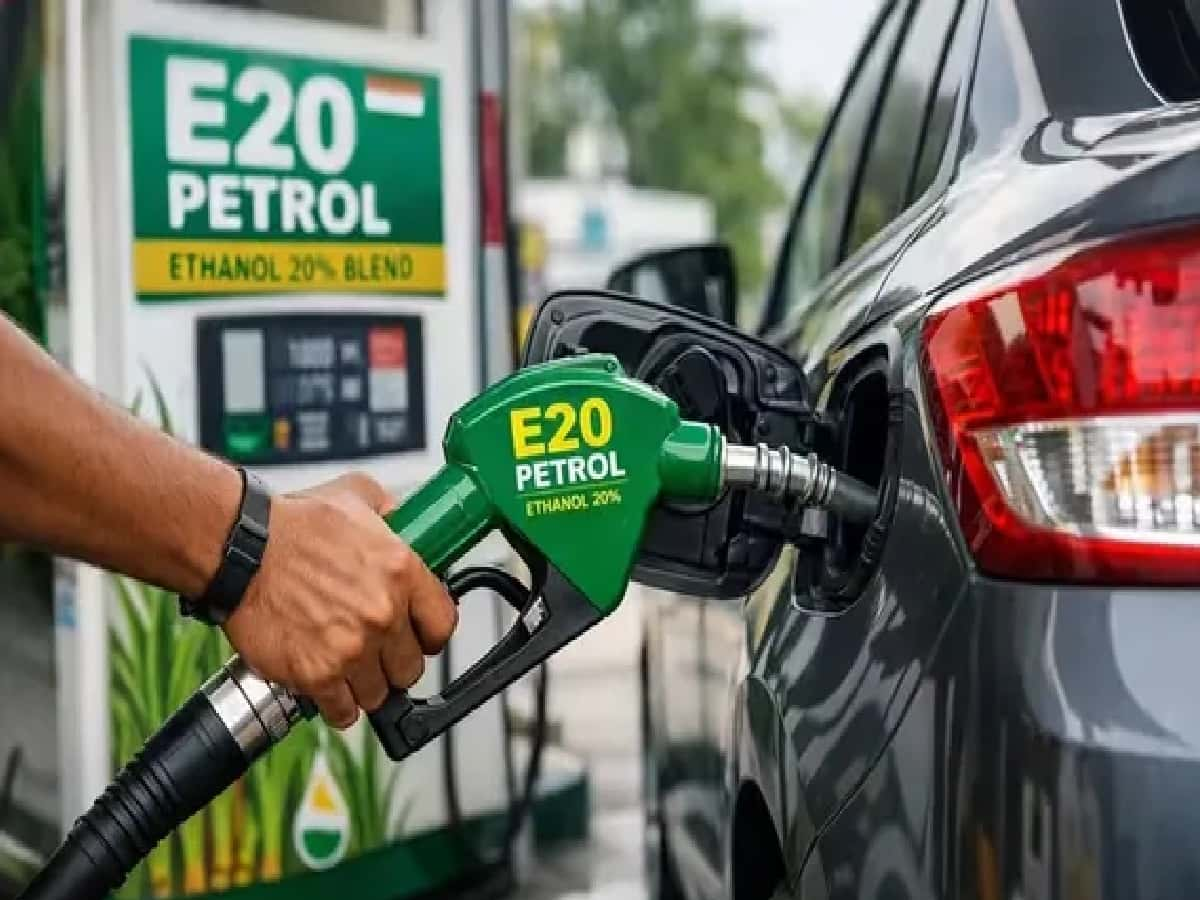
BPCL Clarifies E20 Fuel Quality: All 893 Samples Pass Across 27 States
State-owned energy major Bharat Petroleum Corporation Limited (BPCL) has firmly endorsed the quality and regulatory compliance of E20 ethanol-blended petrol supplied across India, confirming that all 893 fuel samples tested across 27 states and union territories passed laboratory quality checks. Issued from New Delhi following heightened social media scrutiny over ethanol blending levels, BPCL’s official statement verified that every sample tested fell squarely within the mandated 19 to 21 percent ethanol range. Conducted jointly by public sector Oil Marketing Companies (OMCs) in coordination with the Centre for High Technology (CHT) under the Ministry of Petroleum and Natural Gas, the nationwide quality-monitoring exercise included 280 samples tested directly by BPCL across its retail network. By releasing technical details of both the nationwide audit and a widely circulated fuel-test photograph from Karnataka, BPCL sought to reassure motorists in Bengaluru, Mysuru, New Delhi, Mumbai, Lucknow, Chennai, and Hyderabad that E20 petrol dispensed at retail Energy Stations strictly adheres to national quality standards.
Nationwide Audit: 893 E20 Samples Pass Across 27 States and UTs
Public debate around E20 Ethanol Blended Motor Spirit (EBMS) intensified over the past week after online posts and regional claims questioned whether petrol sold at retail outlets contained higher-than-prescribed ethanol proportions. Addressing those concerns head-on, BPCL cited findings from an extensive, multi-state quality-monitoring drive carried out by OMCs alongside the Centre for High Technology. Out of 893 E20 petrol samples collected and analyzed across 27 states and union territories, 100 percent of the samples conformed to the stipulated ethanol concentration of 19 to 21 percent.
Within this nationwide exercise, BPCL independently evaluated 280 retail samples drawn from its network of more than 25,300 fuel stations—reaffirming complete adherence to prescribed blending norms. Industry officials noted that ethanol blending at terminal depots is a tightly controlled, automated process, and that oil companies have zero commercial incentive to blend excess ethanol given strict regulatory oversight and procurement economics.
Truth Behind the Viral Karnataka E20 Separation Test Photo
A central trigger behind recent online speculation was a photograph taken during a consumer awareness demonstration at one of BPCL’s Energy Stations in Karnataka. Field officers had been conducting live ethanol-separation demonstrations at retail outlets across Karnataka over several days to answer motorists’ questions transparently. When one photograph from a demonstration appeared online, social media users misinterpreted the visual reading, prompting the local official to delete the post to prevent confusion.
Explaining the science behind the field demonstration, BPCL detailed how the standard ethanol-water separation test works. To measure ethanol content in a graduated cylinder, technicians mix 100 ml of E20 petrol with 30 ml of water. Because ethanol dissolves readily in water while petrol does not, water draws the ethanol out of the fuel mixture. Immediately after shaking, the liquid naturally turns cloudy or milky as microscopic droplets disperse, requiring several minutes of settling time before the lower ethanol-water layer and the upper petrol layer separate into distinct, readable boundaries. BPCL clarified that the viral image was inadvertently captured and uploaded during that intermediate hazy stage before separation had finished—and confirmed that once settled, the exact sample in question met all prescribed specifications.
Compliance With BIS IS 17021 Standards and Consumer Guidance
Reiterating its commitment to fuel integrity and consumer trust, BPCL emphasized that all E20 petrol distributed through its retail outlets undergoes rigorous multi-stage quality checks governed by the Bureau of Indian Standards (BIS) specification IS 17021. From automated terminal blending and sealed tanker transport to forecourt density and water-dip checks, every batch is monitored before reaching vehicle fuel tanks.
| E20 Fuel Quality & Testing Parameter | Official Verified Details |
| Governing National Standard | Bureau of Indian Standards (BIS IS 17021) |
| Permissible Ethanol Content | 19% to 21% (Target 20% Ethanol Blended Motor Spirit) |
| Nationwide Samples Tested | 893 samples across 27 states and union territories (All passed) |
| BPCL Specific Sample Count | 280 samples tested in coordination with Centre for High Technology (CHT) |
| Field Separation Test Ratio | 100 ml E20 petrol + 30 ml water (Requires settling time after initial milky phase) |
As India scales up E20 adoption to curb crude oil imports, cut carbon emissions, and boost farm incomes through domestic biofuel production, BPCL urged motorists and stakeholders to rely solely on certified testing protocols and accredited quality-assessment mechanisms rather than unverified social media visuals.




