







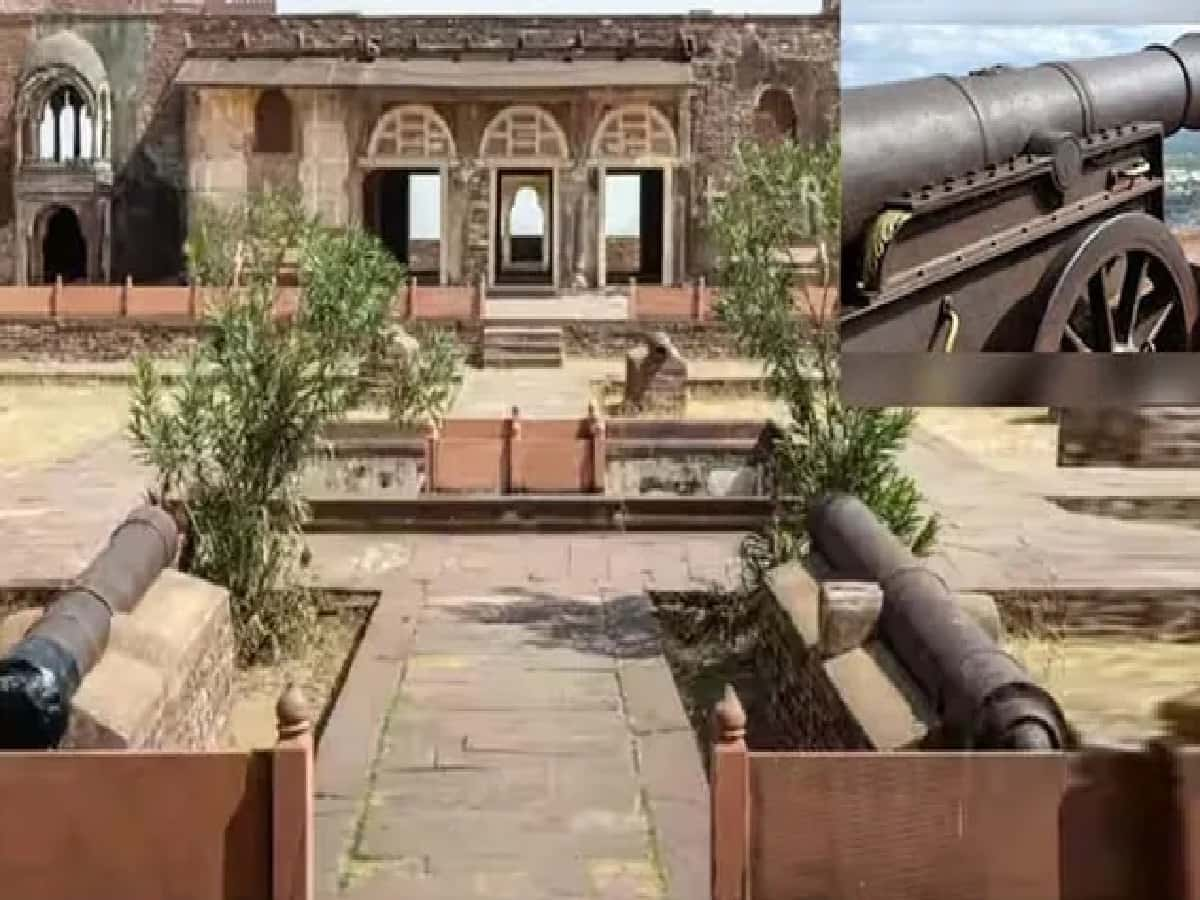
142 Antiquities Stolen in MP; Narwar Cannon Linked to Smugglers
Richly endowed with centuries-old temples, hilltop fortresses, and sacred sculptures, Madhya Pradesh has emerged as the state hardest hit by heritage theft in India—ranking first nationwide in cases of ancient idols, inscriptions, metal artifacts, and architectural treasures stolen from protected monuments. According to official records compiled by the Archaeological Survey of India (ASI), out of 488 antiquities stolen across India since 1960, 142 items—accounting for a staggering 29.1 percent of the national total—belong to Madhya Pradesh alone. By comparison, Rajasthan stands second with 91 stolen antiquities and Uttar Pradesh third with 86, meaning these three states together account for nearly two-thirds of all recorded heritage losses in the country. From historic temple clusters in Guna, Gwalior, Morena, Shivpuri, and Bhind in the Chambal-Gwalior belt to Vidisha, Raisen, Katni, Khandwa, Satna, Damoh, and Barwani, priceless Shivlingas, statues of Lord Vishnu, Lord Ganesha, Jain Tirthankaras, Yaksha figures, and carved temple pillars have vanished over the decades—with the overwhelming majority still untraced.
400-Year-Old Narwar Fort Cannon Theft Exposes Ongoing Vulnerability
While many recorded thefts date back decades, the brazen disappearance of a 400-year-old, 3.5-ton historic cannon from Narwar Fort in Shivpuri district in July 2026 has underscored that heritage trafficking remains an active threat. Perched atop a strategic hill overlooking the Chambal plains, Narwar Fort housed a historic battery of fourteen cannons before thieves managed to haul away one of the massive artillery pieces under the cover of darkness.
Special police investigation teams tracking highway surveillance and interstate smuggling routes found evidence indicating that the stolen cannon was transported across the border into Rajasthan. Despite sustained police efforts, the 3.5-ton heritage artifact has yet to be recovered, reviving urgent questions about perimeter monitoring and physical security at sprawling hill forts and remote temple sites across Madhya Pradesh.
International Smuggling Trail: Bharhut Yakshi and Repatriated Idols
Investigations into Madhya Pradesh’s missing treasures have repeatedly uncovered links to sophisticated international art-smuggling syndicates that supply illicit collectors and overseas galleries using forged provenance papers. One of the most notorious examples involves the 2,200-year-old Bharhut Yakshi sculpture, which was stolen from Katni in 2006 and smuggled out of India to be offered on the illicit American antiquities market for approximately ₹80 crore. In 2011, federal investigators recovered the rare sandstone masterpiece from the New York warehouse of disgraced art dealer Subhash Kapoor, who was subsequently arrested in Germany, extradited to India, and is currently lodged in the Central Jail in Tiruchirappalli (Tiruchi), Tamil Nadu.
Diplomatic and legal repatriation drives have gradually begun bringing several stolen treasures from Madhya Pradesh back home. An ancient sculpture of a Celestial Dancer (Surasundari), which had been trafficked abroad, was formally repatriated from the United States to India in November 2024. More recently, among the batch of Indian antiquities returned by the United States in 2026, investigators confirmed the recovery of an exquisite Dancing Ganesha idol originally stolen from a temple in Madhya Pradesh—reaffirming how closely the state’s heritage has been targeted by global trafficking rings.
ASI and State Authorities Step Up Photographic Documentation
To curb future thefts and strengthen India’s legal claims when stolen objects surface overseas, cultural agencies have placed renewed emphasis on comprehensive scientific cataloging. Following the BRICS Culture Ministers’ Meeting held in Bhopal in August 2026—which prioritized international cooperation on identifying, documenting, and repatriating looted cultural property—both the Archaeological Survey of India and the Madhya Pradesh Directorate of Archaeology have accelerated high-resolution photographic inventorying across protected monuments and museums.
Addressing the security and documentation drive, ASI Director General Yaduvir Singh Rawat noted that while the majority of recorded thefts occurred many years ago, surveillance and physical protection at monuments have been substantially upgraded with the deployment of adequate security personnel. He added that authorities are focused on improving detailed documentation of every antiquity so that law enforcement and international agencies can identify and recover missing heritage pieces far more effectively.
Top 10 States With Highest Stolen Antiquities in India (ASI Data)
| Rank | State | Number of Stolen Antiquities | Key Regional Hotspots / Notes |
| 1 | Madhya Pradesh | 142 (29.1% of India's total) | Guna, Gwalior, Morena, Shivpuri, Bhind, Vidisha, Raisen, Katni, Khandwa, Satna, Damoh, Barwani |
| 2 | Rajasthan | 91 | Second highest nationwide; accounts for 18.6% of recorded thefts |
| 3 | Uttar Pradesh | 86 | Third highest; together with MP & Rajasthan forms ~65% of national cases |
| 4 | Uttarakhand | 33 | Himalayan temple shrines and remote stone sculptures |
| 5 | Tamil Nadu | 30 | Chola-era bronze idols and temple architecture |
| 6 | Bihar | 22 | Ancient Buddhist and Pala-period sculptures |
| 7 | Andhra Pradesh | 18 | Historic stone carvings and temple relics |
| 8 | Karnataka | 15 | Protected temple complexes and inscriptions |
| 9 | Maharashtra | 12 | Cave shrines, forts, and regional temple sculptures |
| 10 | Chhattisgarh | 8 | Ancient temple idols and forest-belt heritage sites |
As heritage authorities mark renewed anti-trafficking campaigns from Bhopal to Shivpuri, pairing modern photographic registries with vigilant district-level policing remains essential to safeguarding Madhya Pradesh’s irreplaceable civilizational legacy for future generations.




