







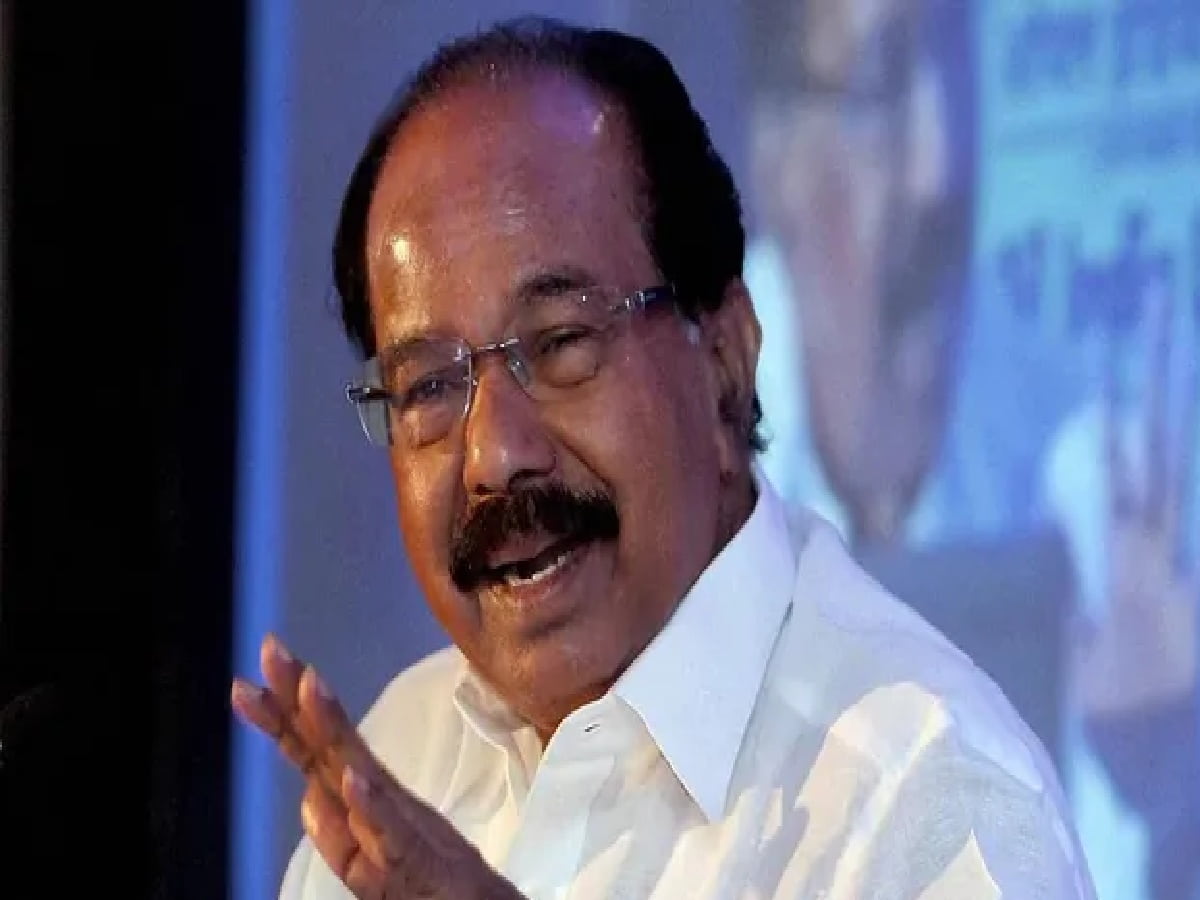
BJP Slams Congress Over Veerappa Moily's Remark on PM Modi's Arrest
A fierce national political storm erupted on Friday, November 20, 2026, after senior Congress leader and former Union Cabinet Minister M. Veerappa Moily remarked at a party event in Bengaluru that Narendra Modi—then serving as Chief Minister of Gujarat—could have been jailed during the United Progressive Alliance (UPA) government, had certain leaders within the Congress not stepped in to halt the investigation against him. Speaking at the Congress office in Bengaluru during the launch of a book chronicling Sonia Gandhi's memoirs, Moily recalled how Amit Shah was imprisoned and externed from Gujarat in the Sohrabuddin Sheikh case—a case in which Shah was subsequently discharged—and asserted that it had been Modi's turn next before some Congress figures, rather than then-Prime Minister Dr. Manmohan Singh, intervened to stop the probe, adding that the party was paying the price for that decision today. Within hours, the Bharatiya Janata Party (BJP) seized upon Moily's remarks as an admission of political vendetta during the UPA years. Addressing reporters in New Delhi, BJP national spokesperson and Rajya Sabha MP Sudhanshu Trivedi declared that the Congress's "true face" had been exposed, alleging that investigative agencies and due legal processes were bypassed in a deliberate conspiracy to fabricate charges against Narendra Modi and Amit Shah prior to the 2014 general election. Trivedi further contended that Moily's reference to leaders other than Dr. Manmohan Singh calling the shots confirmed long-standing BJP allegations about extra-constitutional power centers inside the UPA government, demanding an immediate explanation from the Congress leadership. For voters, political observers, and readers across Unnao, Lucknow, Kanpur, Bengaluru, Ahmedabad, Varanasi, Ayodhya, Prayagraj, and New Delhi, the row reopens one of Indian politics' fiercest debates over institutional autonomy, pre-2014 investigations, and political accountability.
Veerappa Moily's Bengaluru Remark vs. BJP's Rebuttal: Key Points
To bring together the exact claims made by former Union Minister M. Veerappa Moily alongside the counter-offensive mounted by BJP spokesperson Sudhanshu Trivedi and the historical backdrop, the table below summarizes the core developments:
| Political Dimension | M. Veerappa Moily's Statement (Bengaluru) | BJP's Counter-Response (Sudhanshu Trivedi, New Delhi) |
| Claim on Narendra Modi's Arrest | Stated that after Amit Shah's arrest and externment from Gujarat, it was Narendra Modi's turn to go to jail, but certain Congress leaders during the UPA regime stopped the investigation against him. | Framed the remark as direct proof that the UPA government hatched a political conspiracy to trap and falsely implicate Modi and Shah ahead of the 2014 Lok Sabha polls. |
| Role of Manmohan Singh & UPA Leadership | Specified that the probe against Modi was halted during the UPA government "not because of Manmohan Singh, but because of some other leaders," saying the Congress is suffering today as a result. | Argued this proves Dr. Manmohan Singh was not in real charge of the UPA government and that someone else was taking crucial decisions behind the scenes, removing "the mask" from Congress governance. |
| Reference to Amit Shah & Legal Backdrop | Mentioned that Amit Shah went to jail and was externed from Gujarat—claiming that adversity propelled his rise into a powerful Union Home Minister today. | Underscored that the cases against Amit Shah and allegations surrounding Narendra Modi (including pre-2014 speculation around the Ishrat Jahan and Sohrabuddin Sheikh cases) were politically fabricated, noting Shah was acquitted/discharged by the courts. |
| Constitutional & Institutional Debate | Spoke at the Bengaluru Congress office during a book launch on Sonia Gandhi's memoirs while reflecting on past UPA-era political decisions. | Accused the Congress of bypassing investigative agencies and judicial norms during UPA rule, questioning its commitment to the Constitution and demanding an official answer from the party. |
What Veerappa Moily Said at the Bengaluru Book Launch
The controversy was triggered by M. Veerappa Moily's candid reflections at the Karnataka Pradesh Congress Committee office in Bengaluru, where party leaders gathered for the release of a volume on Sonia Gandhi's political journey. Looking back at the UPA decade—when Moily held key Union portfolios including Law and Justice and Petroleum—he observed that Amit Shah's arrest and court-ordered externment from Gujarat in connection with the Sohrabuddin Sheikh case had inadvertently forged him into the powerful Union Home Minister he is today. Moily then claimed that Narendra Modi was next in line to face arrest, but the investigation against him was stalled by certain leaders within the Congress dispensation rather than then-Prime Minister Manmohan Singh, lamenting that the Congress was bearing the political consequences of that restraint today. In political circles prior to the 2014 Lok Sabha elections, intense speculation had indeed swirled around whether central agencies probing cases such as the Ishrat Jahan encounter might seek action against Gujarat's top leadership.
BJP's Counter-Offensive: Sudhanshu Trivedi Questions UPA Governance
In New Delhi, BJP spokesperson Sudhanshu Trivedi wasted no time turning Moily's remarks into a sharp indictment of the UPA era. Trivedi argued that if an investigation against a sitting Chief Minister could be initiated or halted based on the preferences of certain Congress leaders rather than independent legal evidence, it demonstrated that investigative agencies and judicial processes were routinely manipulated for political ends. Highlighting that Amit Shah was cleared by the judiciary after enduring imprisonment and externment, Trivedi maintained that the entire web of allegations leveled against Narendra Modi and Shah between 2004 and 2014 stood exposed as a politically motivated fabrication. He also zeroed in on Moily's distinction between Dr. Manmohan Singh and "some other leaders," asserting that the admission confirmed the BJP's long-standing critique of dual power centers during UPA rule and challenging the Congress high command to clarify who actually controlled decisions in that period.




