







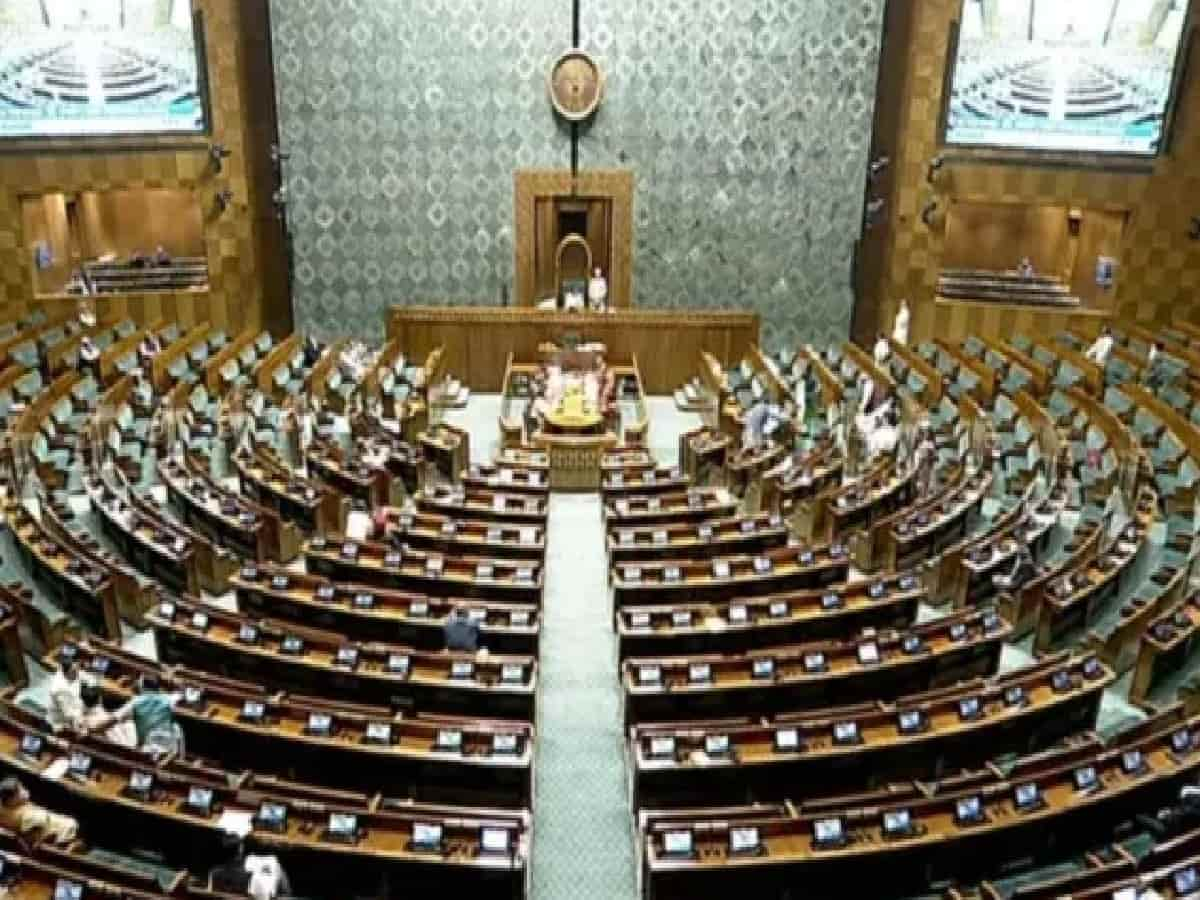
131st vs 132nd Amendment Bills: 5 Big Changes in New Delimitation Plan
Seven months after its earlier constitutional amendment fell short of the required two-thirds majority in the Lower House, the Central government is returning to Parliament with a substantially revised legislative blueprint to operationalize one-third (33%) reservation for women in the Lok Sabha and State Legislative Assemblies. Highlighted across parliamentary, legal, and national-politics desks on Saturday, November 28, 2026, the Constitution (132nd Amendment) Bill, 2026—paired with the accompanying Delimitation (Second) Bill, 2026—is scheduled to be introduced in the Lok Sabha on Monday, November 30, 2026. Unlike the Constitution (131st Amendment) Bill, which was defeated on April 17, 2026 (securing 298 votes in favor against 230 votes against), the redesigned 132nd Amendment directly addresses federal concerns raised by southern and smaller states over inter-state representation. Most notably, the new proposal guarantees a uniform 50% increase in Lok Sabha and Legislative Assembly seats across every single state and Union Territory, raising the maximum strength of the Lok Sabha to 850 (up to 815 members from states and 35 from Union Territories) and lifting the constitutional cap on state assemblies from 500 to 650. By applying an equal 50% expansion across the board, each state's relative share of seats in Parliament remains broadly preserved, while published 2011 Census figures are used to redraw internal constituency boundaries—locking in the revised seat allocations and boundaries until 2051 under a three-member Delimitation Commission headed by a sitting or former Supreme Court judge across New Delhi, Lucknow, Chennai, Bengaluru, Mumbai, Kolkata, and Patna.
131st vs. 132nd Amendment Bills: Five Major Changes in the New Delimitation Proposal
To bring together the five decisive structural differences separating the Constitution (132nd Amendment) Bill, 2026 from April's defeated 131st Amendment Bill, how the uniform 50% seat expansion affects Lok Sabha, State Assemblies, and inter-state balance, and how the 15-year women's quota (Nari Shakti Vandan Adhiniyam) and seat rotation will operate, the tables below organize verified legislative details:
Side-by-Side Comparison: Constitution (131st Amendment) Bill vs. 132nd Amendment Bill, 2026
| Key Parameter | Earlier 131st Amendment Bill (Defeated Apr 17, 2026) | New 132nd Amendment Bill, 2026 (Slated for Nov 30, 2026) |
| 1. Seat Increase Formula Across States & UTs | Did not mandate a uniform percentage seat increase across every state, sparking concerns among states with lower population growth over losing relative parliamentary share. | Mandates a uniform 50% increase in Lok Sabha and Legislative Assembly seats for every state and Union Territory, broadly preserving each state's existing share of Lok Sabha seats. |
| 2. Maximum Strength of Lok Sabha & State Assemblies | Proposed raising Lok Sabha's ceiling to 850 without the uniform 50% inter-state preservation formula. | Raises maximum Lok Sabha strength to 850 (815 from states, 35 from UTs) and increases the maximum size of State Legislative Assemblies from 500 to 650. |
| 3. Census Baseline Used for Delimitation | Replaced the post-2026 census condition of the 2023 Women's Reservation Act (Nari Shakti Vandan Adhiniyam). | Expressly allows constituency boundaries to be redrawn using the latest published census data available when the amendment comes into force—meaning the 2011 Census figures—without waiting for an ongoing census. |
| 4. Freeze Window Through 2051 & 15-Year Women's Quota | Triggered intense debate over open-ended future delimitation intervals. | Fixes the revised seat allocation and constituency boundaries until 2051, while implementing one-third reservation for women (including SC and ST women) for 15 years from commencement, with Parliament empowered by law to extend the duration and define rotation procedures. |
| 5. Delimitation Commission & Rotation of Reserved Seats | Paired with the earlier delimitation bill that was dropped after the April 17 vote. | Accompanied by the Delimitation (Second) Bill, 2026, establishing a three-member Delimitation Commission headed by a serving or former Supreme Court judge (appointed by the Centre) to allocate seats, redraw boundaries, and rotate women's reserved seats—with SC/ST women's seats rotating strictly within SC/ST-reserved constituencies. |
Parliamentary Status & Implementation Roadmap for Women's Reservation
| Milestone / Legislative Provision | Verified Details | Constitutional & Political Significance |
| Outcome of 131st Amendment Bill (April 17, 2026) | Defeated in the Lok Sabha after securing 298 votes in favor and 230 against, falling short of the mandatory two-thirds majority under Article 368. | Prompted the Centre to pause companion delimitation legislation and redesign the seat-allocation formula. |
| Nari Shakti Vandan Adhiniyam (106th Amendment, 2023) | Enacted in 2023 to reserve 33% of Lok Sabha and Assembly seats for women, but linked implementation to the first census and delimitation conducted after enactment. | The 132nd Amendment removes that bottleneck so women's reservation can take effect following the 2011 Census-based delimitation. |
| High-Population States & Assembly Caps | Raising the constitutional ceiling on State Legislative Assemblies from 500 to 650 accommodates a 50% expansion even in India's largest assemblies such as Uttar Pradesh (currently 403 seats). | Ensures major states can expand assembly representation smoothly alongside smaller states and UTs. |
Why the Uniform 50% Formula Reshapes India's Delimitation Debate
Constitutional and electoral analysts across New Delhi, Lucknow, Chennai, Bengaluru, and Mumbai point out that the central political hurdle blocking delimitation has long been the fear among southern and eastern states—which achieved faster population stabilization—that a pure population-based redistribution would shrink their parliamentary voice relative to northern states. By guaranteeing an identical 50% seat expansion for every state and Union Territory and freezing inter-state ratios until 2051, the 132nd Amendment Bill seeks to decouple immediate implementation of 33% women's reservation from inter-state seat redistribution disputes.
What Parliament and Voters Will Watch Starting Monday
When the Constitution (132nd Amendment) Bill, 2026 and the Delimitation (Second) Bill, 2026 are tabled in the Lok Sabha on Monday, November 30, 2026, attention across New Delhi, Lucknow, Chennai, Bengaluru, Mumbai, Kolkata, and Patna will center on how opposition parties respond to the revised uniform 50% seat-hike formula, whether the government commands the two-thirds majority needed for constitutional passage, and how quickly the three-member Delimitation Commission can notify redrawn constituencies ahead of future national and state elections.




