Who Were Ravana's Parents: The Hidden Lineage Behind Lanka's Ten-Headed King
The Ramayana details the righteous triumph of Lord Rama, yet the lineage and origins of his formidable adversary, Ravana, remain shrouded in captivating mythical history. While modern folklore primarily remembers him as the despotic ten-headed monarch of Lanka, classical texts reveal that Ravana was born of an extraordinary dual heritage—half-Brahmin and half-demon (Rakshasa). As the direct grandson of Maharishi Pulastya, one of the venerated Saptarishis and mind-born sons of Lord Brahma, Ravana inherited an elite ancestral pedigree of spiritual intellect, profound scholarship, and formidable celestial power that set him apart from ordinary warriors of the Treta Yuga.
Sage Vishrava and Kaikasi: The Union of Brahmin Wisdom and Demon Strength
Ravana’s father was the revered ascetic Sage Vishrava, son of Maharishi Pulastya. Sage Vishrava’s first wife, Devangana, daughter of Maharishi Bharadwaja, gave birth to Kubera, the celestial lord of wealth. Desiring an invincible heir to restore demonic dominance across the realms, demon king Sumali sent his daughter, Kaikasi, to marry the sage. Approaching Vishrava, Kaikasi sought a boon for offspring who would outshine the devas in strength and remain undefeated across the three worlds. From this sacred and fearsome union were born Ravana, Kumbhakarna, Vibhishana, and their sister Surpanakha. The Srimad Bhagavata Purana further explains this cosmic drama by identifying Ravana and Kumbhakarna as the second earthly incarnations of Jaya and Vijaya—the cursed dwarapalas of Vaikuntha who had previously manifested as the demon brothers Hiranyaksha and Hiranyakashipu.
The Myth of Ten Heads: Childhood Vedic Mastery and Cosmic Boons
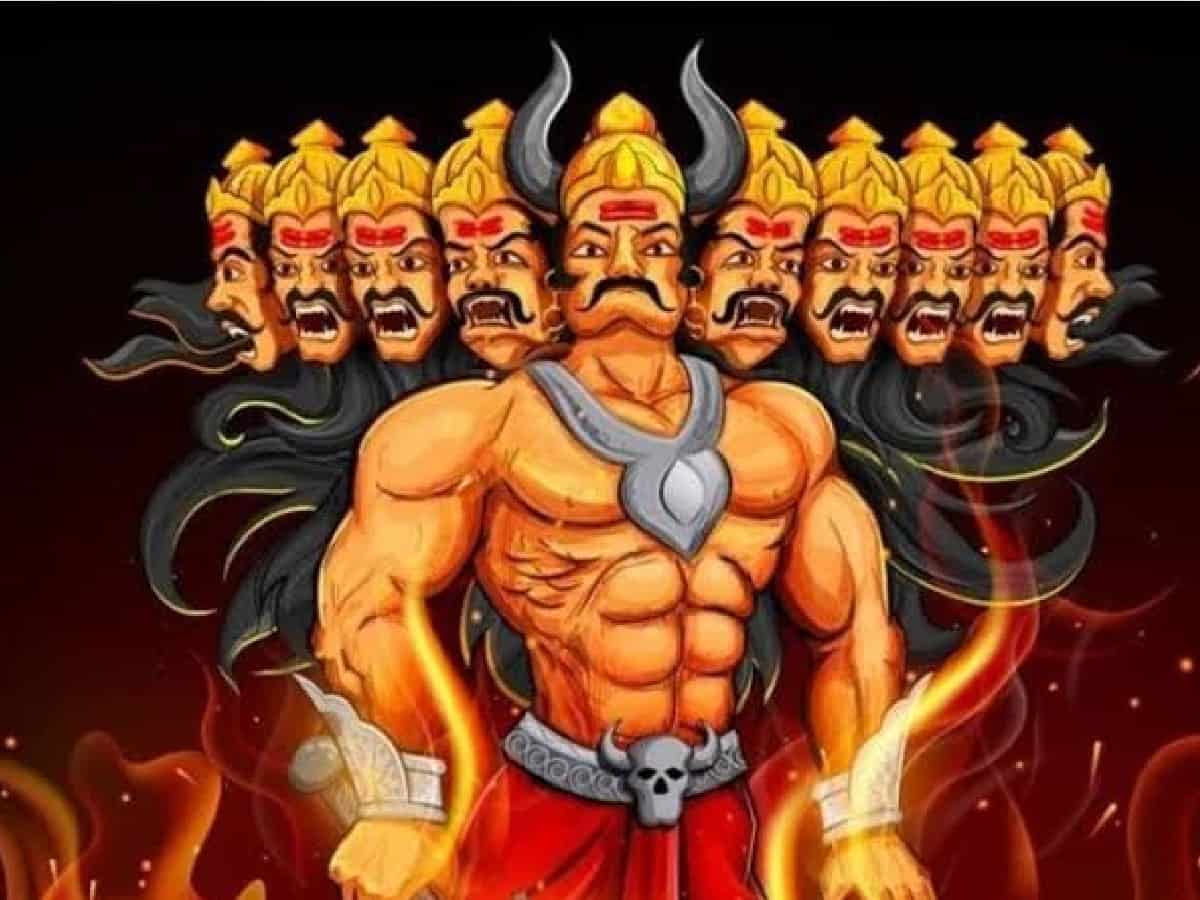
Contrary to widespread belief, Ravana was not born with ten physical heads; his legendary Dashanana form was a cosmic manifestation attained through relentless penance. Immersed in deep intellectual and spiritual learning under his father's tutelage, Ravana mastered all four Vedas, alongside advanced treatises in Ayurveda, astrology, astronomy, and tantric disciplines. Seeking supremacy, he performed severe austerities in deep forests to propitiate Lord Brahma, securing boons of near-invincibility and immense celestial powers. Subsequently, he surrendered himself to the fierce worship of Lord Shiva, who granted him divine boons, unmatched martial strength, and the iconic multi-headed vision reflecting his vast mastery over the scriptures. Combining the cerebral genius of his Brahmin father with the raw, untamed physical prowess of his demonic maternal lineage, Ravana emerged as an unprecedented fusion of profound intellect and supreme temporal dominion.