Divine Chariots of Puri: Decoding the Symbolic Names and Secrets of Jagannath Rath Yatra
The annual Rath Yatra in Puri, Odisha, is more than just a festival; it is a profound spiritual journey that brings the Lord of the Universe out of the sanctum sanctorum to bless every soul, regardless of status. As thousands of devotees gather to pull the magnificent chariots, the air resonates with unmatched devotion. While the visual spectacle of the procession is world-famous, the architectural and symbolic intricacies of the chariots—from the wood used in their construction to the divine names of the horses pulling them—carry deep philosophical meanings rooted in the Skanda and Brahma Puranas.
The Architecture of the Celestial Chariots
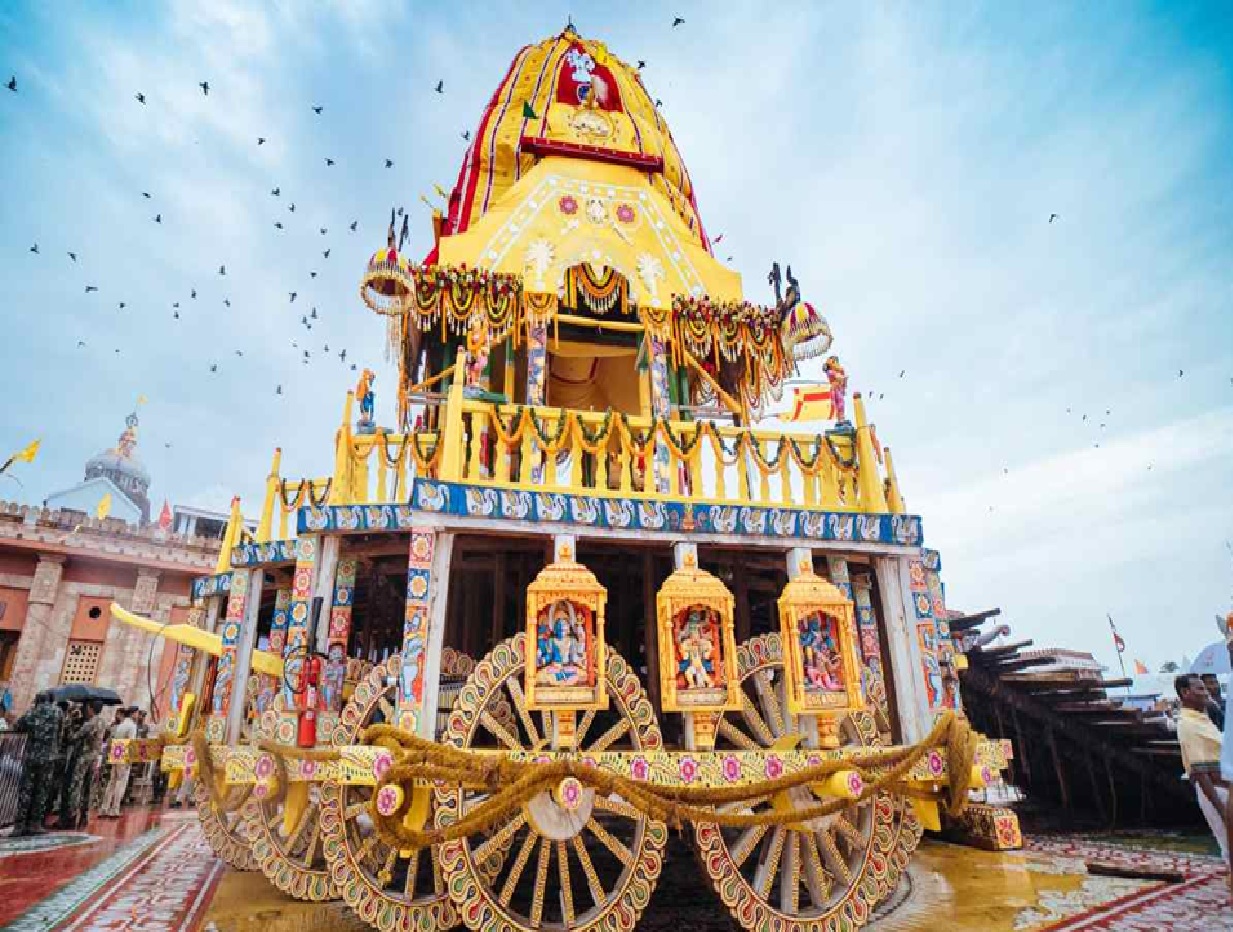
Every year, the construction of these colossal chariots begins on Akshaya Tritiya, utilizing sacred Neem wood. In a marvel of ancient engineering, the chariots are constructed without the use of a single iron nail. Lord Jagannath’s chariot, known as Nandighosha, towers at approximately 45 feet and rests on 16 wheels. Lord Balabhadra’s chariot, Taladhwaj, stands tall with 14 wheels, while sister Subhadra’s chariot, Darpadalan, is the most compact of the three, supported by 12 wheels. The nine-day journey from the Jagannath Temple to the Gundicha Temple and back serves as a symbolic return of the Lord to his roots, signifying the cycle of divine grace.
The Sacred Horses and Mares: Symbols of Divine Energy
The horses pulling these chariots are not merely ceremonial; they represent specific divine qualities. Lord Jagannath’s chariot, Nandighosha, is drawn by four horses: Shankha, Balahaka, Shweta, and Haridashwa. These horses, white in color, symbolize purity, truth, and spiritual light. Conversely, Lord Balabhadra’s chariot, Taladhwaj, is pulled by four powerful black horses named Tivra, Ghora, Dirghashrama, and Swarnanabha. In Vedic tradition, these names represent the qualities of energy, endurance, courage, and the relentless pursuit of success.
Feminine Power in the Darpadalan
A unique feature of the Rath Yatra is the chariot of Goddess Subhadra, which honors the embodiment of feminine power. Instead of horses, her chariot Darpadalan is harnessed to three mares: Rochika, Mochika, and Jita. These names are deeply significant, representing victory, liberation, and the indomitable spirit of never giving up. According to religious scholars, these names are not just labels; they encapsulate the divine attributes and cosmic roles of the deities themselves. Before the Yatra begins, these symbolic animals are worshipped, recognizing them as essential participants in the Lord’s journey through the holy city of Puri.