Afternoon Shubh Muhurat, Seven-Knot Sacred Thread Ritual, and Puja Vidhi for Child Protection
The sacred observance of Santan Saptami, widely celebrated across Hindu households to pray for the longevity, sound health, and overall prosperity of offspring, is being observed today, Friday, September 18, 2026. Falling annually on the Saptami Tithi of Shukla Paksha in the auspicious month of Bhadrapada, this dedicated fast centers on seeking the divine grace of Lord Shiva and Mata Parvati. Revered by both mothers and fathers—as well as couples seeking the blessing of parenthood—the observance involves fasting, hearing the sacred lore, and tying a sanctified seven-knot thread (Kalava) on the wrist. According to Vedic calendar calculations, the Saptami Tithi began on September 17 at 10:48 AM and concludes today, September 18, at 1:01 PM. Adhering to the classical rule of Udaya Tithi, the fast is celebrated today, with the most potent afternoon puja muhurat falling between 12:08 PM and 12:57 PM.
Sacred Puja Samagri and Step-by-Step Rituals for Shiva-Parvati Worship
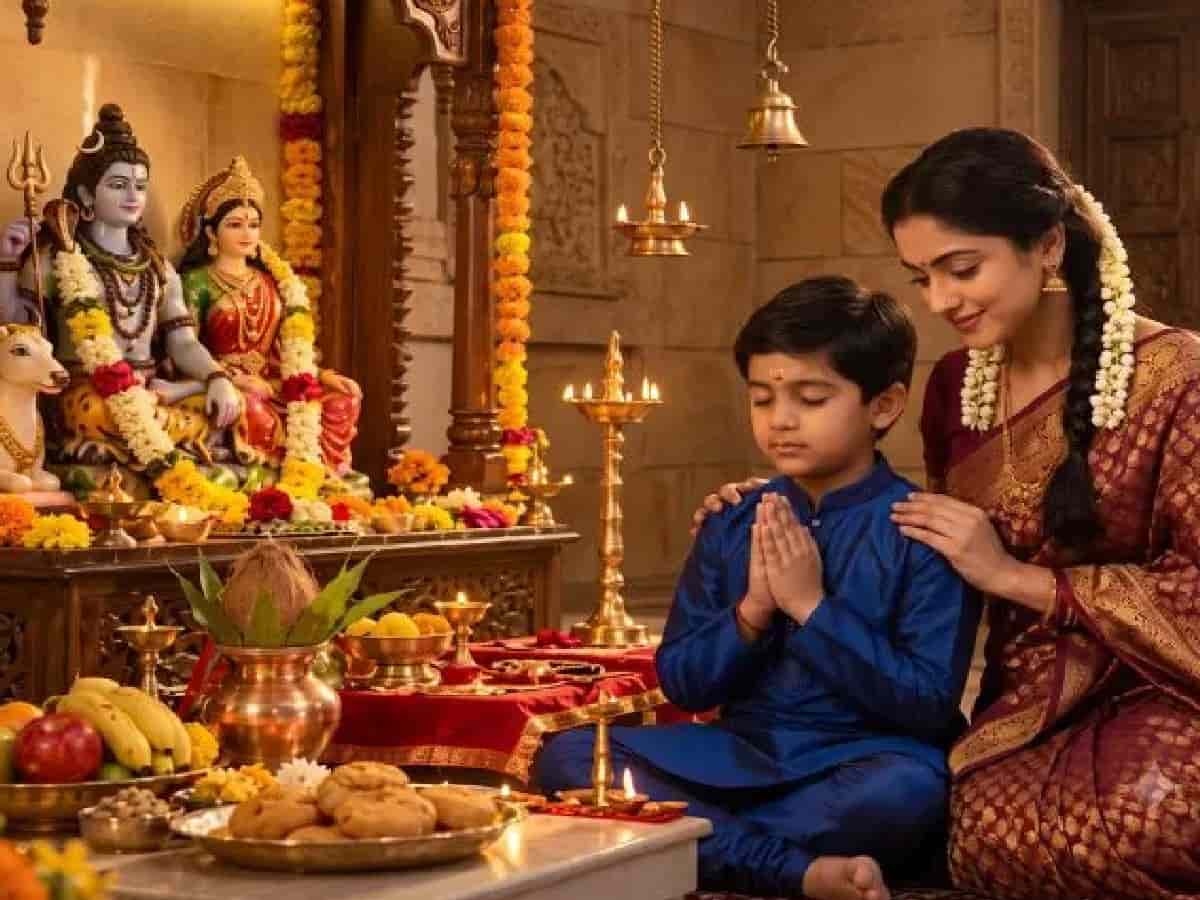
To carry out the ceremony with scriptural precision, devotees prepare an altar arranged with specific devotional items:
-
Essential Samagri List: A sacred thread (Kalava or Mauli), raw turmeric root, roli or kumkum, pure cow ghee, Panchameva (five dry fruits), a traditional brass aarti plate, fresh fragrant flowers, seasonal fruits, unbroken rice grains (akshat), and pure Ganga water.
-
Morning Sankalp: Fasting parents wake before dawn during Brahma Muhurta, bathe, wear clean traditional attire, and take an earnest vow (sankalp), clearly taking the names of each of their children while praying for their safety and well-being.
-
Fasting Options: Devotees may choose to observe a nirjala or phalahari fast until the afternoon puja concludes, breaking it with sattvic food post-rituals, or continue the strict fast until sunrise the next morning.
-
Altar Setup: Spread a fresh red cloth across a clean raised wooden pedestal, install the idols of the Shiva Parivar, sprinkle Ganga water for purification, apply white sandalwood paste to Lord Shiva, and offer red vermilion to Goddess Parvati.
-
The Seven-Knot Thread & Rule of Seven Offerings: Prepare a sacred Mauli thread knotted seven times, smear it with auspicious turmeric paste, and place it directly before the divine couple during the rituals. Devotees offer 7 sweet pua cakes (sweet pancakes) alongside fruits served specifically in quantities of seven.
The Mythological Legend of Queen Chandramukhi and the Power of Devotion
The spiritual origin of the Santan Saptami fast traces back to the Mahabharata, when King Yudhishthira sought guidance from Lord Krishna on a divine vrata capable of eliminating parental distress and securing healthy progeny. Krishna narrated the tale of Chandramukhi, queen of King Nahusha of Ayodhya, and a pious Brahmin woman named Bhadramukhi. While bathing in the holy Saryu River, both witnessed women devoutly worshiping Lord Shiva and Goddess Parvati for their children's safety and resolved to observe the fast themselves. While Bhadramukhi maintained strict, unwavering spiritual discipline, Queen Chandramukhi was negligent, frequently skipping the sacred rites. Following karmic lifecycles in the animal realm, both reincarnated again into human bodies: Bhadramukhi was born as Bhushan Devi and blessed with eight healthy sons, whereas Chandramukhi was afflicted with childlessness. Driven by severe envy, the queen tried poisoning Bhushan Devi's sons with toxic laddus, yet the boys remained unharmed through Lord Shiva's divine shield. Recognizing her spiritual errors, the queen surrendered to the Santan Saptami fast with authentic remorse, ultimately gaining the blessing of a noble child.
Concluding Rites: The Triad Aarti and Wearing the Protective Kalava
The sacred rituals conclude with the recitation of the Santan Saptami Vrat Katha, followed by traditional hymns. Devotees first invoke Lord Ganesha through the "Jai Ganesh Deva" aarti to remove obstacles, followed by the devotional recitation of the "Jai Parvati Mata" aarti and the classical "Om Jai Shiv Omkara" praise for Mahadev. Once the aartis are completed and the camphor flame is waved, the mother or father takes the sanctified seven-knot yellow-dyed Kalava and ties it onto the wrist as a divine shield (raksha sutra) for the protection and prosperity of their children, culminating a day of pure spiritual dedication.