







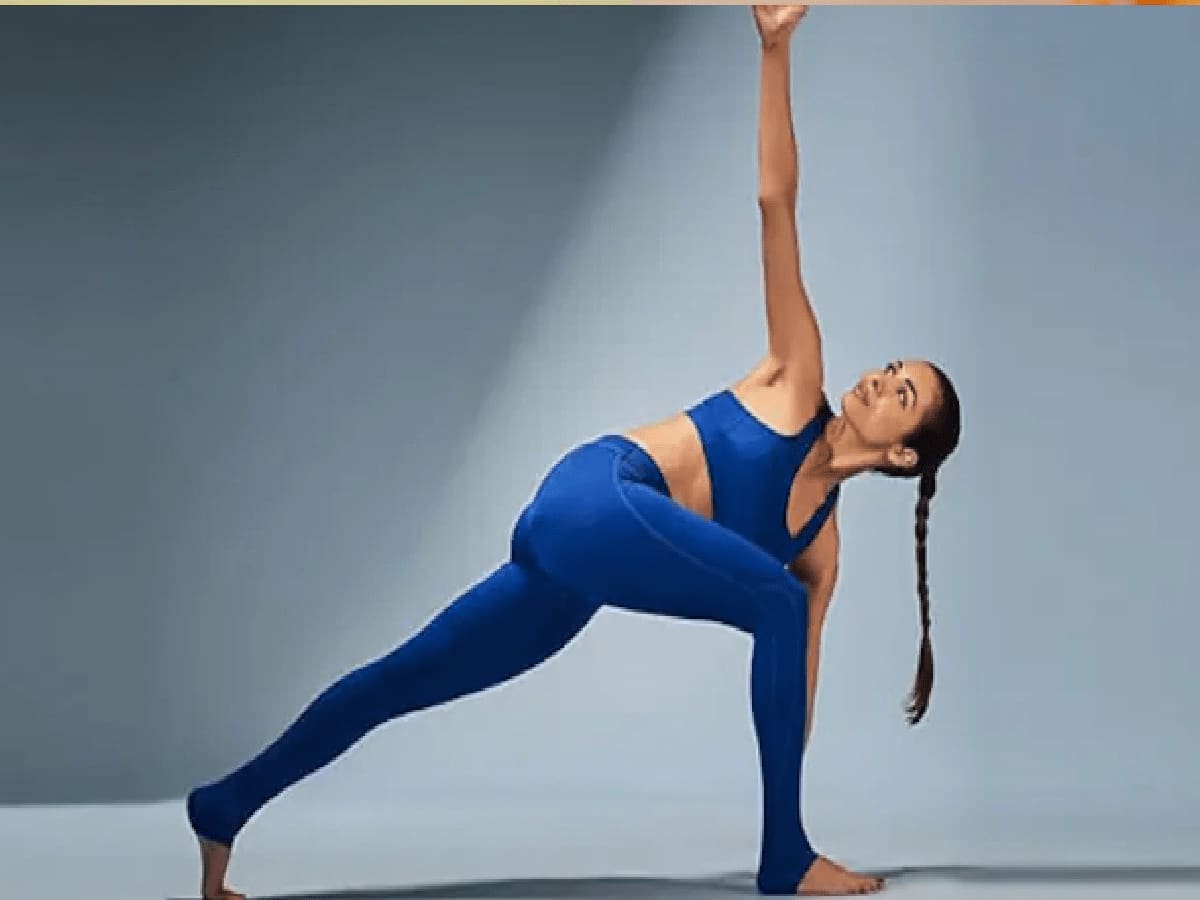
Master Parivrtta: Revolved Bound Side Angle Pose for Belly Fat Loss, Digestion, and Core Balance
Within the ancient Indian yogic tradition, Parivrtta Baddha Parsvakonasana (Revolved Bound Side Angle Pose) stands out as an advanced, transformative posture that develops muscular flexibility, deep core stabilization, and razor-sharp mental focus. Derived from foundational Sanskrit roots, "Parivrtta" signifies twisted or revolved, "Baddha" indicates tied or bound, and "Parsvakon" represents the side angle. Serving as a challenging and deeply beneficial variation of classical Parsvakonasana, the posture combines an intensive lateral spinal rotation with an interlaced hand-lock (bandha) beneath the thigh. This deep compression detoxifies the visceral organs, conditions the lower extremities, and stimulates sluggish metabolic pathways to trim stubborn abdominal fat.
AYUSH-Endorsed Wellness Benefits: Cellular Detox and Visceral Compression
The Ministry of AYUSH underscores this multifaceted asana as a premier practice for inner organ cleansing, mental resilience, and neuromuscular alignment:
-
Internal Visceral Cleansing: The deep twisting compression exerts direct pressure on intra-abdominal organs, effectively massaging the liver, kidneys, pancreas, and intestines to promote internal detoxification.
-
Metabolic Acceleration: The intense compression on the midsection stimulates digestive enzyme secretion, providing relief from chronic constipation, gastric flatulence, and sluggish bowel motility.
-
Full-Spine Decompression: Dynamic rotational torquing along the vertebrae relieves chronic stiffness in the lumbar and thoracic spine while enhancing overall skeletal mobility.
-
Lower-Body Toning: The deep side lunge challenges and tones the quadriceps, hamstrings, knee joints, and ankles, building muscular stability from the ground up.
-
Cardiorespiratory Expansion: Interlocking the hands behind the back opens the pectoral muscles and ribcage, promoting deeper diaphragmatic respiration and increasing lung capacity.
-
Manipura Chakra Activation: Working directly on the solar plexus (Manipura Chakra), this pose fosters inner willpower, mental resolve, emotional stability, and sharp focus.
Step-by-Step Technique: How to Perform the Revolved Bound Side Angle Pose
Mastering the mechanics of the hand bind and spinal twist ensures safety and stability during execution:
-
Establish the Base Lunge: Begin in a stable high lunge with your right leg forward, bending the knee to a 90-degree angle so the knee tracks directly over the ankle, while extending the back left leg straight with the heel grounded or elevated.
-
Initiate the Spinal Rotation: Bring the palms into Anjali Mudra (prayer position) at heart center, lengthen through the crown of the head on an inhale, and on an exhale, rotate your torso to the right, hooking the outer left tricep across the outside of the front right thigh.
-
Execute the Hand Lock (Baddha): Once your twist is secure, slide the left arm under the bent right thigh and sweep the right arm behind your lower back to clasp the left wrist or fingers, locking the bind.
-
Roll the Chest and Direct the Gaze: Rotate the right shoulder open toward the sky, lift through the sternum to avoid collapsing into the chest, and turn your gaze upward while maintaining smooth, rhythmic diaphragmatic breaths.
-
Release and Counterbalance: Hold the posture for 3 to 5 controlled breaths before releasing the arm bind, untwisting the torso back to center, and repeating the sequence on the opposite side to balance lateral flexibility.
Important Contraindications: Who Should Avoid This Pose
Due to the intense spinal rotation, internal abdominal pressure, and joint torque involved, certain individuals must skip this pose:
-
Acute Musculoskeletal Injuries: Anyone with recent injuries, chronic inflammation, or acute pain in the knees, shoulders, spinal discs, or cervical neck region should avoid this pose entirely.
-
Cardiovascular and Hypertensive Concerns: The combination of an inverted twist and chest compression can cause blood pressure fluctuations; individuals with uncontrolled hypertension or cardiovascular issues should avoid deep binding variations.
-
Pregnancy and Abdominal Surgeries: The deep abdominal compression is contraindicated during pregnancy and for anyone recovering from recent abdominal or pelvic surgery.




