
 desk
desk Share
Share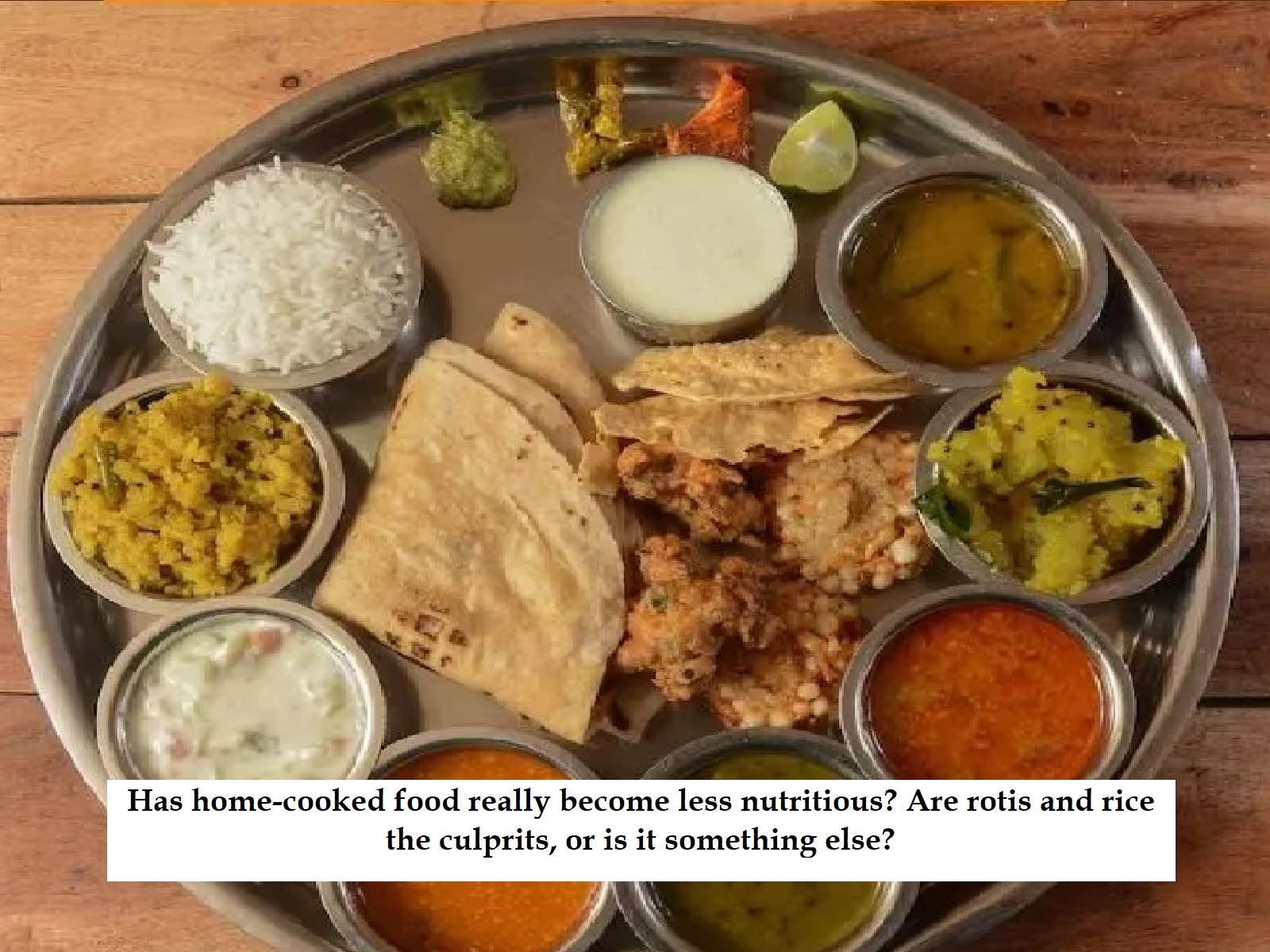
News Topical, Digital Desk : One thing that most appeals to young people who have come to work in big cities is home-cooked food. It's not just a plate of food, but a treasure trove of memories, one that everyone holds dear to their hearts. The gap between generations melts away at this point.
For generations, "home-cooked food" has been synonymous with not just food, but comfort, nutrition, and balance for Indians. It has been the foundation of our lives. But a recent report by the Indian Council of Medical Research (ICMR) revealed a shocking fact: approximately 62 percent of the average Indian's calories now come from rice, wheat, and sugar.
Experts believe that this pattern of carbohydrate-heavy home cooking is contributing to the rise of metabolic disorders like diabetes and obesity. "Homemade food," once a symbol of comfort, nutrition, and balance, is now under scrutiny. But is our traditional diet truly to blame, or is someone else to blame?
He is innocent
Before we start blaming our beloved roti and rice, we should ask a question: has Indian food really become unhealthy or does the fault lie somewhere else and the focus is not reaching that deep.
The truth is that these statistics measure quantity, but nothing about quality. The 360-degree shift in how food is grown, processed, and consumed isn't even discussed. In fact, we view our diets through a Western lens, where carbohydrates are considered the villain and fat the enemy.
Our ancestors' thali (plates) were quite distinct. Their thali consisted of whole, unrefined grains like shelled wheat, parboiled and wild rice, and hand-pounded jowar, bajra, and ragi. The meal was laced with pure ghee. Traditional pickles, papads, and salads balanced this thali, rich in lentils and vegetables. Food was prepared in harmony with nature. The thali mirrored the rhythms of nature.
Our ancestors were aware of the five elements of earth, water, fire, air, and space. Each food provided energy suited to its season. In winter, millet bread, ghee, and gum laddus provided warmth, while in summer, gourd, buttermilk, and whey provided cooling and hydration. Similarly, during the monsoon season, moong khichdi and turmeric decoction were our immunity companions. When we ate seasonally and locally, we ate wisely. The environment energized our food, bringing vigor and vitality.
These are the intruders
Today, that wisdom has faded. Vegetables stored in cold storage are available even out of season, but they lack nutrition! So, the problem isn't with bread or rice. The problem lies in excessive refining. When we strip grains of their nutritional value in the name of cleaning them, polish rice to make it appear whiter, and prefer to cook food in refined or various types of oil, we ourselves destroy the nutritional value of our food.
Hybrid crops, chemical-laden soil, and highly refined ingredients have disrupted the natural balance of our diets. What once provided energy now brings exhaustion. Instead of harnessing the energy of the seasons for health, we have become consumed with filling our stomachs.
Today, we are unknowingly relying on bakery bread, ready-to-eat gravies, refined oils made from seeds, and sugar-laden sweets—the main intruders. A sedentary lifestyle, staying up late, and irregular meals are also equally contributing to this imbalance. Carbohydrates weren't the culprit when people walked in the sun and engaged in manual labor. The problem began when refinement increased and physical activity decreased!
Repeat your traditions
The solution to this problem lies not in abandoning tradition, but in restoring it. The Indian thali needs to be replicated, not reinvented.
1. Include grains in your plate
Bring back husked wheat, jowar, ragi, sanwa rice, kangni, unpolished pulses and rice. These have more fiber, protein, and micronutrients than refined varieties.
2. Cook according to the season
Choose ingredients that suit your climate. Eat warm, heavy foods in the winter and cool, water-rich foods in the summer.
3. Bring fresh, cook immediately
Buy every fruit and vegetable locally, cook fresh, and eat immediately. Avoid out-of-season vegetables altogether.
4. Traditional fats are beneficial
Cold-pressed mustard, coconut, and sesame oils or ghee are regionally appropriate and thermally stable. Refined seed oils have lost their vitality.
5. Follow rhythm and relaxation
Eat with the sun. Regular portions and breaks between meals restore the body's biological clock, something our grandmothers instinctively practiced.
Read More: Why do you feel sleepy again and again after lunch, is this a symptom of some disease?
--Advertisement--


