desk
desk Share
Share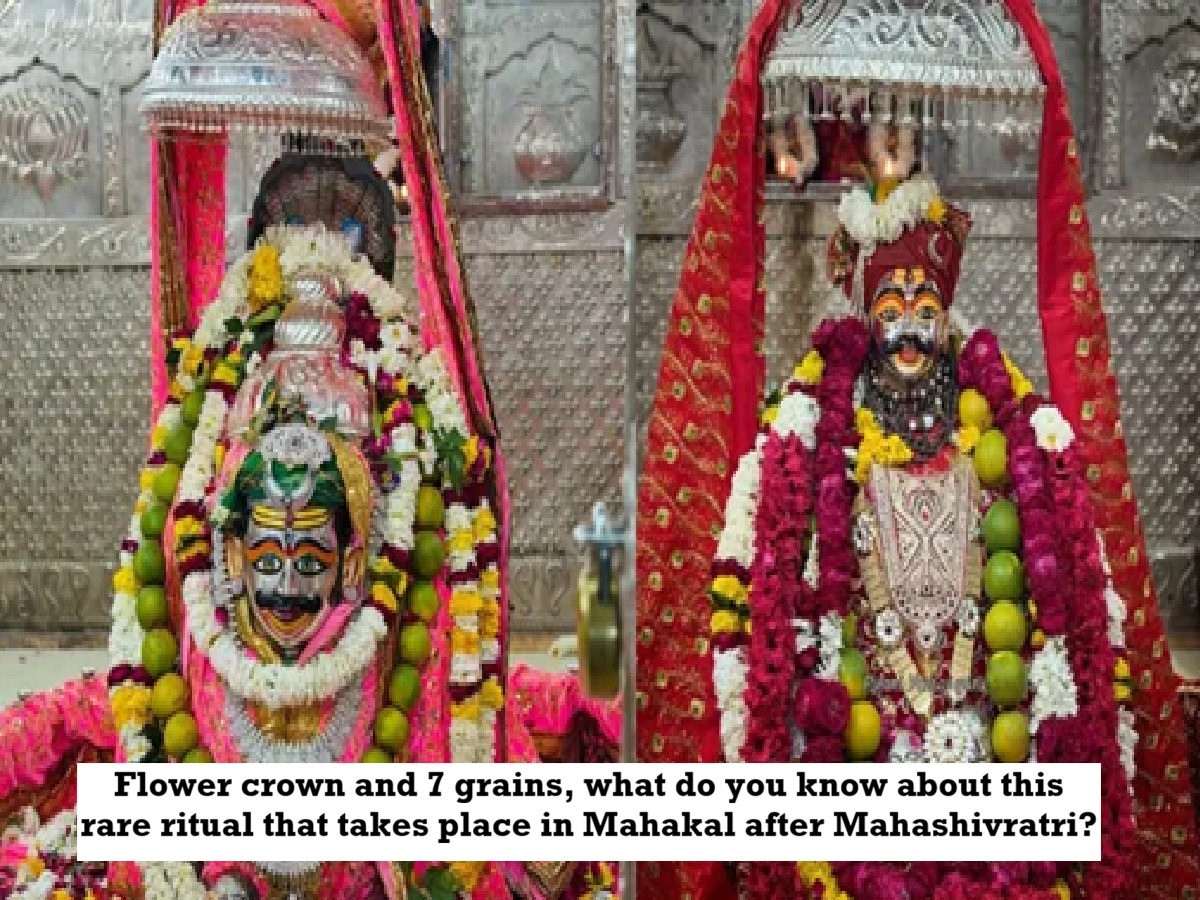
News Topical, Digital Desk : Shivratri isn't just a festival, but a celebration of the "great union" of Shiva and Shakti, echoes of which resonate across the country. It's a sacred night when devotees flock to Shiva temples seeking their deity's blessings. But in the sacred land of Ujjain, where Mahakaal, the lord of all times, resides, the festival takes on a unique charm.
Although in Mahakal's court, Bholenath is adorned with a magnificent decoration six times daily, from Bhasma Aarti to Shayan Aarti, the scene immediately following Mahashivratri is unimaginable. On this day, Bholenath, who embraces renunciation, appears as a charming groom. With a turban on his head and a glow on his face, this "Sehra Shringar" of Baba Mahakal leaves devotees overwhelmed. Come, let us witness this rare and little-known tradition of Ujjain today.
Saptdhanya makeup is very special
At Ujjain's Mahakal Temple, priest Akash Sharma and servant Bhavesh Vashisht explained that Mahashivratri is celebrated with great pomp at Ujjain's famous Mahakaleshwar Temple , but the most special and unique aspect of the festival occurs on the day after Shivratri. This is when Lord Mahakal is dressed as a groom, and devotees witness his divine form.
Baba Mahakal Sehra Darshan
Early in the morning on the day after Mahashivratri, Lord Shiva is adorned like a groom. This adornment is called "Sehra Darshan." According to tradition, the Lord is adorned with a huge Sehra (flower crown). This Sehra is not just made of flowers, but also uses a large quantity of flowers as well as "Saptdhan." The Lord is also adorned with a beautiful mask, symbolizing the joy and excitement of the Shiva-Parvati marriage .
Importance of Saptadhan
The most distinctive feature of this decoration is the "Saptdhan" (seven grains). Saptdhan means the use of seven types of grains. The seven grains used in the deity's Sehra include rice, green gram, sesame seeds, lentils, wheat, barley, and black gram.
These grains are considered auspicious and symbolize the gifts of nature. This decoration is performed only once a year, and therefore holds great significance.
Symbol of prosperity
After the adornment is removed, the aarti (sacred ritual) is called the "Sehra Aarti." When this ritual is complete and the deity's Sehra is removed, the Saptadhan (grain) used in the ceremony is distributed as a special offering. It is believed that this grain possesses miraculous powers. A portion of this offering is kept in the government treasury to ensure that the state does not face a shortage of funds.
The remaining grain is distributed among the devotees. Devotees firmly believe that if this grain is kept in the home's safe or money storage area, it will ensure a safe and secure home, bringing happiness, peace, and prosperity.
Read More: A small mistake during Chhayadaan can prove costly; do not do this even by mistake.
--Advertisement--