







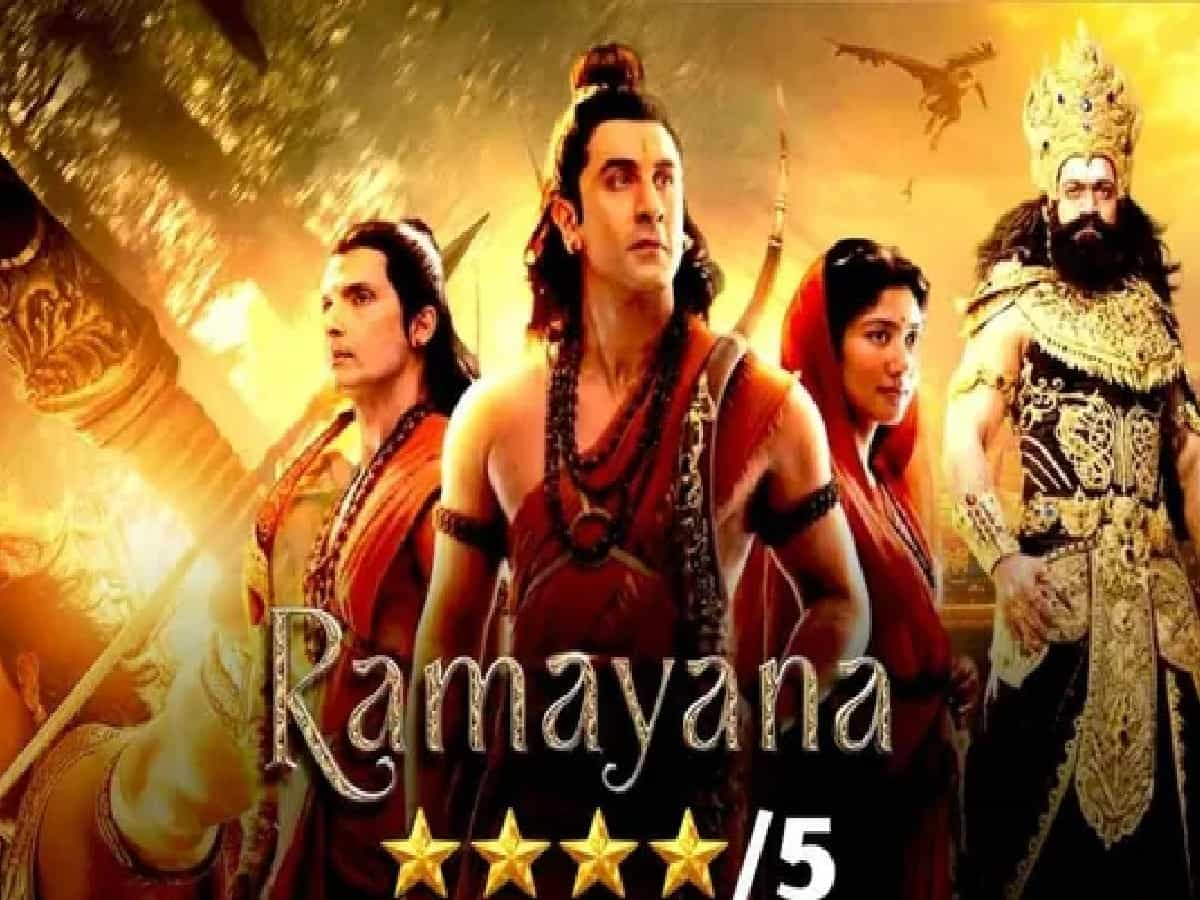
Ramayana Movie Review: Ranbir's Divine Grace Meets Yash's Ferocious Ravana
When the sacred dignity of the Treta Yuga converges with the pinnacle of modern cinematic technology, the result is director Nitesh Tiwari and producer Namit Malhotra’s magnum opus Ramayana, which arrived in theatres worldwide on Thursday, November 5, 2026. Moving far beyond the nostalgic boundaries of Ramanand Sagar’s iconic television serial, this massive ₹4,000-crore scale production elevates Indian storytelling onto a global canvas, delivering a visually stunning theatrical experience that bridges profound spiritual reverence with seamless Hollywood-caliber visual wizardry. From the pristine architectural marvel of ancient Ayodhya to the dense foliage of Dandakaranya and the towering golden ramparts of Lanka, the film redefines epic filmmaking, creating a captivating big-screen spectacle anchored by Ranbir Kapoor’s measured, tranquil embodiment of Lord Rama and Kannada superstar Yash’s magnetic, fearsome incarnation of the demon king Ravana.
Cinematic Grandeur and Mythological Lore: Tracing the Epic from Lanka’s Genesis to Dandakaranya
While the timeless foundational narrative remains etched across Indian cultural memory, Tiwari crafts a refreshed, visually exhilarating trajectory that begins with the primal cosmic conflict between the Devas and Asuras, showcasing Indra’s conquest of Lanka before Ravana’s mother, Kaikasi, steers her son toward his sovereign destiny. Guided by maternal ambition, Ravana undergoes rigorous austerities to secure the boon of immortality from Lord Brahma, subsequently vanquishing Kubera to claim the golden citadel of Lanka. The narrative then shifts gracefully to Ayodhya for King Dasharatha's sacred Putrakameshti Yajna, chronicling the birth of the four princes and Guru Vishwamitra’s call for Rama to eradicate forest demons Tadaka and Subahu. Navigating smoothly through Sita's swayamvara and Rama's heartbreaking exile, the screenplay introduces fresh creative layers—including Ravana’s fierce confrontation with Shurpanakha’s husband Vidyut Jeeva, Lakshmana’s decisive defense against Shurpanakha, and a refreshing portrayal of Mother Sita as a scholarly and brave warrior, culminating in an emotionally devastating airborne confrontation between Ravana and the legendary bird king Jatayu that leaves audiences transfixed.
Stellar Acting Showcases: Yash Dominates as Dashanana While Ranbir and Sai Pallavi Radiate Grace
The ensemble performances elevate the mythological drama, anchored by Ranbir Kapoor’s remarkably restrained and gentle demeanor, which effortlessly silences initial pre-release skeptics by balancing the serene compassion of Maryada Purushottam with the fierce, righteous valor of an unmatched Kshatriya warrior. However, it is Rocking Star Yash who commands every inch of the screen as Ravana, exuding terrifying arrogance, immense intellect, and unyielding majesty, with actor Sharad Kelkar’s resonant Hindi dubbing transforming the ten-headed Dashanana sequence into an electrifying theatre highlight. Sai Pallavi delivers a deeply moving portrayal of Sita, eschewing overt melodrama to convey sacrifice, royal purity, and steel-willed resolve through expressive eyes and composed grace. The supporting cast adds vibrant color to the canvas, with Ravi Dubey capturing Lakshmana’s fiery loyalty and devoted brotherly camaraderie, Rakul Preet Singh bringing striking elegance to Shurpanakha, Arun Govil lending regal poignancy to King Dasharatha, Lara Dutta adding gravitas as Kaikeyi, Kajal Aggarwal portraying Mandodari, Ajinkya Deo embodying Maharishi Vishwamitra, and Anupam Kher providing the film's crowning emotional heartbeat through his moving vocal performance as Jatayu.
Hollywood-Scale Visuals and Final Verdict: Balancing Grandeur, Zimmer-Rahman Score, and Runtime Realities
On the technical front, Ramayana sets a benchmark for Indian VFX and world-building, utilizing photorealistic environmental rendering, tactical chariot maneuvers, and authentic battle physics that never appear artificial or detached. The dual musical collaboration of Academy Award winners Hans Zimmer and A.R. Rahman provides an evocative auditory landscape, conjuring meditative stillness during spiritual passages while intensifying the adrenaline of high-stakes duels, even if a few background transitions feel slightly subdued under the weight of colossal expectations. Compressing this vast chapter into a brisk three-hour runtime inevitably requires editorial compromises, leading to brief condensations of Janakpur's rich atmosphere, the profound dialogue with the boatman Kevat, and intimate emotional beats between Queen Kaushalya and Rama. Nonetheless, these minor pacing compromises do little to detract from the grand achievement, solidifying Ramayana as an unmissable theatrical event that establishes Indian cinema’s ability to execute mythological storytelling on an uncompromising international scale.




