







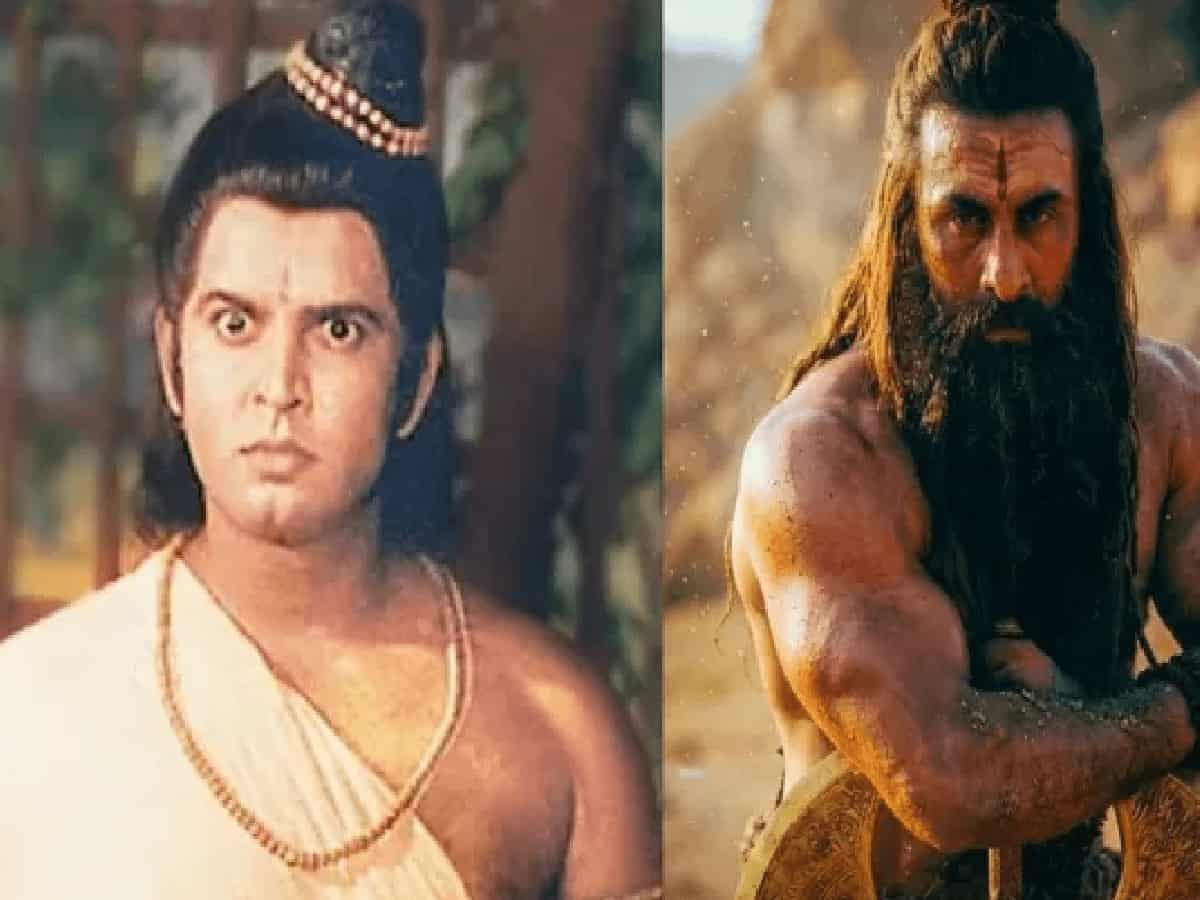
Doordarshan’s ‘Lakshman’ Sunil Lahri Reviews Ranbir’s Ramayana
As Nitesh Tiwari’s big-budget mythological epic Ramayana: Part 1 draws massive crowds across Indian and international theaters, audiences have been eagerly awaiting reactions from the beloved cast of Ramanand Sagar’s iconic 1987 Doordarshan television series. On Wednesday, November 11, 2026, veteran actor Sunil Lahri—immortalized in Indian pop culture for his fiery, devoted portrayal of Lakshman—shared a candid video review on his social media handles after watching the new theatrical adaptation. While Lahri applauded the film’s monumental visual scale and dedicated cast performances, he described the overall viewing experience as "bittersweet," pointing out that the narrative prioritizes grand spectacle over spiritual depth.
In his video message shared on Instagram and X (formerly Twitter), Lahri began by acknowledging the immense technical craft behind the Namit Malhotra-backed production. Speaking directly to fans across cities from Mumbai and New Delhi to Lucknow and Ayodhya, the veteran actor noted that the cinematography and visual effects set a high benchmark for Indian filmmaking. However, drawing upon his deep personal association with the sacred epic, Lahri offered constructive criticism regarding script omissions, dialogue dignity, and the execution of pivotal mythological episodes.
World-Class VFX and Heartfelt Acting Earn High Praise
Sunil Lahri was generous in his appreciation of the film’s technical polish and the sincerity of its ensemble cast. "It is a very grand picture made on a massive budget," Lahri said in his Hindi video statement. "The visual effects are world-class, and the cinematography is exceptionally beautiful—a true delight to the eyes. Every actor in this film has performed their assigned role very well and with great heart. Several sequences in the film are truly outstanding."
In the new two-part cinematic adaptation, Ranbir Kapoor steps into the role of Lord Rama, Sai Pallavi portrays Goddess Sita, Yash plays the antagonist Ravana, Sunny Deol appears as Lord Hanuman, and television star Ravie Dubey takes on the mantle of Lakshman. Notably, Arun Govil—who played Lord Rama opposite Lahri in the 1987 classic—also features in the film as King Dasharatha. Lahri’s praise for the cast’s commitment underscored that his reservations stemmed not from the actors' efforts, but from creative and structural choices in the screenplay.
Weak Parashurama Sequence and Missing Ahalya Episode Draw Criticism
Transitioning to areas where he felt the filmmakers missed the mark, Lahri pointed out that emotional depth and poetic dialogue were overshadowed by visual grandeur. "In my opinion, certain emotional scenes and dialogues did not receive the attention they deserved," the actor observed. "Several key episodes are missing altogether. For instance, I found the Parashurama sequence rather weak. Furthermore, the Ahalya episode is completely absent from the narrative."
In Sage Valmiki’s Ramayana, both episodes carry profound spiritual weight. The liberation of Sage Gautama’s wife, Ahalya, from her curse of turning into stone exemplifies Lord Rama’s boundless grace and compassion, while the confrontation with the warrior-sage Parashurama following Sita’s Swayamvara marks the symbolic passing of divine authority from the sixth avatar of Lord Vishnu to the seventh. In Nitesh Tiwari’s film, Ranbir Kapoor portrays a dual role as both Lord Rama and Parashurama during this sequence—a creative choice that Lahri felt lacked the dramatic intensity and traditional reverence audiences associate with the encounter.
‘More Shakti-Pradhan Than Bhakti-Pradhan’: Concerns Over Dialogue and Ravana’s Portrayal
Beyond missing subplots, Lahri expressed discomfort with the conversational tone used by certain characters when addressing Lord Rama. Specifically, he noted that the manner in which Shurpanakha (played by Rakul Preet Singh) and even Goddess Sita address Rama felt overly casual, lacking the classical dignity and scriptural grace expected in a mythological retelling.
Summing up his critique, Lahri contrasted the philosophical core of the new film with the devotional spirit of the 1980s television landmark. "There are several other scenes where devotion (bhakti) and divinity feel lacking," he stated. "In my view, this film is more shakti-pradhan (centered on power and action) than bhakti-pradhan (centered on devotion)." In his accompanying social media caption, Lahri also voiced concern over the characterization of Yash’s Ravana, noting that the demon king appeared to have been "glorified quite a lot" at the expense of traditional moral framing.
Bridging Generations: Doordarshan’s 1987 Classic vs. Modern Cinema
Despite his candid critique, Sunil Lahri refrained from discouraging moviegoers, urging audiences to watch the film in theaters and form their own impressions. His commentary highlights an ongoing generational dialogue in Indian entertainment: while Ramanand Sagar’s Ramayan (1987–1988) resonated with households through unhurried storytelling, classical Sanskritized Hindi, and deep devotional fervor, contemporary pan-Indian cinema leans toward fast-paced visual storytelling and muscular action designed for global IMAX audiences.
As Ramayana: Part 1 continues its strong box-office run—having crossed ₹440 crore net in India and surged past ₹820 crore worldwide within its opening days—Lahri’s balanced review reflects the enduring emotional ownership that millions of Indians feel toward the timeless epic.




