desk
desk Share
Share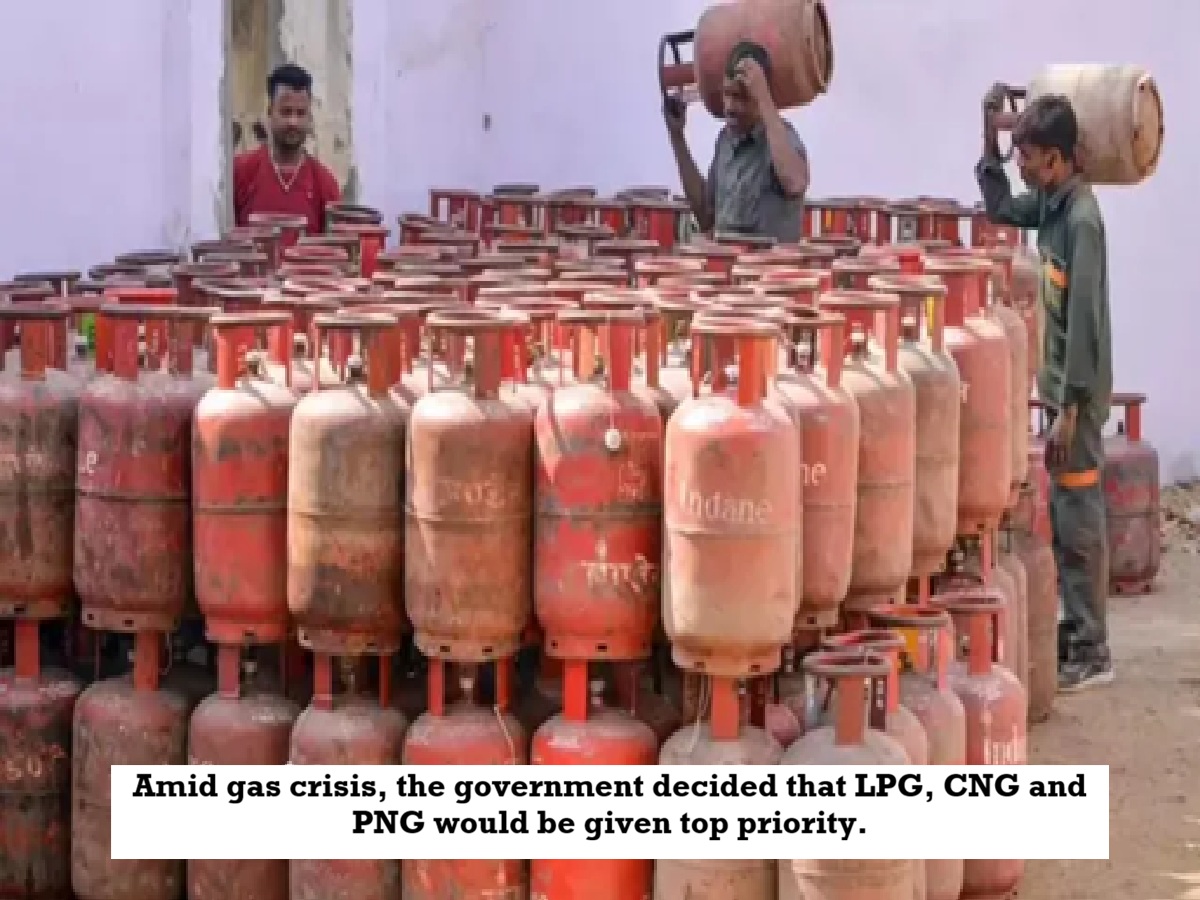
News Topical, Digital Desk : Amid pressure on energy supply due to escalating military conflict in West Asia, the central government has re-prioritized the use of natural gas in the country.
The government yesterday decided that production of domestic cooking gas (LPG), supply of CNG and piped cooking gas (PNG) will be given top priority so that there is no shortage in households and transport sector.
In this regard, the Petroleum Ministry has issued a new order invoking the Essential Commodities Act of 1955. A monitoring committee has been formed to prevent hoarding and black marketing of LPG. Disruptions in the supply of commercial gas cylinders in many cities across the country have increased the risk of hotel and restaurant closures.
Regular supply to 33 crore domestic gas connections is the first priority.
According to the new order, the share of gas supplied to non-priority sectors is being reduced and diverted to priority sectors. The government maintains that overall gas availability in the country is sufficient, but given the current global situation, it is essential to secure domestic needs. The government's claim comes amid reports of disruptions in gas supply from LPG distribution agencies in many parts of the country.
Highly placed sources in the Petroleum Ministry stated that the government's top priority is ensuring regular supplies to the country's approximately 330 million domestic gas connections. The ongoing conflict in West Asia and disruptions to tanker traffic through the Strait of Hormuz have disrupted approximately 30 percent of India's gas supply. This is why the government has restructured the gas allocation system.
According to officials, available LNG will be used first to meet the needs of LPG production, CNG, and piped cooking gas. The goal is to meet 100% of the average six-month demand in these sectors. Priority will then be given to the fertilizer industry, where at least 70% of the gas supply will be ensured. Commercial and industrial consumers will be provided with approximately 80% of their average gas consumption.
According to sources, the West Asia crisis has increased pressure on the supply of cooking gas. Therefore, gas allocations have been rescheduled and refineries have been directed to use additional gas feedstock to increase LPG production. As a result, LPG production has increased by approximately 10 percent over the past two days.
The monitoring committee will decide the priority
A monitoring committee comprising senior officials of the three state-owned oil marketing companies – Indian Oil, Hindustan Petroleum and Bharat Petroleum – has also been formed to review the demand for LPG in non-priority sectors.
This committee will assess gas demand from various industrial sectors and decide on its allocation. The government has entrusted the implementation of this new gas supply system to the state-owned company, GAIL Limited, which will control gas distribution to various sectors according to a priority list. Once the situation returns to normal, the original commercial contracts for gas supply will be reinstated.
Daily consumption of 19 crore cubic meters of gas
India's natural gas consumption is approximately 191 million cubic meters per day, of which nearly half is met by imported LNG. The West Asia crisis has increased volatility in energy markets. LPG supply disruptions have been reported from several parts of the country. LPG distribution agencies have reported supply disruptions from several parts of the country.
On the instructions of oil marketing companies, the supply of commercial LPG cylinders has already been restricted at many places. Bengaluru BJP MP Tejasvi Surya has written a letter to Union Petroleum and Natural Gas Minister Hardeep Singh Puri, requesting him to ensure LPG supply to hotels, restaurants and tourism sector also.
The hotel and restaurant industry in several states, including Tamil Nadu, Karnataka, and Maharashtra, is facing a crisis due to disruptions in the supply of commercial gas cylinders. The Petroleum Ministry says it is investigating these complaints and has directed oil companies to ensure smooth supply. It is also increasing coordination with state agencies to prevent black marketing and hoarding of cooking gas.
Read More: 'Indian Army is preparing to fight and win the next war', says former Army Chief JJ Singh
--Advertisement--