desk
desk Share
Share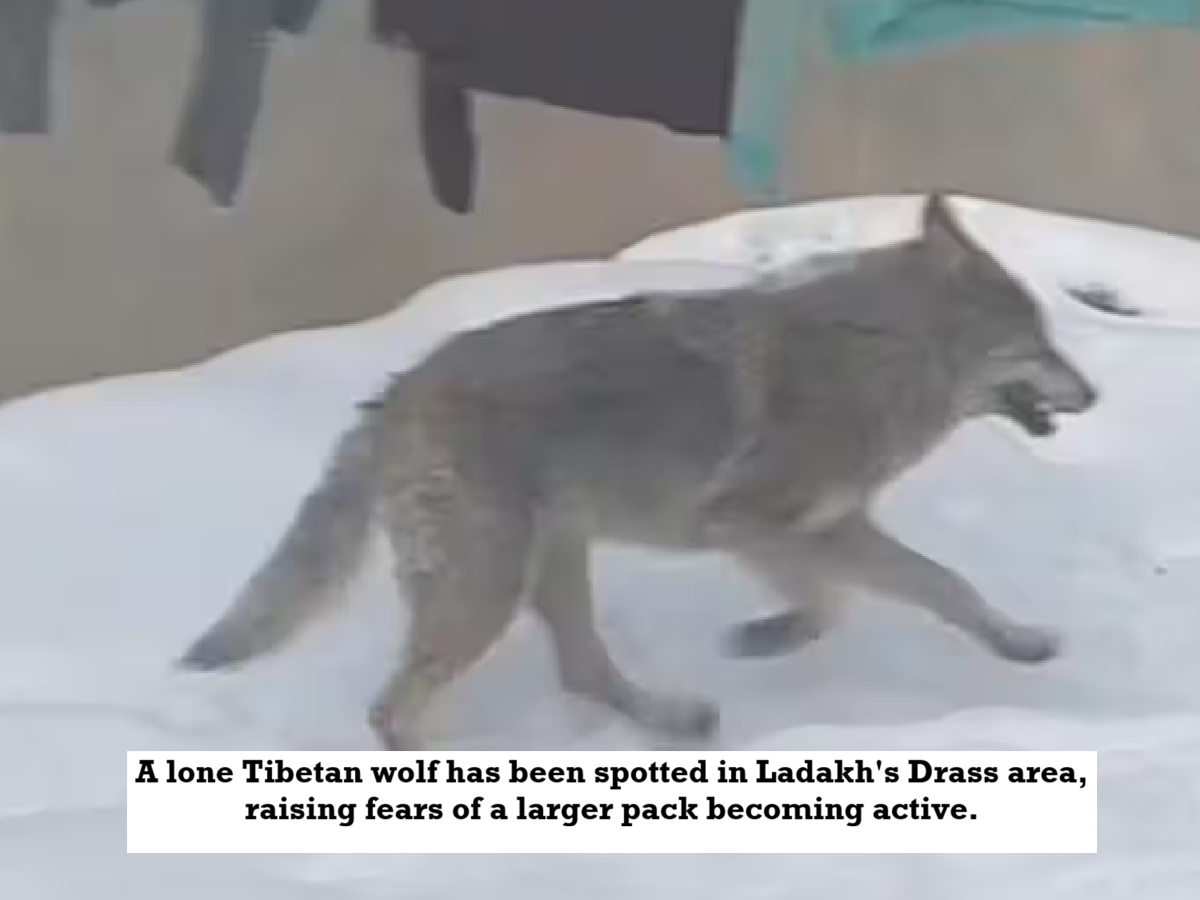
News Topical, Digital Desk : A Tibetan wolf has been spotted in the Drass area of Ladakh, raising serious concerns about safety and security among local residents. Wolves are typically pack animals, and the presence of a lone wolf has raised fears that a larger wolf pack may be active in the surrounding area.
According to local witnesses, the wolf reportedly attempted to attack children several times. However, due to the timely intervention of villagers, no one was injured. These incidents have caused widespread panic, as wolves are highly skilled predators. Such close encounters pose an immediate and serious threat to human safety.
Man captures lone wolf on camera
The lone wolf was captured on a mobile phone by a local resident, and the footage has since drawn attention to the increasing frequency of human-wildlife conflict in the region. Experts say extreme cold conditions often lead to a lack of food in the wild, forcing large predators to venture into populated areas in search of prey.
Although such behavior is more common in some carnivorous animals, wolves have traditionally avoided coming close to human settlements, making this incident particularly worrying.
What is a Tibetan wolf?
The Tibetan wolf, locally known as the shanku, is a high-altitude subspecies of the gray wolf, scientifically classified as Canis lupus chanco (also spelled Canis lupus chanku).
It is found primarily in the trans-Himalayan cold deserts of Ladakh, including the Changthang, Markha Valley, Upper Suru, Zanskar, Rumbak, and Hemis regions. These wolves inhabit alpine plateaus and cold deserts at altitudes of approximately 3,200 to 5,600 meters above sea level.
Wolves come to the valley in winter.
They migrate seasonally, descending into the valleys in winter and moving to higher slopes with their prey in summer. Tibetan wolves are generally shy and elusive, active both day and night. They are often seen in small packs, although sightings alone are also not uncommon.
Being apex predators, they play an important ecological role by controlling the numbers of herbivores such as blue sheep, Himalayan marmot, ibex, kiang (Tibetan wild ass), and sometimes livestock.
Attacks domestic animals
Due to the lack of wild prey in Ladakh's harsh environment, wolves sometimes attack domestic animals such as goats, sheep, yaks, and horses, leading to long-standing conflicts with pastoral communities. In response to recent sightings in Drass, wildlife officials have set numerous traps and intensified surveillance in affected areas.
The department appealed to the people to be cautious.
The Wildlife Conservation Department has urged residents to remain vigilant and coordinate efforts to safely capture the animal or drive it away from human settlements. The incident highlights the urgent need for improved community awareness, rapid response mechanisms, and stronger coordination between local residents and wildlife officials to ensure public safety in one of the world's coldest inhabited regions.
Read More: Drunk man lands on Kanpur metro track, causing chaos and raising questions about safety
--Advertisement--