







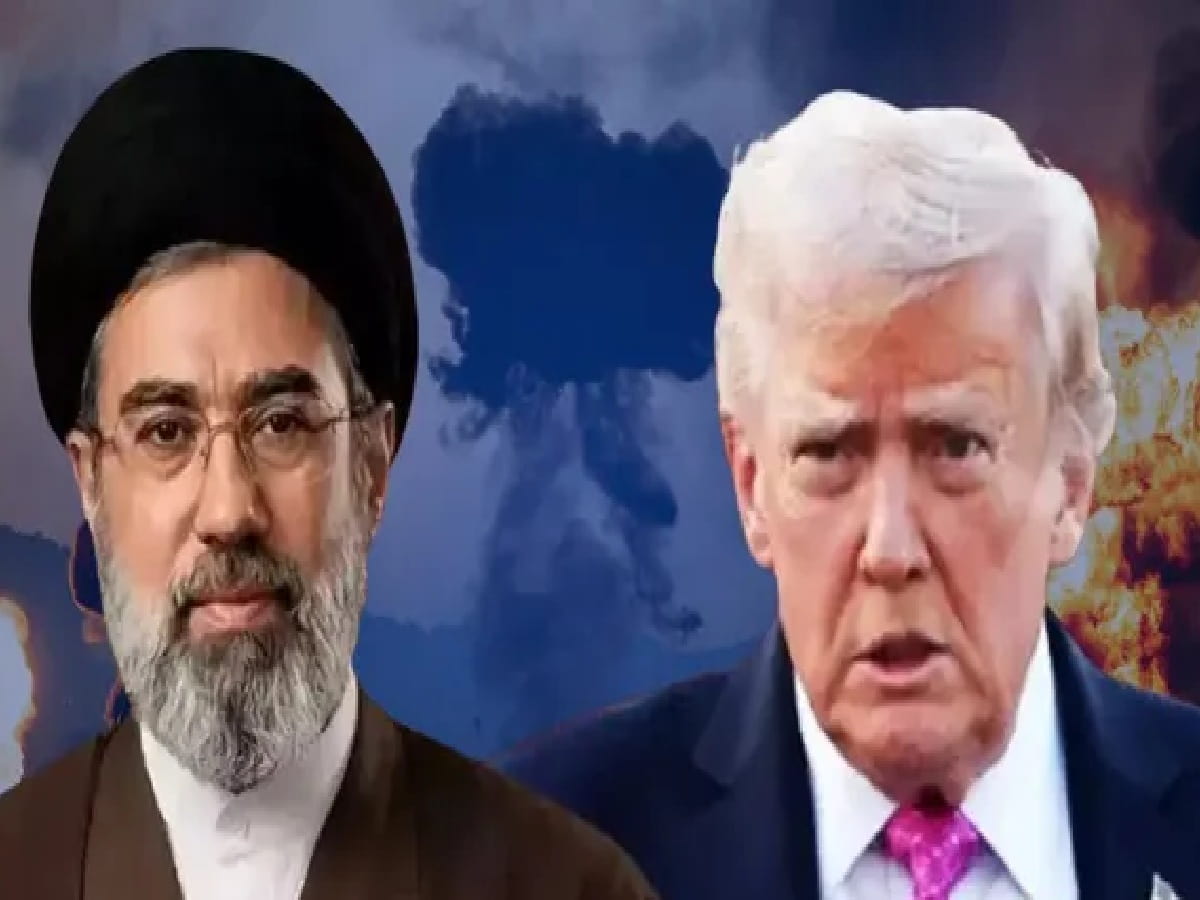
What Is Iran's 'Dirty Bomb' Plot Targeting Top US Officials in DC
United States intelligence and national security agencies have intensified protective vigilance around senior government officials in Washington, DC, following fresh intelligence assessments indicating that Iran has been developing contingency plans to target top Trump administration officials inside the American capital using a radioactive 'dirty bomb' or chemical weapons. According to reporting by CNN citing seven US officials familiar with the intelligence, the intercepted information outlines specific potential locations and targets in Washington, prompting heightened protective adjustments and interagency contingency meetings over the past week. At the same time, intelligence officials emphasized that the findings reflect Tehran mapping out retaliatory options—rather than a confirmed decision or an imminent operational launch—and that US agencies remain divided over whether Iran possesses the personnel on the ground inside the United States to execute such a plot. Responding to the report, White House spokesperson Lauren Bis stated that while the administration actively monitors all potential threats, there are currently "no credible threats to the homeland". On the other side, Iran's mission to the United Nations dismissed the allegations regarding chemical weapons as "false and fabricated," while declining to directly address the radioactive dirty bomb intelligence. Alongside domestic homeland security reviews, two US officials told CNN that intelligence agencies are also tracking indications that Tehran could consider chemical weapons against American military personnel stationed in the Middle East, prompting checks on protective gear and response readiness across regional bases. The revelations surface at a fragile juncture in the months-long US–Iran conflict—with diplomatic talks stalled over the US naval blockade and shipping disruptions in the Strait of Hormuz, even as US President Donald Trump recently suggested the war could end soon. For citizens, foreign policy observers, security analysts, and readers across Washington, New York, London, New Delhi, Lucknow, Mumbai, Bengaluru, Dubai, and Riyadh, the intelligence disclosures underscore how stalled diplomacy in the Persian Gulf carries severe asymmetrical security risks far beyond the Middle East.
Inside the US Intelligence Assessment on Washington and Middle East Threats
According to officials briefed on the intelligence, analysts have intercepted Iranian chatter claiming that bomb-making materials—potentially radiological or chemical components—may already be stashed inside the United States. While intelligence agencies remain split over the credibility of those claims, national security officials acknowledged that porous border security over the past decade means smuggling components or recruiting operatives already residing inside the country remains a plausible scenario.
| Security & Diplomatic Dimension | Key Findings & Official Statements |
| Core Intelligence Warning (CNN Report) | Seven US officials confirmed intelligence showing Iran drew up specific plans—identifying targets and locations in Washington, DC—for a potential dirty bomb or chemical attack on senior Trump administration officials |
| Operational Readiness & Debate | Officials view the plotting as contingency option-building rather than an imminent strike, and are divided over whether Iran has trained operatives inside the US |
| White House & Pentagon Posture | White House spokesperson Lauren Bis said there are "no credible threats to the homeland"; Pentagon referred queries to ODNI while agencies reviewed protective gear for US troops in the Middle East |
| Iran's Official Response | Iran's UN Mission rejected the chemical weapons claims as "false and fabricated," without explicitly addressing the dirty bomb intelligence |
| Geopolitical Backdrop | Stalled negotiations over lifting the US blockade and reopening the Strait of Hormuz, alongside recent drone strikes in Bahrain and tanker mine incidents in the Gulf |
Officials noted that while Iran's physical capability to strike inside US territory may not have expanded dramatically, its strategic calculus may be shifting under sustained military pressure and economic isolation. Recently, heightened security concerns even prompted senior economic officials—including Treasury Secretary Scott Bessent—to relocate to military housing facilities for added protection.
What Is a 'Dirty Bomb' and How Does It Differ From a Nuclear Weapon
A 'dirty bomb', formally known as a radiological dispersal device (RDD), combines conventional explosives—such as dynamite—with radioactive material in powder or pellet form. Unlike a nuclear bomb, a dirty bomb does not trigger a nuclear fission chain reaction and does not produce the massive blast wave or mushroom cloud associated with atomic weapons.
Instead, as national security sources explained, a dirty bomb functions primarily as a weapon of terror and disruption. When the conventional explosive detonates, it disperses radioactive dust and smoke across surrounding streets and buildings—contaminating property, causing acute radiation sickness or long-term health hazards for exposed individuals, forcing evacuations, and potentially rendering targeted urban zones uninhabitable until costly decontamination is completed.
Strait of Hormuz Standoff and Crucial Weeks Ahead for US–Iran Diplomacy
These intelligence warnings coincide with renewed friction around the Strait of Hormuz, where the US Navy has been enforcing a blockade and escorting oil tankers while Iran's Islamic Revolutionary Guard Corps (IRGC) has restricted unpermitted transit and launched drone strikes on regional targets. Although Washington and Tehran remain deadlocked over conditions to lift the blockade and reopen the vital energy chokepoint, regional diplomatic sources told CNN that the coming weeks will prove decisive—warning that hardline factions opposed to a negotiated settlement could attempt to sabotage diplomacy just as both capitals weigh pathways toward de-escalation.




