







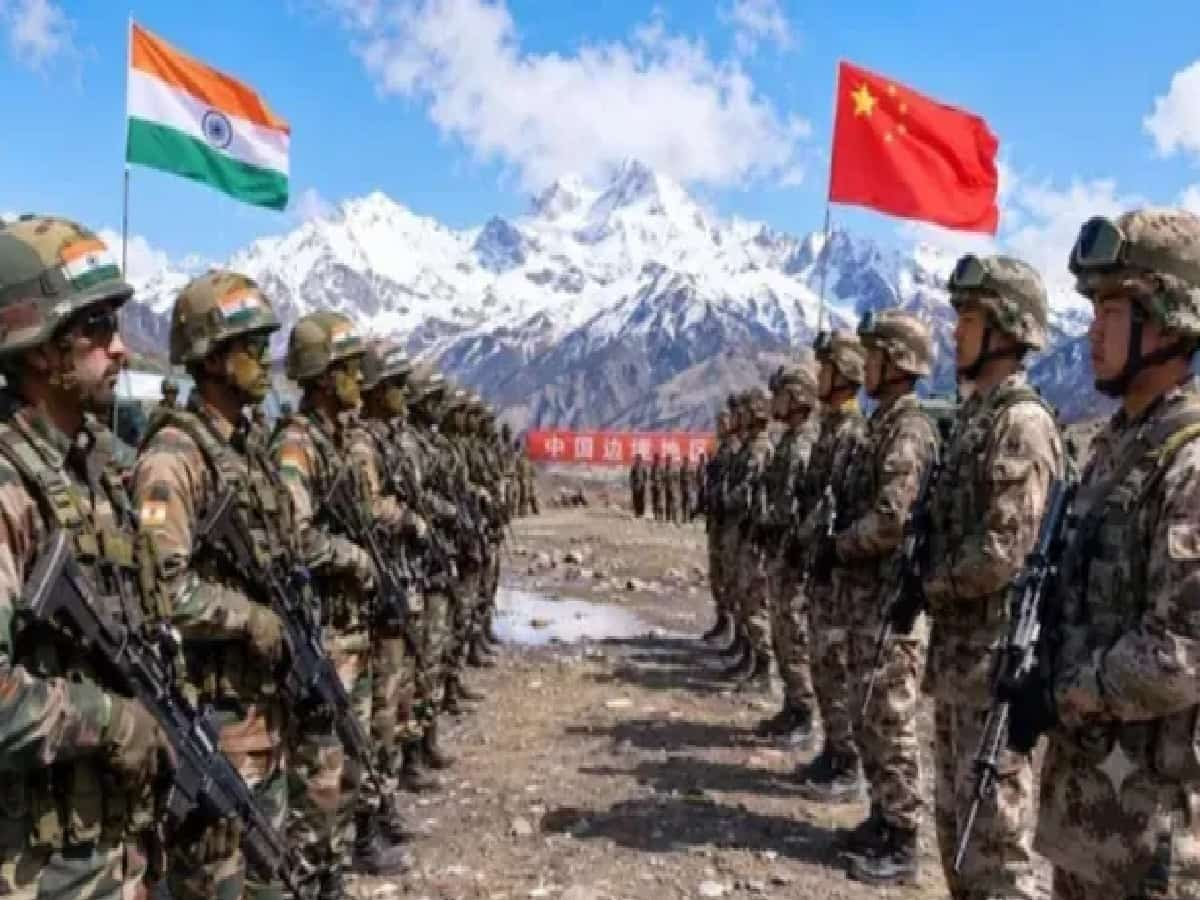
'Transgressions Happen on Both Sides, LAC Normal': Arunachal CM Khandu
Arunachal Pradesh Chief Minister Pema Khandu has stated that periodic border transgressions occur from both sides along the India-China frontier owing to differing perceptions of the undemarcated boundary, while firmly asserting that the overall situation along the Line of Actual Control (LAC) remains normal and that the Indian Army is effectively safeguarding every inch of Indian territory. Interacting with journalists in Itanagar on the sidelines of National Press Day on Monday, November 16, 2026, the Chief Minister addressed renewed public questions regarding recent claims of Chinese People's Liberation Army (PLA) patrols in the remote Taksing sector of Upper Subansiri district as well as broader border management along Arunachal Pradesh's approximately 1,200-kilometer-long frontier with Chinese-controlled Tibet. Explaining that the decades-old boundary dispute stems directly from Beijing's refusal to recognize the historic McMahon Line agreed upon in 1914, Khandu noted that patrols from both countries occasionally cross overlapping patrol zones when asserting their respective perceptions, though established diplomatic and military protocols work to prevent escalation. Alongside reassuring citizens on military preparedness, the Chief Minister emphasized that border residents act as India's first line of strength, calling for accelerated road connectivity, telecommunications, and livelihood infrastructure in remote frontier settlements so local communities continue to thrive along the border. Meanwhile, local tribal bodies and opposition voices in Arunachal Pradesh have continued to press for transparent official verification of ground developments in Upper Subansiri. For citizens, strategic affairs observers, and readers across Itanagar, Tawang, Daporijo, Pasighat, Guwahati, Dispur, New Delhi, Lucknow, Kolkata, and Mumbai, CM Khandu's remarks offer clear insight into ground realities along India's sensitive eastern Himalayan frontier.
Why Transgressions Occur Along the 1,200-Km Arunachal Frontier: The McMahon Line Context
Addressing reporters in Itanagar on November 16, Chief Minister Pema Khandu placed recent border headlines into historical and operational perspective. Pointing out that Arunachal Pradesh shares roughly 1,200 kilometers of rugged Himalayan border with the Tibet Autonomous Region, Khandu noted that the boundary remains unresolved because China refuses to accept the 1914 McMahon Line, which India recognizes as the legal boundary.
Because the Line of Actual Control is not physically demarcated on the ground across high-altitude ridges and valleys, patrolling parties from both the Indian Army and the Chinese PLA periodically traverse areas where territorial perceptions overlap. Khandu stressed that such patrol movements—technically termed transgressions due to differing perceptions rather than permanent territorial occupation—have occurred over decades, and emphasized that preventing escalation while maintaining firm defensive vigilance remains paramount.
Taksing Sector Allegations, Army Reassurance, and Frontier Infrastructure Push
Questions surrounding border security in Upper Subansiri gained heightened attention after the Nah Welfare Society, a local community organization, submitted a memorandum to district authorities in late June 2026 alleging increased PLA movement and infrastructure activity near traditional hunting and grazing grounds in the Taksing area.
| Key Aspect of Arunachal Border Situation | Official Position & Ground Developments |
| Length & Legal Status of Frontier | Arunachal Pradesh shares an ~1,200-km border with Chinese-controlled Tibet; boundary dispute persists because China rejects the 1914 McMahon Line |
| CM Pema Khandu's Assessment (Nov 16, 2026) | Transgressions happen from both sides due to differing perceptions; LAC situation is normal and Indian Army is guarding territory effectively |
| Upper Subansiri / Taksing Reports | Local Nah Welfare Society alleged heightened PLA presence near Taksing in June; Indian Army rejected encroachment claims as baseless |
| Broader Border Coordination & Patrols | Following earlier patrol face-offs noted by ITBP and MEA, Indian troops maintain robust deployment and border-personnel protocols to prevent escalation |
| Frontier Village Development Priority | CM Khandu stressed upgrading roads, connectivity, and living conditions in border villages so residents remain strong pillars of national security |
The Indian Army subsequently rejected claims of fresh Chinese encroachment as baseless, while the Ministry of External Affairs and Indo-Tibetan Border Police (ITBP) reiterated that Indian forces respond firmly whenever Chinese patrols deviate from established patrolling patterns. Following consultations with Upper Subansiri representatives, including the Mra Welfare Society, Khandu underscored that strengthening all-weather roads, electricity, healthcare, and telecom connectivity in frontier villages is critical so border residents remain anchored on their ancestral land.
Balancing Security Vigilance With Border Development and Tourism
Concluding his remarks on National Press Day, CM Pema Khandu expressed full confidence in the professionalism and preparedness of the Indian Armed Forces and ITBP deployed along the eastern sector. By pairing steadfast military vigilance with rapid infrastructure expansion under central and state border-area development initiatives, Arunachal Pradesh aims to ensure both enduring peace along the LAC and prosperity for its frontier communities.




