







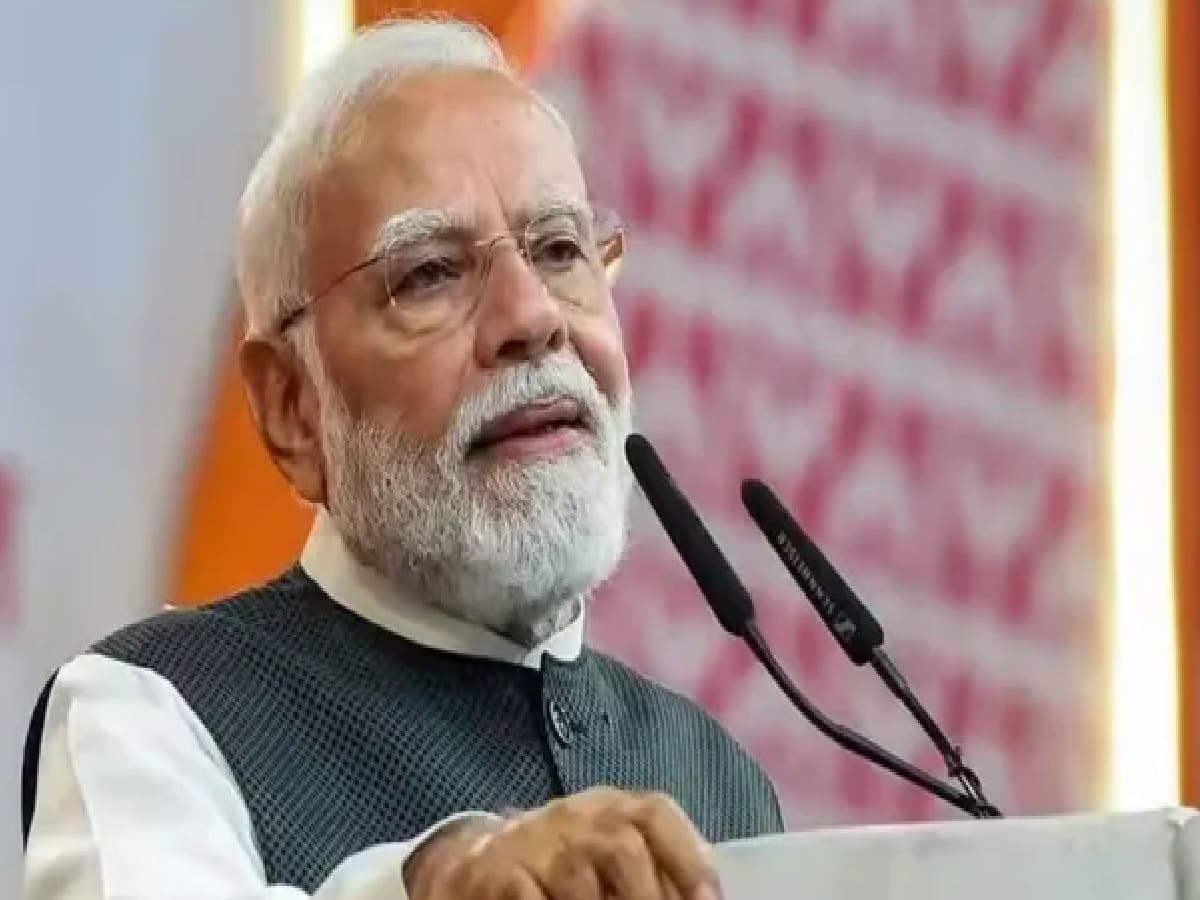
ASEAN Ties at Heart of India's 'Act East' Policy: PM Modi in Manila
Prime Minister Narendra Modi is leading India's high-level diplomatic engagement in Manila, the capital of the Philippines, on Tuesday, November 17, 2026, participating in the 23rd ASEAN-India Summit, the 21st East Asia Summit, and a pivotal Quad Leaders' Summit on the sidelines of the regional gatherings. Arriving in the Philippine capital on Monday at the invitation of President Ferdinand Marcos Jr.—whose country holds the 2026 ASEAN Chair—Prime Minister Modi emphasized in his departure statement that ties with the Association of Southeast Asian Nations (ASEAN) lie at the very heart of India's 'Act East' policy and occupy a central place in New Delhi's broader 'Ocean' (MAHASAGAR) vision for the Indo-Pacific. Noting that India's relationship with Southeast Asia is anchored in centuries-old civilizational exchanges that today encompass trade, physical and digital connectivity, maritime security, emerging technologies, and vibrant people-to-people links, PM Modi stated that he looks forward to working with fellow leaders to accelerate the ASEAN-India Comprehensive Strategic Partnership under this year's summit theme, "Navigating the Future". Following the ASEAN-India and East Asia Summit sessions on Tuesday, the Prime Minister will join US President Donald Trump, Japanese Prime Minister Sanae Takaichi, and Australian Prime Minister Anthony Albanese for the first in-person Quad Leaders' Summit in more than two years—and the first ever hosted in a non-Quad nation. Convening just 48 hours before President Trump travels to Shenzhen, China, on November 19 for an unprecedented trilateral summit with Russian President Vladimir Putin and Chinese President Xi Jinping on the sidelines of the APEC Economic Leaders' Meeting, the Manila Quad conclave is widely viewed by foreign policy analysts as an effort to reassure Indo-Pacific partners of the grouping's enduring strategic relevance. Earlier on Tuesday morning, PM Modi also visited Manila's historic Gurudwara Khalsa Diwan—established in 1901 and recognized as the oldest Sikh shrine in the Philippines—to offer prayers and lay the foundation stone for its redevelopment alongside members of the Indian community. For citizens, strategic affairs observers, business leaders, and students across New Delhi, Lucknow, Kanpur, Varanasi, Prayagraj, Mumbai, Bengaluru, Chennai, Kolkata, and Hyderabad, PM Modi's Manila itinerary highlights India's active diplomatic balancing across Southeast Asia and the wider Indo-Pacific.
PM Modi's Act East Vision, Gala Dinner, and Gurudwara Khalsa Diwan Visit
Upon arriving in Manila on Monday, Prime Minister Modi was welcomed at the airport by Philippine Information and Communications Technology Secretary Robert Joseph Montes de Claro before attending an official gala dinner hosted by President Ferdinand Marcos Jr. for visiting heads of state and government. Embracing local cultural tradition, PM Modi wore the Barong Tagalog, the intricately embroidered formal national attire for Filipino men, during the evening banquet featuring cultural performances and regional cuisine.
In his pre-departure remarks, PM Modi stressed that the East Asia Summit serves as an essential leader-led forum for candid dialogue on regional and global challenges, expressing confidence that his Manila engagements will inject fresh momentum into India's partnership with ASEAN and reinforce collective commitment to a peaceful, prosperous, and resilient Indo-Pacific. Alongside multilateral meetings and bilateral talks with President Marcos Jr. and other world leaders, PM Modi's Tuesday morning visit to Gurudwara Khalsa Diwan—celebrated by the Ministry of External Affairs as a vital bridge between the Indian-Sikh diaspora and Philippine society—underscored deep cultural and community bonds.
Why the Manila Quad Summit Matters Ahead of Trump's Shenzhen Meeting With Putin and Xi
Tuesday evening's Quad Leaders' Summit carries substantial diplomatic significance for three reasons: it ends a two-year gap since the previous leaders' meeting in Wilmington, Delaware, in September 2024; it represents the first Quad summit of President Donald Trump's second term (after the 2025 summit slated for India was deferred); and it marks the first time Quad leaders are convening in a non-Quad host nation.
| Diplomatic Forum / Event in Manila | Date & Chair / Host | Participating Leaders & Core Agenda |
| 23rd ASEAN-India Summit | Tuesday, Nov 17, 2026 (Chaired by Philippines President Ferdinand Marcos Jr.) | PM Narendra Modi & leaders of 11 ASEAN member states; trade review (AITIGA), maritime cooperation, connectivity & resilience under theme "Navigating the Future" |
| 21st East Asia Summit (EAS) | Tuesday, Nov 17, 2026 (ASEAN-led forum in Manila) | 11 ASEAN members + 8 dialogue partners (India, US, China, Japan, South Korea, Australia, New Zealand, Russia); Indo-Pacific peace, regional stability & Myanmar |
| Quad Leaders' Summit | Tuesday, Nov 17, 2026 in Manila (First in a non-Quad country) | PM Narendra Modi, US President Donald Trump, Japanese PM Sanae Takaichi, Australian PM Anthony Albanese; maritime domain awareness, free & open sea lanes, critical minerals, and supply chain resilience |
| Upcoming Shenzhen Trilateral Summit | Thursday, Nov 19, 2026 in Shenzhen, China (APEC sidelines) | US President Donald Trump, Russian President Vladimir Putin, Chinese President Xi Jinping; Manila Quad meet reassures Indo-Pacific partners ahead of Shenzhen talks |
With President Trump scheduled to travel from Manila to Shenzhen, China, for his landmark November 19 trilateral summit with Russian President Vladimir Putin and Chinese President Xi Jinping—where global conflicts, nuclear arms reduction following the expiry of New START, and strategic stability are set to feature—diplomatic observers note that holding the Quad summit first in Manila signals Washington's intent to reassure India, Japan, and Australia that the Quad remains a cornerstone of US Indo-Pacific strategy. Discussions among Modi, Trump, Takaichi, and Albanese are expected to focus on maritime security in the Indo-Pacific, free and open sea lanes, critical mineral supply chains, and advancing the September 2024 Delaware Declaration.
Understanding ASEAN's 11 Members and the East Asia Summit Architecture
Established in 1967, ASEAN has grown into one of the Indo-Pacific's most influential regional groupings, comprising 11 member states: Brunei, Cambodia, Indonesia, Laos, Malaysia, Myanmar, the Philippines, Singapore, Thailand, Timor-Leste, and Vietnam, alongside dialogue partners including India, the United States, China, Japan, and Australia. Founded in 2005, the East Asia Summit (EAS) brings together all 11 ASEAN countries with eight key Indo-Pacific partners—India, China, Japan, South Korea, Australia, New Zealand, the United States, and Russia—serving as the premier leader-led platform for strategic dialogue on security, economic integration, and regional cooperation.




