







US Strikes Iran Air Defense Near Hormuz Amid Peace Push
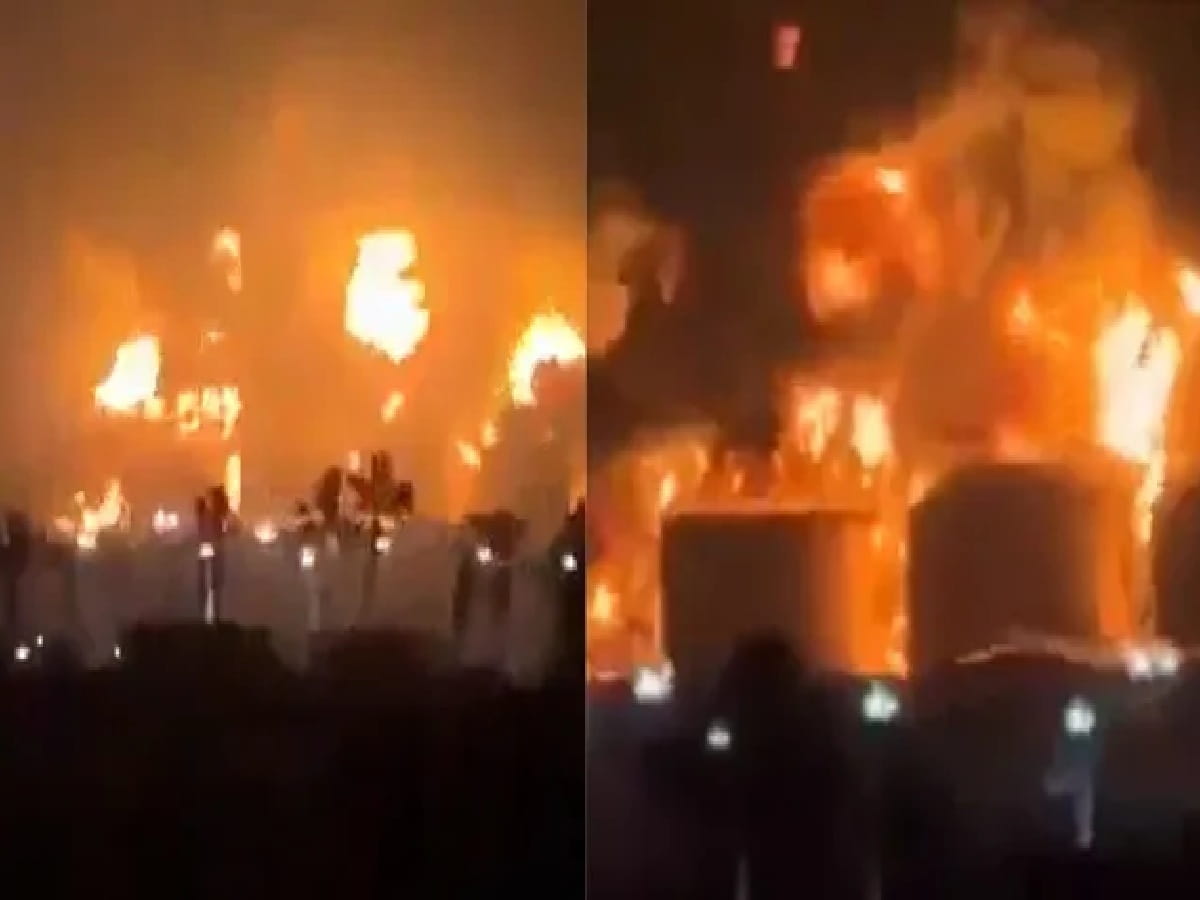
Tensions across the Persian Gulf escalated once again on Friday as the United States military carried out fresh, precision strikes against an Iranian air defense installation situated adjacent to the strategically vital Strait of Hormuz. United States President Donald Trump confirmed the military operation shortly after detonations were reported in the region, characterizing the mission as an "extremely minor" tactical engagement designed to eliminate an active threat to international aviation and maritime patrols. Simultaneously, Iranian state media acknowledged multiple explosions rocking the Souza district on Qeshm Island, an island outpost that commands direct visual and radar surveillance over the narrow maritime corridor through which a significant portion of the world's petroleum flows. The kinetic exchange arrived at an intensely sensitive juncture, unfolding against the backdrop of domestic political turbulence in Washington following recent midterm elections, an unprecedented multi-million-dollar bounty program launched by US Central Command, and a high-stakes diplomatic initiative led by Qatar to negotiate an emergency bridge deal between Washington and Tehran.
Precision Strike on Qeshm Island: Tactical Target in the Hormuz Chokepoint
The operation was executed with rapid precision in the early hours of Friday morning, targeting localized anti-aircraft equipment that Iranian forces had positioned along the southern shoreline of Qeshm Island. According to defense officials in Washington, surveillance assets had detected the deployment of a mobile surface-to-air missile radar unit capable of tracking coalition aircraft operating within international airspace over the Gulf of Oman and the Strait of Hormuz. Acting under standing defensive authorities, American air assets launched standoff munitions that neutralized the battery within minutes of authorization, preventing the establishment of an expanded anti-access perimeter along the coastline.
Inside Iran, state-affiliated news outlets corroborated the occurrence of twin explosions in the Souza municipality, located on the southern flank of Qeshm Island. While Iranian military authorities initially downplayed the physical destruction, regional defense analysts underscored the geographic sensitivity of the target. Qeshm Island serves as a primary forward operating garrison for the Islamic Revolutionary Guard Corps Navy (IRGCN), functioning as a fortified staging ground for coastal missile batteries, fast-attack missile craft, and advanced radar tracking systems. By targeting military hardware on the island, the Pentagon delivered a pointed operational message: the United States retains the capability and intent to strike Iranian coastal installations whenever they pose an immediate risk to freedom of navigation or allied assets in the waterway.
Domestic Fallout and Strategy: Trump's Dual Path of Threats and Diplomacy
The military strike comes at a politically volatile moment for the Trump administration, occurring on the heels of notable electoral setbacks for the Republican Party in the recent US midterm elections. Post-election polling and political analyses across the United States pointed to widespread voter fatigue over persistent macroeconomic pressures, chief among them the sharp inflation driven by energy spikes and elevated pump prices resulting from prolonged geopolitical clashes in the Middle East. With domestic voters signaling intense frustration over foreign military entanglements that disrupt global oil flows, the White House finds itself navigating an intricate political tightrope.
In the wake of the electoral outcome, President Trump has adopted a visibly dual-track posture. On one hand, the administration has sustained fiery public rhetoric, reiterating that any broader Iranian aggression will be met with devastating retaliation against critical infrastructure. On the other hand, the President has publicly expressed optimism for a swift diplomatic resolution, acknowledging that backdoor channels are actively communicating with Tehran. The limited nature of Friday’s airstrike—deliberately confined to a single, isolated air defense installation rather than major command hubs or energy facilities—reflects this calculated calibration. By neutralizing an immediate tactical asset without triggering mass casualties, Washington seeks to project unwavering military resolve while keeping the door ajar for negotiated de-escalation.
The $20M Bounty: CENTCOM's Push to Compromise Iran's Nuclear Network
Parallel to conventional military actions, the United States has accelerated unconventional intelligence-gathering efforts designed to penetrate Iran's nuclear establishment. Late Friday night, US Central Command (CENTCOM) published an unprecedented announcement across its official communication channels, offering financial rewards of up to $20 million alongside permanent international resettlement and identity protection for credible whistleblowers. The incentive program specifically solicits actionable, confidential intelligence concerning the covert locations, logistics networks, underground research facilities, and scientific personnel driving Iran's uranium enrichment infrastructure.
The timing of CENTCOM’s high-value bounty initiative underscores Washington’s determination to increase psychological and operational pressure on Tehran’s technical apparatus. By incentivizing defections and leaks from within the Iranian defense-scientific complex, American intelligence seeks to disrupt nuclear advancements from within, complicating Iran's ability to reconstitute damaged installations or construct clandestine centrifuge cascades. Regional intelligence observers noted that the public nature of the bounty announcement serves as a strategic warning to Iranian scientists and military administrators, fostering institutional paranoia within Tehran's security corridors even as informal diplomatic negotiations take shape.
The Qatari Bridge Deal: Phased Concessions and Maritime Reopening
While military and intelligence measures dominated the headlines, intensive diplomatic maneuvering was underway behind closed doors. Qatar, resuming its established role as an indispensable regional intermediary, formally presented a comprehensive compromise proposal to Tehran aimed at defusing the standoff over Iran’s nuclear ambitions and regional hostilities. The centerpiece of this diplomatic framework is an interim, two-day "bridge deal" designed to generate baseline mutual trust before formal, long-term negotiations can formally commence.
Under the initial phase of the draft agreement drafted by Qatari negotiators, the United States would agree to lift its maritime blockade on key Iranian commercial ports and authorize the release of billions of dollars in frozen Iranian foreign exchange reserves currently held in escrow accounts. In direct reciprocity, Iran would commit to granting International Atomic Energy Agency (IAEA) inspectors unimpeded access to evaluate and monitor sensitive nuclear and defense installations that were previously targeted in American and Israeli air strikes. Following this reciprocal verification step, the proposal envisions Iran temporarily reopening the Strait of Hormuz to commercial maritime traffic the subsequent day, operating under a framework brokered in coordination with the Sultanate of Oman. This provisional maritime protocol would remain in effect until a comprehensive multilateral agreement is ratified with Gulf neighbors, paving the way for structured negotiations on uranium stockpiles and long-term nuclear limits.
Diplomatic Balancing Act: Regional Powers Scramble to Prevent Escalation
Despite Qatar's proactive mediation, the pathway to an agreement remains steep, as Tehran maintains a rigid set of preconditions before agreeing to direct discussions with American counterparts. Iranian officials have demanded that Washington permanently dismantle comprehensive economic sanctions, provide formal reparations for war damages sustained during recent strikes, and enforce an immediate cessation of allied military operations across the Middle East, specifically demanding an end to Israeli operations targeting Hezbollah infrastructure in Lebanon. The White House, while acknowledging ongoing indirect contacts, has maintained that it will not accept unilateral preconditions that compromise allied security architecture.
In an effort to prevent an open military rupture, regional capitals have engaged in rapid diplomatic dialogue. US Defense Secretary Pete Hegseth held an extensive telephone conference with Qatari Defense Minister Sheikh Saud bin Abdulrahman Al Thani to review defensive postures and coordination mechanisms, following direct discussions between President Trump and the Emir of Qatar. Concurrently, Iranian Foreign Minister Abbas Araghchi conducted intensive rounds of consultations with his counterparts across the Arab world, engaging the foreign ministers of Iraq, Tunisia, and Egypt. During these discussions, Egyptian Foreign Minister Badr Abdelati issued a clear appeal to all stakeholders, urging maximum restraint, strategic flexibility, and pragmatism to avert a regional confrontation that could destabilize global energy markets. As naval forces remain on high alert along the waters of Hormuz, the coming days will determine whether quiet diplomacy can successfully bridge the deep chasm between military deterrence and regional peace.




