







US Loses Measles-Free Status After 26 Years; Over 5,400 Cases in 2026
In a sobering setback for global public health, the United States has officially lost its measles elimination status after 26 years, reversing a landmark medical achievement first earned in 2000. According to findings reported by The Wall Street Journal and CNN on Friday, November 13, 2026, an independent commission of experts reporting to the director of the Pan American Health Organization (PAHO) concluded that the United States no longer qualifies as a country where measles transmission has been eliminated. The determination follows an alarming surge of more than 5,400 confirmed measles cases across the United States in 2026—marking the country’s highest annual infection tally since 1991—and at least 10 measles-associated deaths recorded across states including Pennsylvania, Wisconsin, and New York. From major metropolitan hubs such as New York City, Houston, and Philadelphia to rapidly expanding outbreak clusters across Utah, Pennsylvania, South Carolina, Wisconsin, and Texas, public health officials are now confronting the return of endemic measles transmission.
How PAHO Experts Verified Endemic Transmission Using Genomic Data
Under international public health guidelines enforced by PAHO and the World Health Organization (WHO), a country loses its measles elimination designation when the same genetic strain of the measles virus circulates continuously from person to person within its borders for 12 months or longer. To establish whether outbreaks stem from isolated international travel or sustained domestic spread, virologists examine the exact genetic sequences of virus samples collected from infected patients, tracking minor mutations that occur each time the pathogen replicates.
Crucial scientific proof emerged from Utah, where more than 600 measles cases were recorded between June 2025 and June 2026—stretching from the southwestern part of the state into central Utah. In an August preprint study, scientists at the Utah Public Health Laboratory demonstrated that a single strain of measles had circulated uninterrupted in the state for over a year, accounting for more than 95 percent of all reported local cases. Dr. Angela Rasmussen, a virologist at the University of Saskatchewan in Canada and editor-in-chief of the scientific journal Vaccine, noted that the genomic sequencing evidence from Utah alone was sufficient to prove sustained endemic transmission. Alongside Utah, large outbreaks in Pennsylvania (exceeding 1,200 cases), South Carolina, Wisconsin, and New York propelled the national total past 5,400 cases—more than double the 2,289 infections recorded in 2025.
Declining MMR Vaccination Rates and Policy Debates Fuel the Surge
Epidemiologists and pediatric infectious disease specialists point directly to falling childhood immunization rates and growing vaccine skepticism as the primary drivers behind the resurgence. To maintain community herd immunity and prevent imported cases from sparking wider outbreaks, health authorities emphasize that at least 95 percent of the population must be vaccinated. However, national childhood vaccination coverage in the United States has slipped to roughly 92 percent—with substantially lower pockets in several communities—amid rising nonmedical exemptions and public questioning of vaccine safety and schedules by key figures in the Trump administration.
| Measles Outbreak & Public Health Metric | Verified Key Facts & Figures |
| Previous Elimination Milestone | Declared eliminated in the U.S. in 2000 (Lost after 26 years in Nov 2026) |
| Reviewing Authority | Independent expert commission reporting to the Pan American Health Organization (PAHO) |
| 2026 Confirmed U.S. Cases | More than 5,400 cases (Highest annual total in 35 years, since 1991) |
| 2026 Reported Fatalities | At least 10 deaths nationwide (including recent fatalities in Pennsylvania & Wisconsin) |
| Key Outbreak States | Utah (600+ cases in 12 months; single strain >95%), Pennsylvania, South Carolina, Wisconsin, New York |
| MMR Vaccine Efficacy | Two doses provide 97% protection against measles infection |
Reacting strongly to the PAHO commission’s conclusion, Dr. Peter Hotez, co-director of the Center for Vaccine Development at Texas Children’s Hospital in Houston, called the loss of America’s measles-free status "deeply shameful" and "incredibly embarrassing," warning that because vaccination rates have dropped across wide regions, returning to normal will not happen quickly. Public health historians also underscored the irony of the setback for a nation that played a leading global role in eradicating smallpox—still the only human infectious disease ever wiped off the planet.
Why Measles Spreads So Rapidly and How the MMR Vaccine Protects
Medical experts stress that measles ranks among the most contagious viruses known to science. Unlike respiratory illnesses that require prolonged close contact, the measles virus is airborne and can remain suspended in indoor air or linger on surfaces for up to two hours after an infected person leaves a room. In an unvaccinated group, one infected individual typically transmits the virus to 12 to 18 other people, leading to rapid, exponential spread across schools, clinics, and neighborhoods.
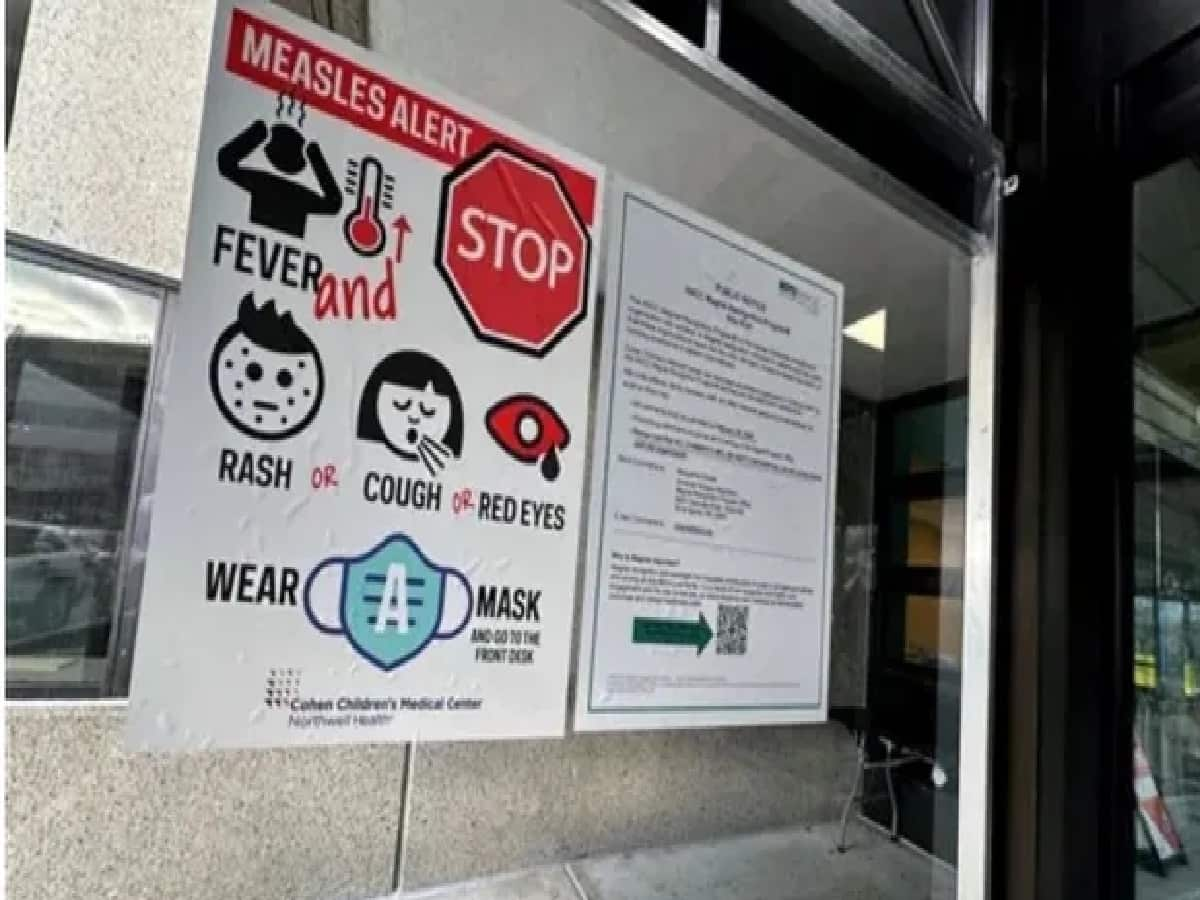
Despite its extreme contagiousness, measles remains entirely preventable through safe, widely available immunization. According to the Centers for Disease Control and Prevention (CDC), two doses of the Measles-Mumps-Rubella (MMR) vaccine reduce the risk of contracting measles by 97 percent, while a single dose offers roughly 93 percent protection. As New York and other states deploy public awareness posters and emergency vaccination clinics, infectious disease specialists emphasize that rebuilding routine MMR coverage back above the 95 percent threshold is the only proven path for the United States to halt ongoing outbreaks and eventually reclaim its measles-free standing.




