







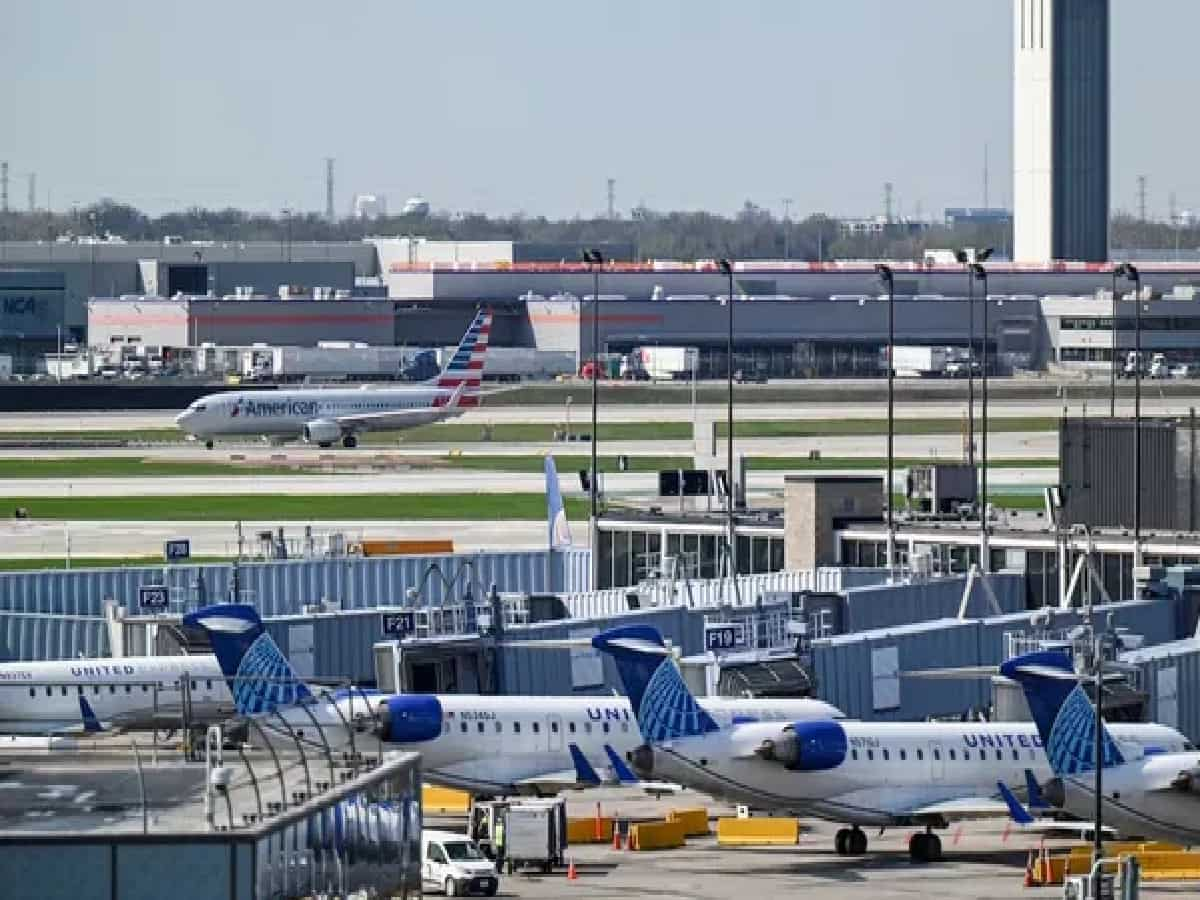
US Airline Crisis Ends: FAA Lifts Nationwide Ground Stop After 4 Hours
A four-hour aviation freeze that brought commercial takeoffs across the United States to a sudden halt has officially come to an end after the Federal Aviation Administration (FAA) lifted its extraordinary nationwide ground stop. Imposed on Friday afternoon following severe telecommunications and radar communication failures across 22 regional Air Route Traffic Control Centers, the precautionary restriction grounded departures at every U.S. airport and sent shockwaves through global flight corridors from New York JFK, Chicago O'Hare, Atlanta, Washington Dulles, and Los Angeles to international hubs including Toronto Pearson, London Heathrow, New Delhi, and Mumbai. The FAA confirmed shortly after 8:15–8:30 PM Eastern Time that its air traffic control systems had been thoroughly tested and stabilized, allowing aircraft departures to resume. Even so, aviation officials and major airlines cautioned that while the immediate crisis has subsided, thousands of stranded travelers will continue experiencing residual delays and cancellations through Saturday, November 14, 2026, as carriers work to untangle displaced fleets and crew schedules.
How the Four-Hour FAA Ground Stop Unfolded Across US Airports
The disruption began mid-afternoon on Friday when radar frequencies and voice communication links experienced sudden instability across regional air route traffic control centers—with initial router malfunctions traced to the Chicago airspace before cascading nationwide. Citing "extraordinary circumstances and reasons of safety," the FAA issued a mandatory national ground stop, prohibiting all parked aircraft at U.S. airports from taking off while permitting planes already airborne to continue safely to their destinations under controller guidance.
U.S. Transportation Secretary Sean Duffy notified the public on social media that FAA technicians were actively investigating the communications failure affecting en-route traffic control facilities. Under FAA safety protocols, international flights were managed on a case-by-case basis, while emergency medical evacuations and critical cargo missions were prioritized. Roughly four hours after halting departures, the FAA announced that system stability had been verified and reopened American airspace, though Duffy emphasized that restoring normal airline timetables would be a gradual process dependent on crew and aircraft availability.
Thousands of Flights Delayed or Canceled; Toronto and Global Hubs Affected
According to flight-tracking platform FlightAware, the four-hour shutdown caused massive operational fallout—initially pushing delays and cancellations past 7,000 flights before climbing even higher into Friday night as carriers canceled remaining evening rotations. Major U.S. airlines including United Airlines, Delta Air Lines, American Airlines, and Southwest Airlines announced late Friday night that they were restarting operations, prioritizing overnight flights where rested cockpit and cabin crews were available.
| US Aviation Ground Stop Overview | Verified Operational Facts & Figures |
| Triggering Cause | Telecommunications & router outage affecting 22 regional Air Route Traffic Control Centers |
| Duration of Ground Stop | Approximately 4 hours (Airspace reopened shortly after 8:15–8:30 PM Eastern Time) |
| Flight Disruption Volume | Nearly 7,000+ flights delayed or canceled initially (climbing past 10,000 delays overnight) |
| Security & Cyber Assessment | DHS Secretary Markwayne Mullin confirmed no cyberattack or malicious security threat |
| Historical Comparison | Only 2nd nationwide US ground stop since 9/11 (first since Jan 2023 FAA computer glitch) |
The ripple effects extended well beyond American borders. Neighboring aviation hubs felt immediate congestion, with Toronto Pearson International Airport temporarily halting U.S.-bound departures and Air Canada canceling its remaining Friday evening flights between Canada and the United States. Transatlantic carriers, including British Airways and Virgin Atlantic operating out of London Heathrow and Manchester, also reported cancellations and schedule knock-ons for U.S.-bound services.
Homeland Security Rules Out Cyberattack; Second Freeze Since 9/11
Addressing travelers’ fears at a White House briefing alongside Secretary Duffy, U.S. Homeland Security Secretary Markwayne Mullin confirmed that federal authorities found zero evidence of a cyberattack or malicious intrusion. Characterizing the event strictly as a telecommunications outage, Mullin assured families that every airborne aircraft was accounted for and that passengers were never in danger.
Aviation historians noted the rarity of Friday’s action: it marked only the second nationwide ground stop of all U.S. departures since the September 11, 2001 attacks—the only prior instance occurring in January 2023, when a computer database failure in the FAA’s pilot-alert system briefly halted domestic takeoffs. Both Duffy and Mullin pointed to aging 1980s copper-line switching hardware being overwhelmed by modern data demands, renewing the administration’s urgent call for congressional funding to overhaul America’s air traffic control infrastructure. In the meantime, airports including New York JFK and San Francisco International advised Saturday flyers to confirm live flight statuses directly with their airlines before leaving for the terminal.




