







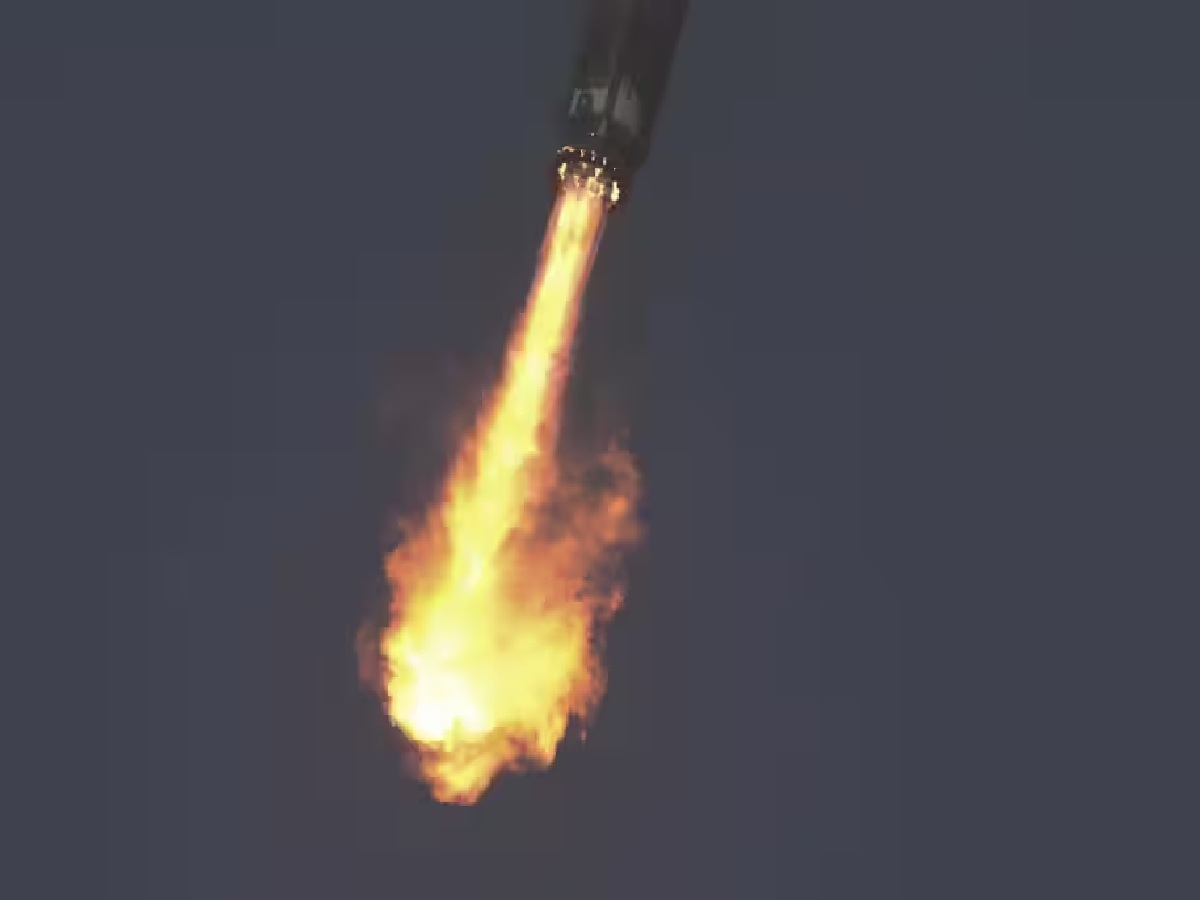
SpaceX Starship Booster Explodes in Gulf; Double Catch Plan Foiled
Elon Musk’s aerospace company SpaceX suffered a high-profile setback during its most ambitious test flight to date after the Super Heavy first-stage booster of its colossal Starship rocket malfunctioned mid-descent, aborted a planned launch-tower catch, and exploded in a fireball upon splashing down in the Gulf of Mexico. Lifting off on Friday afternoon (November 13, 2026) from SpaceX’s Starbase launch complex in South Texas—in the early hours of Saturday morning in India—Starship Flight 15 was designed to achieve a historic world first: recovering both the Super Heavy booster and the orbital Starship upper stage back at the launch pad in a single, roughly 22-hour mission. While the automated safety abort thwarted Musk’s goal of a full double recovery when the booster diverted offshore roughly six to eight minutes after liftoff, the upper-stage spacecraft (Ship 42) powered cleanly into low Earth orbit and deployed 26 next-generation Starlink V3 satellites ahead of its own scheduled tower-catch attempt.
Why Starship Flight 15's Double Recovery Test Was Crucial for Elon Musk
Standing nearly 400 feet tall as the largest and most powerful launch vehicle ever built, Starship is engineered around one revolutionary economic premise: complete and rapid reusability. Unlike conventional rockets that discard expensive hardware in the ocean after every launch, SpaceX aims to catch both stages using the launch tower’s giant mechanical arms—nicknamed "Chopsticks"—refuel them rapidly, and fly again.
For Elon Musk, mastering full orbital reusability is non-negotiable. Achieving fast, airline-like turnaround times is the only way to dramatically slash launch costs, deploy massive satellite constellations, establish a permanent human base on the Moon, and eventually transport astronauts and cargo to Mars. Had both stages been recovered on Flight 15, SpaceX would have become the first organization in spaceflight history to retrieve every single major component of an orbital-class rocket.
What Went Wrong Over the Gulf and How Past Tests Compare
During Friday’s launch, the upgraded Version 3 (Block 3) Super Heavy Booster 22 fired its Raptor engines for roughly two minutes and 20 seconds to propel the stack out of the dense lower atmosphere before executing a clean "hot-staging" separation. However, as the booster pivoted back toward Starbase—relighting 27 of 28 boostback engines—flight computers detected an anomaly that failed the strict safety criteria required for a launch-site tower catch.
Triggering an automatic abort, SpaceX steered the booster away from land and brought it down for an offshore splashdown in the Gulf of Mexico, where it tipped over and exploded in a dramatic fireball. Although SpaceX had previously caught three earlier Version 1 boosters at Starbase—and had successfully sent Starship into orbit during a September test flight without attempting any hardware recovery—Friday’s mission marked the first recovery attempt for the upgraded V3 booster. Despite losing the booster, Ship 42 reached its target orbit around 170 miles above Earth, completed satellite deployment, and remained on track for an unprecedented orbital reentry and tower-catch attempt after completing 14–15 orbits.
Replacing Falcon Rockets From Florida and Competing With Blue Origin for NASA's Moon Mission
Even as SpaceX refines Starship’s recovery systems, the company is actively expanding its coastal launch infrastructure. SpaceX plans to begin launching Starship from Florida’s Space Coast in the coming months and add launch operations in Louisiana in the years ahead. For now, SpaceX’s workhorse Falcon 9 and Falcon Heavy rockets—which still expend their upper stages on every flight—will continue carrying NASA astronauts to the International Space Station (ISS) from Cape Canaveral and launching satellites from California, though Musk intends for Starship to eventually replace the entire Falcon fleet.
| Starship Flight 15 & Artemis Program Key Facts | Verified Mission & Program Details |
| Mission & Launch Date | Starship Flight 15 launched Nov 13, 2026 (4:47 PM CST / Nov 14, 4:17 AM IST) from Starbase, Texas |
| First-Stage Booster Outcome | Super Heavy Booster 22 (V3) aborted tower catch after anomaly; diverted & exploded in Gulf of Mexico |
| Upper-Stage Spacecraft Status | Ship 42 reached low Earth orbit, deployed 26 Starlink V3 satellites, and targets ~22-hr tower catch |
| Future Launch Expansion | Starship launches planned from Florida in coming months and Louisiana in coming years |
| NASA Artemis Moon Competition | Competing against Jeff Bezos' Blue Origin (Blue Moon) ahead of Artemis III (Summer 2027) & Artemis IV (2028) |
Stakes are equally high for NASA’s Artemis lunar program, which has committed billions of dollars to SpaceX to develop a human-rated Starship lunar lander—while keeping Jeff Bezos’ Blue Origin and its Blue Moon lander in active competition. Under NASA’s updated roadmap, astronauts will practice orbital rendezvous and docking with both Blue Moon and Starship in Earth orbit during the Artemis III test mission scheduled for next summer (2027). NASA is expected to decide roughly a year ahead of the 2028 Artemis IV mission which lander—Elon Musk’s Starship or Jeff Bezos’ Blue Moon—will carry astronauts down to the lunar surface, making every flight test at Starbase a decisive milestone in the modern space race.




