







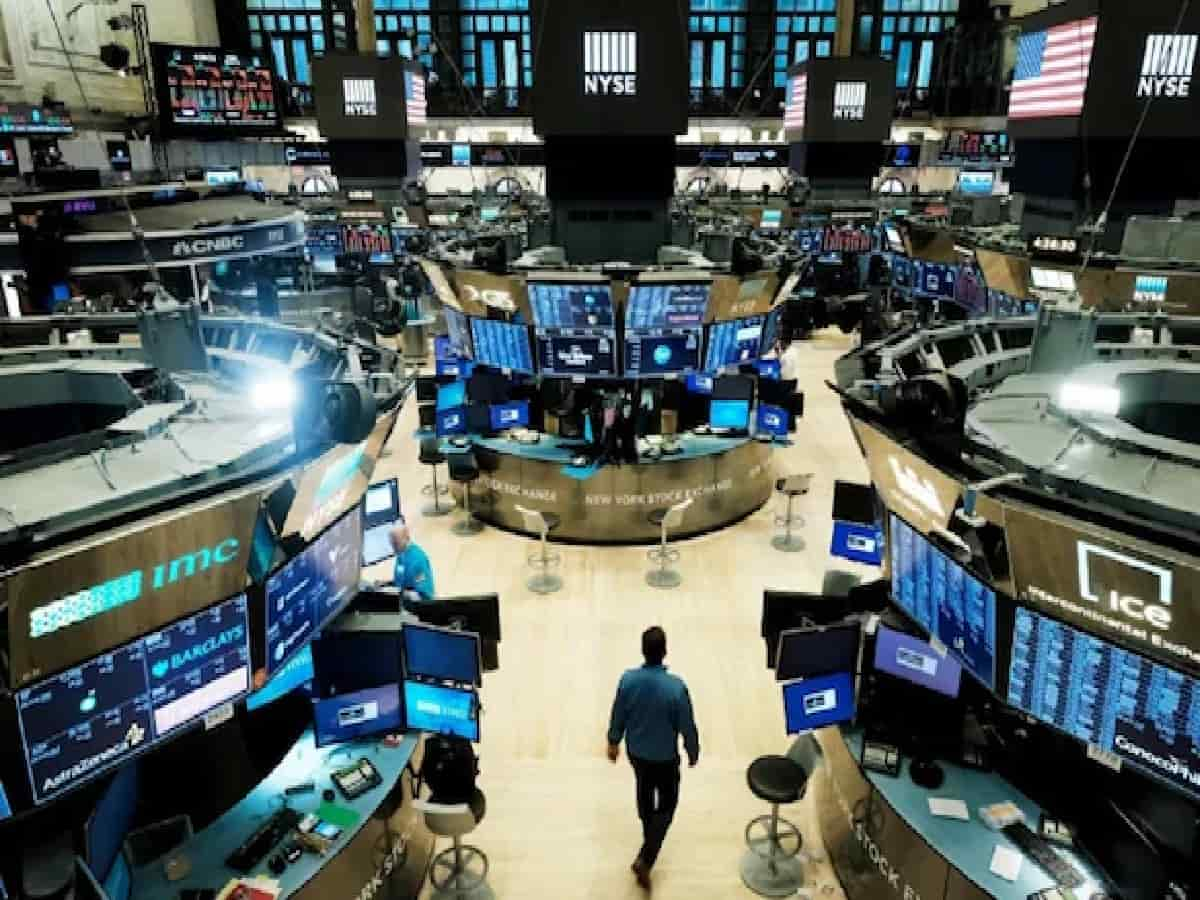
US Market: Nasdaq Falls Nearly 1% on Tech Sell-Off; Nvidia Hits 15-Month Low
Technology stocks dragged Wall Street lower on Friday, November 13, 2026, as a second consecutive day of selling in Nvidia pulled the Nasdaq Composite down nearly 1 percent and dragged the artificial intelligence chipmaker’s market capitalization below $4 trillion for the first time in 15 months. At the closing bell in New York, the Nasdaq Composite declined 0.91 percent to settle at 25,136.27, while the benchmark S&P 500 slipped 0.40 percent to 7,561.67. Bucking the tech-led weakness, the blue-chip Dow Jones Industrial Average edged higher by 50.46 points, or 0.10 percent, to finish at 52,347.55. Despite Friday’s late-week pullback, all three major U.S. equity benchmarks delivered strong cumulative gains—posting their best weekly performance since early August and offering encouraging global cues for investors across New York, London, Mumbai, Bengaluru, and New Delhi.
Wholesale Inflation Data Sparks Early Rally Before Gains Fade
Trading began on an upbeat note Friday morning following the release of the U.S. Bureau of Labor Statistics’ October 2026 Producer Price Index (PPI) report. Wholesale prices rose 0.3 percent on a month-on-month basis in October, coming in slightly cooler than economists’ consensus forecast of a 0.4 percent increase and providing brief relief to bond and equity traders.
However, that initial optimism quickly faded once investors digested the underlying annual trend. On a year-over-year basis, producer prices surged 6.5 percent—the steepest annual wholesale inflation reading since November 2022. Combined with persistent concerns over heavy capital expenditures across the semiconductor and artificial intelligence sectors, the sticky annual inflation print tempered appetite for high-multiple growth stocks as the session wore on.
Nvidia Falls for Second Straight Day, Slipping Below $4 Trillion
The sharpest pressure on the technology sector came from Nvidia (NVDA), whose shares dropped 2 percent on Friday, compounding a decline of more than 4 percent in the prior session following the abrupt resignation of longtime CEO and co-founder Jensen Huang. Friday’s slide pushed Nvidia’s market valuation below the $4 trillion threshold for the first time since July 2025—a 15-month low for the company that once stood above $5 trillion.
Adding to the headwinds, brokerage HSBC downgraded Nvidia’s stock rating to "Hold" on Friday with a $170 price target, warning that shares could remain range-bound and volatile until the board clarifies its succession roadmap. While seasoned Chief Financial Officer Colette Kress—a decade-long Nvidia veteran—has stepped in as interim CEO, Nvidia’s board of directors has launched both an internal and external search for a permanent chief executive.
Wall Street Strategists Weigh Leadership Transition and AI Capex
Market analysts noted that leadership transitions at founder-led technology giants inevitably invite heightened scrutiny. Thomas Martin, senior portfolio manager at Globalt Investments, observed that recruiting and appointing a permanent CEO could take considerable time, prolonging near-term uncertainty around Nvidia’s stock. He added that institutional investors are also seeking greater clarity regarding Nvidia’s customer financing arrangements, supply-chain commitments, and long-term commercial relationships
| US Stock Market & Nvidia Performance Snapshot | Friday Close (Nov 13, 2026) | Weekly Performance |
| Nasdaq Composite | 25,136.27 (-0.91%) | +2.3% (Best week since early August) |
| S&P 500 Index | 7,561.67 (-0.40%) | +2.5% (Best week since early August) |
| Dow Jones Industrial Average | 52,347.55 (+0.10% / +50.46 pts) | +2.1% (Best week since early August) |
| Nvidia (NVDA) Share & Valuation | -2.0% on Friday; Market Cap slips below $4 Trillion | Lowest market cap in 15 months (since July 2025); downgraded to "Hold" by HSBC |
| US October 2026 PPI Inflation | +0.3% MoM (vs. +0.4% forecast) | +6.5% YoY (Highest annual gain since Nov 2022) |
Offering a more measured perspective, Ross Mayfield, investment strategist at Baird, suggested that a substantial portion of Nvidia’s near-term governance risk has already been priced into the shares, even if choppy trading persists. According to Mayfield, rather than abandoning equities altogether, investors are rotating capital into other segments of the market and diversifying across broader AI-linked opportunities.
Best Weekly Gains Since August Signal Broad Market Resilience
Despite Friday’s tech-driven pullback and lingering questions over returns on massive AI infrastructure spending, the broader weekly scorecard underscored underlying market resilience. Over the full trading week, the S&P 500 surged 2.5 percent, the Nasdaq Composite climbed 2.3 percent, and the Dow Jones Industrial Average advanced 2.1 percent—marking the strongest weekly advance for all three benchmarks since early August. Looking ahead, global investors will remain closely focused on corporate AI return-on-investment metrics, Federal Reserve interest-rate expectations following the 6.5 percent PPI print, and updates on Nvidia’s permanent leadership search.




