







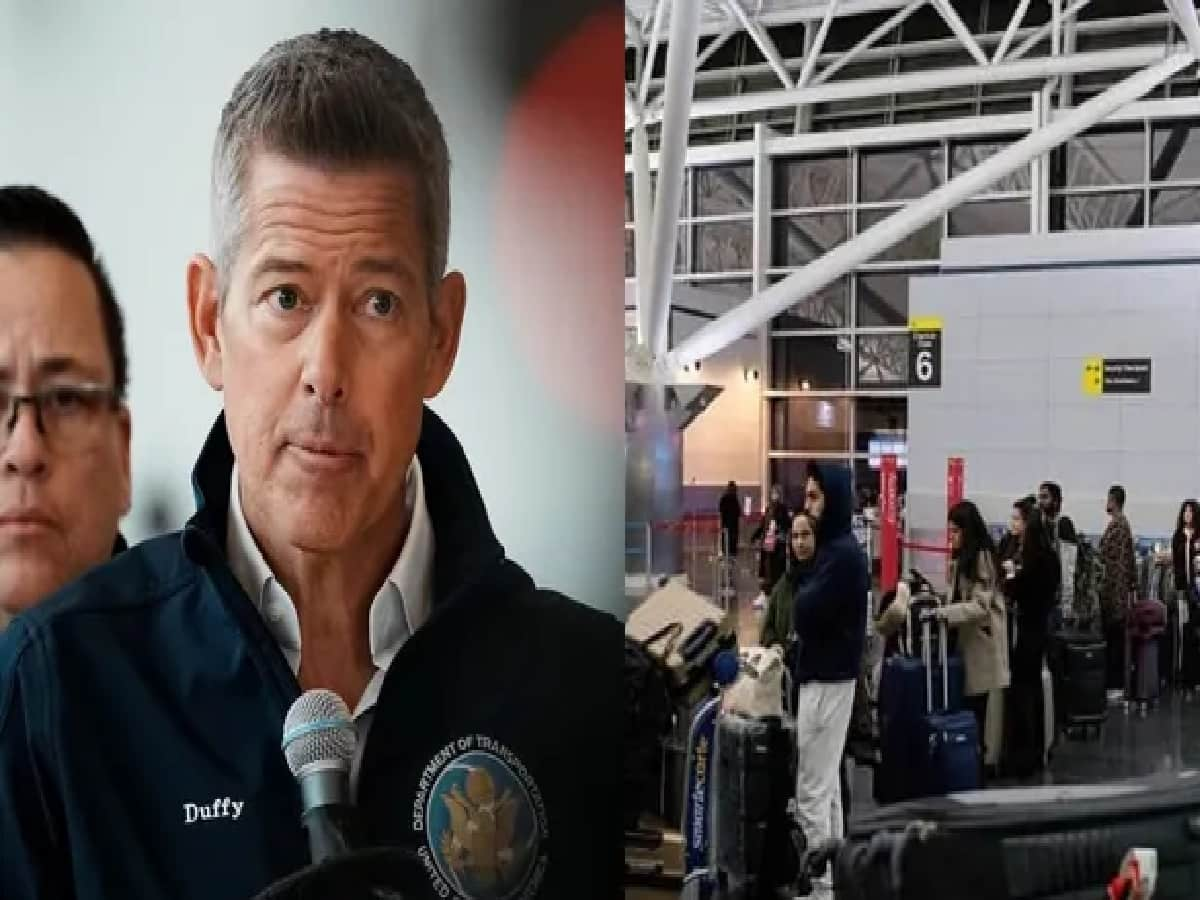
US Lifts Flight Ground Stop; Sean Duffy Warns Delays Will Persist
Air travel across the United States has begun a slow and complex recovery after the Federal Aviation Administration (FAA) lifted an extraordinary nationwide ground stop imposed following a widespread air traffic control communications failure. Reopening American airspace at 8:15 PM Eastern Time on Friday evening (November 13, 2026) after more than four hours of halted departures, U.S. Transportation Secretary Sean P. Duffy confirmed that the underlying technical fault had been isolated and that regional air traffic control centers and Terminal Radar Approach Control (TRACON) facilities were back in normal operation. However, for hundreds of thousands of stranded domestic and international flyers—including transatlantic travelers connecting through New York JFK, Newark, Chicago O'Hare, Atlanta, Dallas-Fort Worth, Los Angeles, and San Francisco, as well as long-haul passengers traveling to and from New Delhi, Mumbai, London, and Toronto—the lifting of the order does not mean an instant return to schedule. Secretary Duffy cautioned that lingering delays and cancellations will ripple through Saturday, November 14, 2026, as airlines race to reposition displaced aircraft and comply with strict federal flight-crew duty limits.
When Will Flights Return to Normal Across US Airports
Addressing reporters during an urgent late-evening briefing alongside Homeland Security Secretary Markwayne Mullin, Transportation Secretary Sean Duffy stressed that reopening the skies at 8:15 PM ET marked only the first step in untangling the aviation gridlock. Because commercial pilots and flight attendants are governed by mandatory federal rest rules, hours spent waiting on tarmacs and inside terminals left numerous carriers short of legally eligible crews for late-night departures.
"Does this mean every flight is going to fly right now? It's going to be slow," Duffy explained, urging travelers waiting inside airport concourses or preparing to head to terminals to contact their airlines directly. He added that carriers with available cockpit and cabin crew capacity would attempt to operate as many delayed departures as possible through the night, while the bulk of stranded aircraft and passengers would begin moving systematically on Saturday morning—acknowledging that it will take considerable time to fully unwind Friday afternoon’s system-wide disruption.
What Caused the Nationwide US Air Traffic Control Outage
Detailing the exact sequence of the crisis, Secretary Duffy revealed that radar and telecommunications systems across multiple Air Route Traffic Control Centers and TRACON facilities began experiencing severe instability at 3:36 PM Eastern Time on Friday afternoon, triggering the formal nationwide ground stop minutes later. The telecommunications malfunction—believed to have originated with network router failures in the Chicago airspace before cascading nationwide—created dangerous inconsistencies in radar tracking data and disrupted radio communications between air traffic controllers and pilots.
At the moment the FAA issued the mandatory departure halt—only the second nationwide ground stop in American aviation history since September 11, 2001, following a shorter computer outage in January 2023—more than 3,500 aircraft were already airborne across U.S. skies. Rather than risking mid-air separation errors, controllers guided airborne flights safely to landing while holding all new takeoffs on the ground. By the time Duffy delivered his evening update, fewer than 400 planes remained in the air, and every aircraft was accounted for. Homeland Security Secretary Markwayne Mullin also confirmed that federal investigators found no indication of a cyberattack or nefarious threat, emphasizing that the outage was purely a technical telecommunications failure unrelated to separate global software glitches. Throughout the freeze, the FAA maintained dedicated corridors for essential missions, permitting medical evacuation flights, cargo aircraft carrying life-saving medicines, and law enforcement operations to fly without interruption.
Trump Administration Demands $50 Billion to Overhaul Legacy Systems
Blaming the breakdown squarely on aging air traffic control hardware, Secretary Duffy described America’s legacy analog infrastructure as severely deteriorated and warned that newly deployed modern tools had overloaded outdated telecommunications links. Pointing to recent localized radar and communications glitches in New York and Newark, he called on the United States Congress to approve comprehensive modernization funding without further delay.
"Until the American people and Congress tell us to rebuild, there will continue to be more incidents like this," Duffy warned, noting that no agency can predict every failure point inside decades-old infrastructure. The Trump administration has requested $50 billion from lawmakers to overhaul the nation’s air traffic control network, replacing fragile copper-era hardware with resilient digital communications and satellite-backed navigation systems.
Airline Advisories: 827 Diverted Flights and Weekend Disruptions
Even with U.S. airspace officially reopened, major North American and international carriers faced massive operational bottlenecks in matching aircraft with rested crews. According to aviation analytics firm Cirium, at least 827 flights had been diverted by Friday evening—with 670 aircraft (81 percent) forced to turn back to their originating airports and 157 planes diverted to alternate hubs such as Washington Dulles, Los Angeles, Cincinnati, and Nashville—while flight-tracking data recorded over 10,000 delays and thousands of cancellations.
| Aviation Crisis Impact Metric | Verified Details & Operational Status |
| Outage Start & Airspace Reopening | Instability began at 3:36 PM ET; FAA lifted ground stop at 8:15 PM ET (Nov 13, 2026) |
| Aircraft Airborne at Ground Stop | 3,500+ flights in the air (reduced to under 400 safely landed by evening update) |
| Diverted Flights (Cirium Data) | 827 total diversions (670 returned to origin airport; 157 landed at alternate airports) |
| Root Cause & Security Assessment | Outdated telecom/router instability across ATC & TRACON centers; no cyberattack |
| Modernization Funding Demand | $50 billion requested by Trump administration to rebuild US air traffic control systems |
Air Canada canceled all remaining Friday evening flights operating both to and from the United States, cautioning passengers that services linking Canada with the Caribbean and South America that transit U.S. airspace could also experience knock-on delays. JetBlue likewise canceled the remainder of its Friday domestic schedule—while exempting select transatlantic departures to Europe from Boston Logan International Airport and New York’s John F. Kennedy International Airport—and warned flyers that residual cancellations and schedule adjustments would persist into Saturday. Meanwhile, major U.S. carriers including United, Delta, American Airlines, and Southwest began restarting limited overnight operations while advising all Saturday travelers to verify live flight statuses via airline apps before departing for the airport.




