







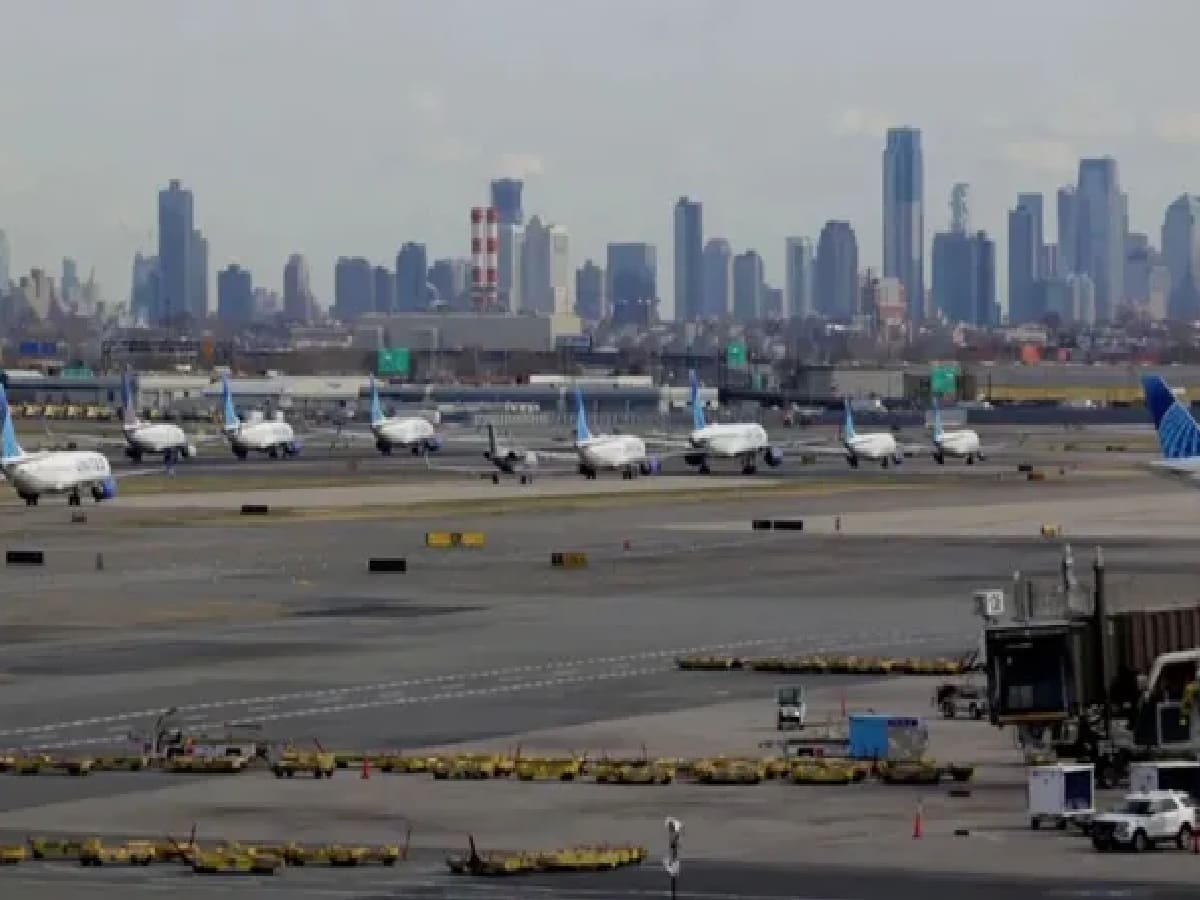
US Halts All Flights Briefly, 2nd Ban Since 9/11; 827 Flights Diverted
Commercial aviation across the United States was thrown into unprecedented turmoil on Friday afternoon after the Federal Aviation Administration (FAA) ordered a temporary nationwide halt to all flight departures—marking only the second nationwide ground stop since the September 11, 2001, terrorist attacks. Triggered by severe telecommunications and radar data instabilities across the country’s 22 regional Air Route Traffic Control Centers, the emergency safety restriction froze airport operations from Los Angeles, San Francisco, and Chicago O'Hare to Washington Dulles, New York JFK, Atlanta, and Dallas-Fort Worth, while also disrupting long-haul international connections to hubs such as London, Toronto, Abu Dhabi, New Delhi, and Mumbai. Although the FAA subsequently lifted the departure freeze at 8:15 PM Eastern Time, the four-hour shutdown forced at least 827 flights to divert, stranded tens of thousands of travelers inside crowded airport terminals, and triggered cascading delays and cancellations stretching well into Saturday.
Only the Second Nationwide Ground Stop Since September 11, 2001
Before Friday’s shutdown, the United States had imposed a nationwide aviation ground stop only once since the aftermath of the 9/11 attacks—during a January 2023 computer failure involving the FAA’s Notice to Air Missions (NOTAM) pilot-briefing system. In an official operational advisory, the FAA explained that Friday’s restrictions were enforced "due to extraordinary circumstances and for reasons of safety".
Speaking to reporters outside the White House, Homeland Security Secretary Markwayne Mullin sought to calm public anxiety by confirming that federal intelligence and cybersecurity agencies found no indication of a cyberattack or national security threat, attributing the crisis squarely to a telecommunications outage. Transportation Secretary Sean Duffy added that technical teams were investigating data inconsistencies across the nation’s 22 regional air traffic control centers—the en-route facilities responsible for guiding aircraft cruising between airports. While domestic departures were halted, Mullin noted that international flights were managed on a case-by-case basis, with select overseas departures still clearing coastal hubs on Friday evening, and Alaska Airlines confirming that certain regional flights within Alaska and Hawaii remained unaffected.
Thousands of Flights Disrupted as Passengers Are Stranded on Tarmacs
The human and operational toll across American airports was immediate and sweeping. According to flight-tracking data, more than 10,500 flights were delayed and over 3,500 canceled across the U.S. network, leaving weekend travelers, wedding guests, and business flyers stranded on taxiways and inside concourses. At Chicago O'Hare International Airport, travelers clearing security checkpoints discovered the shutdown abruptly when every departure board turned simultaneously to "Delayed."
For passengers already aboard aircraft, planes stopped dead in their tracks. "It's frustrating. This certainly sounds like it's going to be more than the usual run-of-the-mill delay. I look forward to finding out why," said Washington, D.C., attorney Jeff Dubner, whose Alaska Airlines flight from Los Angeles to the nation’s capital was already half an hour behind schedule and taxiing toward the runway when pilots brought the jet to a sudden halt. Major carriers including United Airlines and American Airlines confirmed that aircraft already airborne were permitted to continue safely to their destinations under air traffic control guidance, while all new takeoffs waited out the freeze.
827 Flights Diverted Across Major US Hubs; Cargo Operations Impacted
According to aviation analytics firm Cirium, at least 827 flights had been diverted by 7:05 PM EST on Friday. Of those, 670 flights were forced to return to their originating departure airports, while 157 aircraft were rerouted to alternate airfields. Airports absorbing heavy waves of unscheduled diversions included Washington Dulles International Airport, Los Angeles International Airport (LAX), Cincinnati/Northern Kentucky International Airport, and Nashville International Airport. With nearly 11,000 flights carrying more than 1.5 million passengers originally scheduled to depart U.S. airports after 4:00 PM EST, airlines warned of significant knock-on disruptions throughout the weekend.
| US Aviation Ground Stop Impact | Official Figures & Key Details |
| Historical Precedent | Only 2nd nationwide US ground stop since 9/11 (first since Jan 2023 NOTAM outage) |
| Root Cause & Security Status | Telecommunications/router data outage across 22 regional ATC centers; no cyberattack |
| Total Flight Diversions (Cirium) | 827 flights diverted (670 returned to origin airport; 157 landed at alternate hubs) |
| Major Diversion Airports | Washington Dulles, Los Angeles (LAX), Cincinnati/Northern Kentucky, Nashville |
| Scheduled Evening Traffic Affected | Nearly 11,000 flights carrying 1.5 million+ passengers scheduled after 4:00 PM EST |
| US Air Cargo Volume Daily | ~61,000 tons transported daily across 220+ countries (Airlines for America data) |
The shutdown also rippled through global supply chains and express logistics. FedEx, the world’s largest cargo airline, announced that its operational teams were ready to activate contingency plans to minimize delivery delays. According to industry trade group Airlines for America, U.S. carriers transport roughly 61,000 tons of cargo every day to and from more than 220 countries—spanning urgent letters, medical shipments, and commercial parcels. Even with U.S. skies reopened, aviation officials and carriers urged all Saturday passengers to check live flight statuses before heading to airports as crews and aircraft gradually return to position.




