







Trump's 10 Key Announcements Post-Midterm Loss, Praises India & Quad
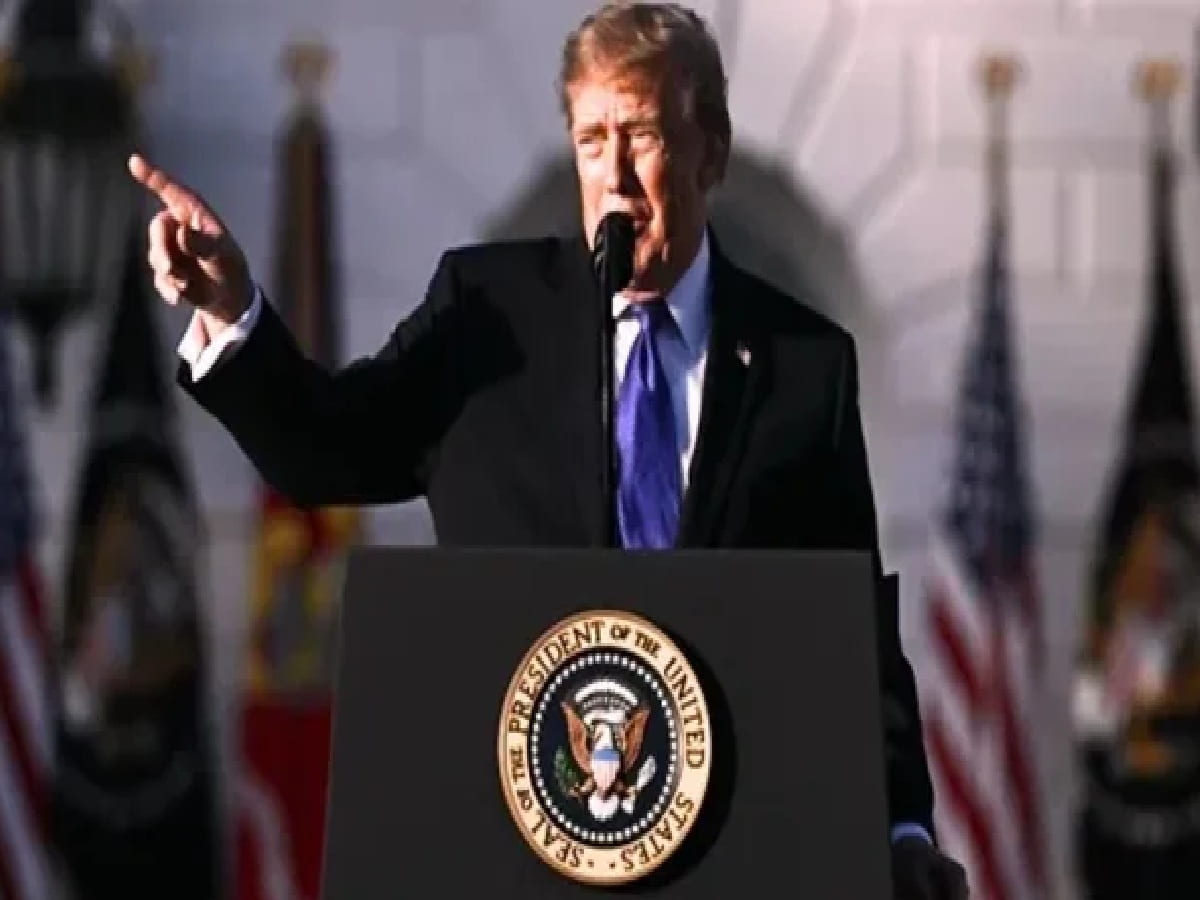
Stepping into the James S. Brady Press Briefing Room at the White House on Friday, November 20, 2026—just hours after returning from a four-day diplomatic swing to Manila and Shenzhen and in his first major press conference since the Republican Party's midterm election setback—United States President Donald Trump defended his administration's economic and foreign policies while signaling a pragmatic willingness to engage with congressional Democrats on border security and domestic legislation. Flanked by Vice President J.D. Vance, Secretary of State Marco Rubio, Defense Secretary Pete Hegseth, Treasury Secretary Scott Bessent, and White House Chief of Staff Stephen Miller during the roughly 90-minute briefing (widely covered across global and Indian outlets on Saturday, November 21, 2026), Trump laid out 10 major policy announcements and diplomatic takeaways spanning India's 7 percent economic growth, the commercial strength of the Quad, a trilateral nuclear risk-reduction declaration with Chinese President Xi Jinping and Russian President Vladimir Putin, hardline warnings on Iran and overseas US data centers, and support for former Nvidia CEO Jensen Huang. Notably for Indian policymakers and markets, Trump pointed directly to India's 7 percent growth rate and lower interest rates as a model the United States should study, while Secretary of State Marco Rubio highlighted the Quad's economic weight ahead of the grouping's first Business Leaders Forum slated for Mumbai in early 2027. At the same time, Trump struck an unusually conciliatory tone toward incoming Democratic leaders—citing a "very productive" phone call with Texas Democratic Governor-elect Gina Hinojosa on border enforcement and praising incoming House Democratic leader Hakeem Jeffries—even as critics and Democratic lawmakers prepare heightened congressional oversight over the administration's Iran military operations and trade tariffs. For diplomats, investors, technology executives, and readers across Unnao, Lucknow, Kanpur, Mumbai, Bengaluru, Hyderabad, New Delhi, and Washington, Friday's briefing mapped out the geopolitical and economic priorities shaping the second half of Trump's term.
President Trump's 10 Key Announcements (Nov 20, 2026): Policy, Trade & Geopolitics
To bring together the ten major statements delivered by President Donald Trump—alongside remarks from Vice President J.D. Vance and Secretary of State Marco Rubio during Friday's White House press conference—the table below summarizes the verified takeaways:
| # | Policy / Topic Area | Attributed Statements & Announcements (Nov 20, 2026) | Geopolitical & Economic Context |
| 1 | Praise for India's 7% Economic Growth & Interest Rates | Trump lauded India's macroeconomic trajectory, stating: "Look at India, they have low interest rates and a growth rate of 7 percent," arguing the US could achieve faster expansion with lower borrowing costs. | Underscores strong bilateral economic interest despite broader tariff negotiations across Asia. |
| 2 | Economic & Strategic Strength of the Quad | Trump highlighted the Quad (US, India, Japan, Australia) in supply chains, economic security, maritime surveillance, and a new AI superintelligence accelerator; Secretary of State Marco Rubio called the four nations "four very powerful economies" ahead of the first Quad Business Leaders Forum in Mumbai in early 2027. | Pushes back against commentary suggesting the recent Manila Quad gathering lacked momentum. |
| 3 | Veto Threat & Negotiations With a Democratic House | Threatened to deploy presidential veto power to compel negotiations with the incoming Democratic-majority House while asserting that a deal with Iran must meet strict US terms. | Reflects divided government dynamics following Democratic midterm gains in Congress. |
| 4 | 'Tremendous Tax' Warning on Overseas US Data Centers | Announced plans to impose heavy taxes and penalties on American technology firms that build AI data centers abroad, warning that letting infrastructure move overseas risks ceding ground to China. | Urged local US communities to welcome domestic data centers and negotiate community benefits. |
| 5 | Iran Nuclear Standoff & Defense of Military Strikes | Accused Tehran of "fooling people for 51 years," insisted any nuclear deal must be genuine, and said he would take the same military decision against Iran again to stop it acquiring nuclear weapons—a stance backed by Vice President J.D. Vance despite acknowledging midterm political costs. | Democratic lawmakers have signaled plans to scrutinize the intelligence behind the Iran strikes. |
| 6 | Support for Jensen Huang's Return to Nvidia | Defended former Nvidia CEO Jensen Huang (who stepped down last week amid scrutiny over personal controversies) as a "brilliant man" who put the US 10 years ahead in AI chips, calling America "a nation of second chances" and urging Nvidia to welcome him back after an apology. | Compared his backing of Huang to his first-term defense of Elon Musk, while praising Musk's Starlink. |
| 7 | US–Russia–China Trilateral Nuclear Risk Declaration | Described his first trilateral meeting with Vladimir Putin and Xi Jinping in Shenzhen as a historic step producing a formal peace declaration affirming that nuclear conflict must never happen and pledging non-proliferation cooperation. | Noted that all three leaders acknowledged the responsibility of being the world's largest nuclear powers. |
| 8 | Ban on Advanced AI Chips to China, Older Chips Open | Reaffirmed export bans on top-tier American computer chips to China while keeping older-generation processors open for sale: "The only chips that should go are the old ones". | Balances national security restrictions on frontier AI hardware with commercial semiconductor exports. |
| 9 | Bipartisan Outreach to Democratic Leaders | Praised Texas Democratic Governor-elect Gina Hinojosa (who defeated Republican Greg Abbott) after a "very productive" phone call on border security, and called incoming House Democratic leader Hakeem Jeffries "smart" and "streetwise". | Signals selective cooperation on immigration and border enforcement ahead of the new congressional session. |
| 10 | Asia Trade Deals & Oil Price Drop | Highlighted over $17 billion in Southeast Asian commercial deals (including Philippine Airlines buying 20 Boeing 787 Dreamliners), tariff elimination agreements with Thailand ($2.6B US farm purchases) and the Philippines, ongoing Mexico and Canada talks, and falling oil prices. | Framed his Asia tour as one of the most successful in US history to counter domestic cost-of-living criticism. |
Praise for India's Growth, Quad's Mumbai Forum, and Global Diplomacy
Across the 90-minute White House session, President Donald Trump repeatedly returned to economic competitiveness in the Indo-Pacific. Pointing to India's 7 percent GDP growth and lower interest rates, Trump argued that the United States could unlock substantially faster expansion if borrowing costs were brought down alongside domestic energy and infrastructure investments. On strategic groupings, both Trump and Secretary of State Marco Rubio rejected suggestions that the Quad—comprising the United States, India, Japan, and Australia—had lost relevance, emphasizing joint maritime surveillance, resilient supply chains, a new AI superintelligence accelerator, and the inaugural Quad Business Leaders Forum scheduled to convene in Mumbai in early 2027. Turning to broader great-power diplomacy, Trump hailed his Shenzhen trilateral summit with Xi Jinping and Vladimir Putin as a landmark commitment to preventing nuclear war, even as he maintained strict bans on exporting advanced US AI chips to China while permitting older-generation semiconductors.
Domestic Pivot After Midterms: Data Center Penalties, Iran, and Bipartisan Tone
Domestically, Friday's press conference reflected the shifting political landscape following the November 2026 midterm elections, in which Democrats captured the House and won high-profile state races such as Gina Hinojosa's gubernatorial victory in Texas. While Trump and Vice President J.D. Vance stood firmly behind their military action against Iran—insisting preventing a nuclear-armed Tehran justified the political price—Trump also opened the door to bipartisan talks with Hinojosa and Hakeem Jeffries on border security and immigration, alongside threatening vetoes if House Democrats block core priorities. Simultaneously, his warning of "tremendous taxes" on US tech firms building data centers overseas and his public endorsement of Jensen Huang's return to Nvidia signaled an assertive industrial policy aimed at keeping artificial intelligence infrastructure anchored inside the United States.




