







Trump Celebrates Diwali at White House, Receives Hanuman Chalisa
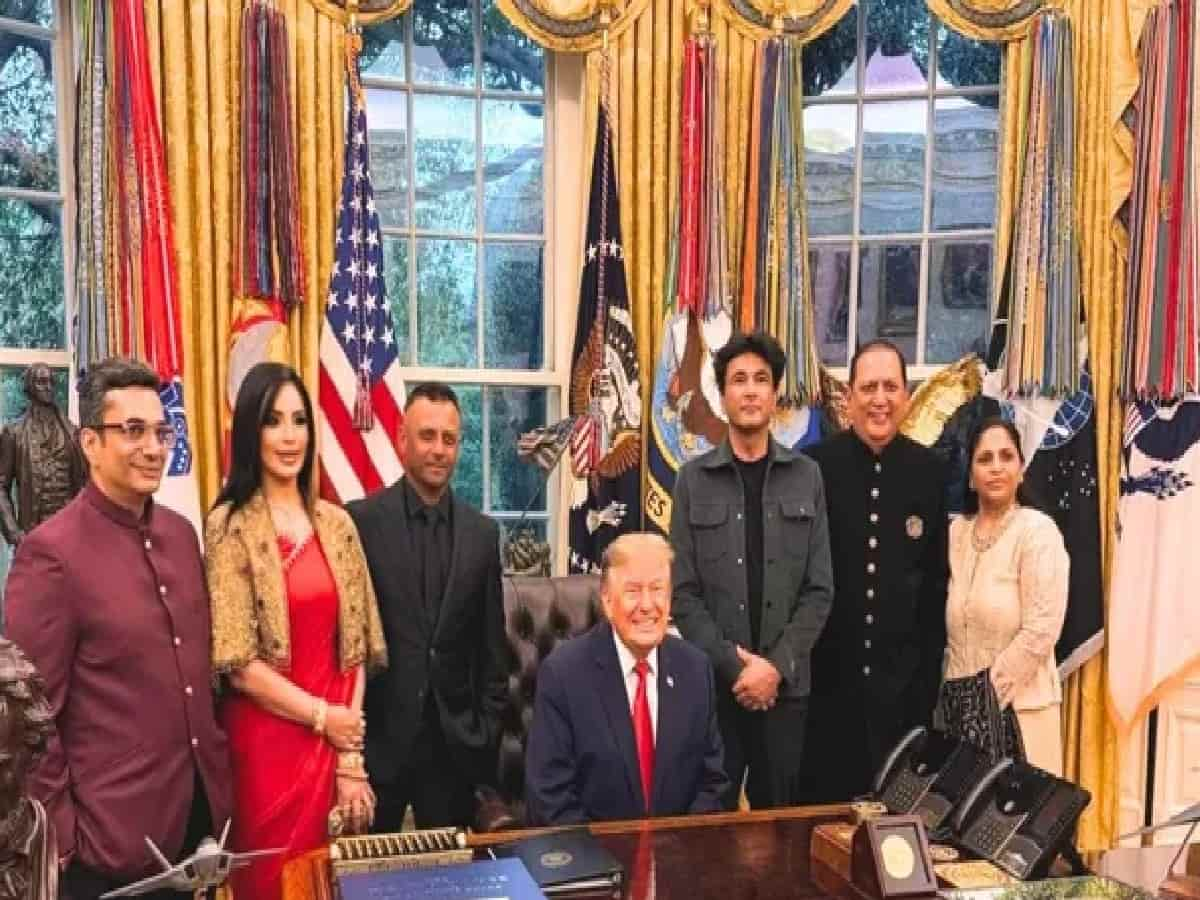
The historic corridors of the White House radiated with the glow of traditional brass lamps and the warmth of cultural bonhomie on Friday as United States President Donald Trump hosted a high-profile Diwali celebration inside the Oval Office. Bringing together prominent Indian-American business executives, cultural icons, diplomats, and international dignitaries, the event marked the triumph of light over darkness and highlighted the enduring strength of the global Indian diaspora. Among the defining highlights of the ceremony was an exchange between President Trump and Indian health-tech entrepreneur Vishal Gondal, the founder of GOQii, who presented the American Commander-in-Chief with an ornate copy of the sacred Hindu text, the Hanuman Chalisa. The gathering transformed the executive heart of the United States government into a vibrant sanctuary of shared goodwill, prayer, and diplomatic solidarity, reaffirming the cultural bridge that connects the world’s oldest and largest democracies.
Diya Lighting in the Oval Office: A Sacred Moment at the White House
The central ceremony unfolded around the historic Resolute Desk, where President Trump was joined by invited leaders of the Indian diaspora and senior administration officials for the traditional lighting of the diya (earthen oil lamp). Dressed in festive Indian attire and formal business suits, attendees watched as the flame was kindled, symbolizing the spiritual victory of knowledge over ignorance, good over evil, and hope over despair. The intimate Oval Office ceremony stood out for its blend of traditional Vedic customs with the solemn dignity of the American presidency.
For the assembled guests, celebrating the festival of lights directly inside the President’s executive office carried immense symbolic and emotional weight. The occasion showcased the deep integration and rising influence of the Indian community within the American socio-economic and political fabric. In addition to presidential remarks, the ceremony provided a venue for informal exchanges on culture, community achievements, and the shared democratic ethos that unites India and the United States. Following the ceremony, President Trump presented select guests with a commemorative presidential challenge coin engraved with the presidential seal and "45th & 47th" inscriptions, serving as a lasting memento of the festive occasion.
The Gift of Faith: Presenting the Hanuman Chalisa to Donald Trump
The presentation of the Hanuman Chalisa by Vishal Gondal quickly emerged as one of the most widely discussed cultural moments of the celebration. The devotional hymn, an exquisite 40-verse eulogy composed in the 16th century by the poet-saint Goswami Tulsidas in the Awadhi language, holds a revered place in millions of households worldwide. Revered as an invocation of Lord Hanuman’s boundless strength, supreme wisdom, selfless devotion, and moral courage, the scripture is traditionally chanted by devotees seeking protection, inner fortitude, and victory over adversity.
The special volume presented to President Trump featured a cream-colored hardbound cover adorned with golden lotus motifs, metallic corner guards, and an embossed artwork depicting Lord Hanuman. Gondal, who pioneered mobile gaming in India before building his preventive healthcare ecosystem, reflected on the honor of sharing such a meaningful piece of Indian heritage inside the Oval Office. By gifting the revered hymn to the US President, the delegation presented an emblem of spiritual resilience, peace, and enduring loyalty—virtues that resonate universally across borders and cultures.
'Jug Jug Jiyo': Gondal Shares Message of Longevity and India-US Ties
Taking to social media platform X (formerly Twitter) after the ceremony, Vishal Gondal shared photographs documenting the historic gathering, expressing deep gratitude for the experience. Describing the occasion as "a moment of shared joy in the Oval Office," Gondal underscored how the ritual of lighting the lamps was intertwined with profound prayers for bilateral harmony. "As the diyas were lit, my prayer was for friendship between India and America, and for the triumph of light over darkness," he wrote, capturing the collective aspirations of the Indian diaspora.
In his post, Gondal also invoked the timeless Indian blessing "Jug Jug Jiyo," translating and explaining its philosophical resonance to a global audience. "Jug Jug Jiyo, a blessing many of us grew up hearing, means 'may you live for ages,'" Gondal noted. "It is the wish behind everything I do, and today I made it for everyone around the world: peace, prosperity, good health, and longevity". The tech founder reflected on the experience of stepping into the West Wing, recounting that experiencing the President’s personal hospitality during the most auspicious week of the Hindu calendar was a powerful affirmation of mutual respect and friendship between the two nations.
High-Profile Diaspora Delegation: Vikas Khanna and Global Indian Voices
The gathering in the Oval Office brought together a distinguished roster of Indian-origin luminaries representing diverse fields such as culinary arts, governance, business, and diplomacy. Among the prominent attendees was world-renowned Michelin-starred chef, restaurateur, and author Vikas Khanna. Celebrated globally for elevating traditional Indian cuisine onto the highest international gastronomic stages and for his extensive humanitarian food-relief efforts, Khanna’s presence highlighted the cultural soft power that Indian cuisine and hospitality command across the West.
The delegation also featured prominent diaspora political and corporate figures, including former Canadian Member of Parliament Ruby Dhalla, whose public service across North America has made her a prominent voice in community advocacy. The event’s guest roster also included leading institutional voices, such as India's Ambassador to the United States Vinay Mohan Kwatra, IBM Chief Executive Officer Arvind Krishna, Micron Technology CEO Sanjay Mehrotra, and key federal officials including Secretary of State Marco Rubio and Deputy Commissioner of the Social Security Administration Arjun Mody. The congregation of technological titans, culinary ambassadors, policy architects, and diplomatic stalwarts underscored the versatile, high-impact contributions of the diaspora in shaping global commerce and public affairs.
Decades of Tradition: The Evolution of White House Diwali Since 2003
Diwali’s inclusion on the official calendar of White House cultural events represents a two-decade trajectory of diplomatic recognition and community integration. The institutional tradition of celebrating Diwali within the executive compound was first formally established in 2003 under the administration of President George W. Bush. In its early years, the observances were predominantly conducted within the adjacent Eisenhower Executive Office Building, attended by Indian diplomats, staff members, and community organizers.
The milestone deepened significantly in 2009 when President Barack Obama became the first sitting US President to personally kindle the ceremonial Diwali lamp inside the White House proper during a historic celebration in the East Room. In subsequent years, the observance grew increasingly intimate and prominent, finding its way into the Roosevelt Room and the Oval Office across successive administrations. By welcoming Indian leaders to light lamps in the Oval Office and accepting the Hanuman Chalisa, President Trump carried this cherished tradition forward, sending an unambiguous message of goodwill, spiritual inclusion, and festive warmth to billions of people celebrating across India and around the world




