







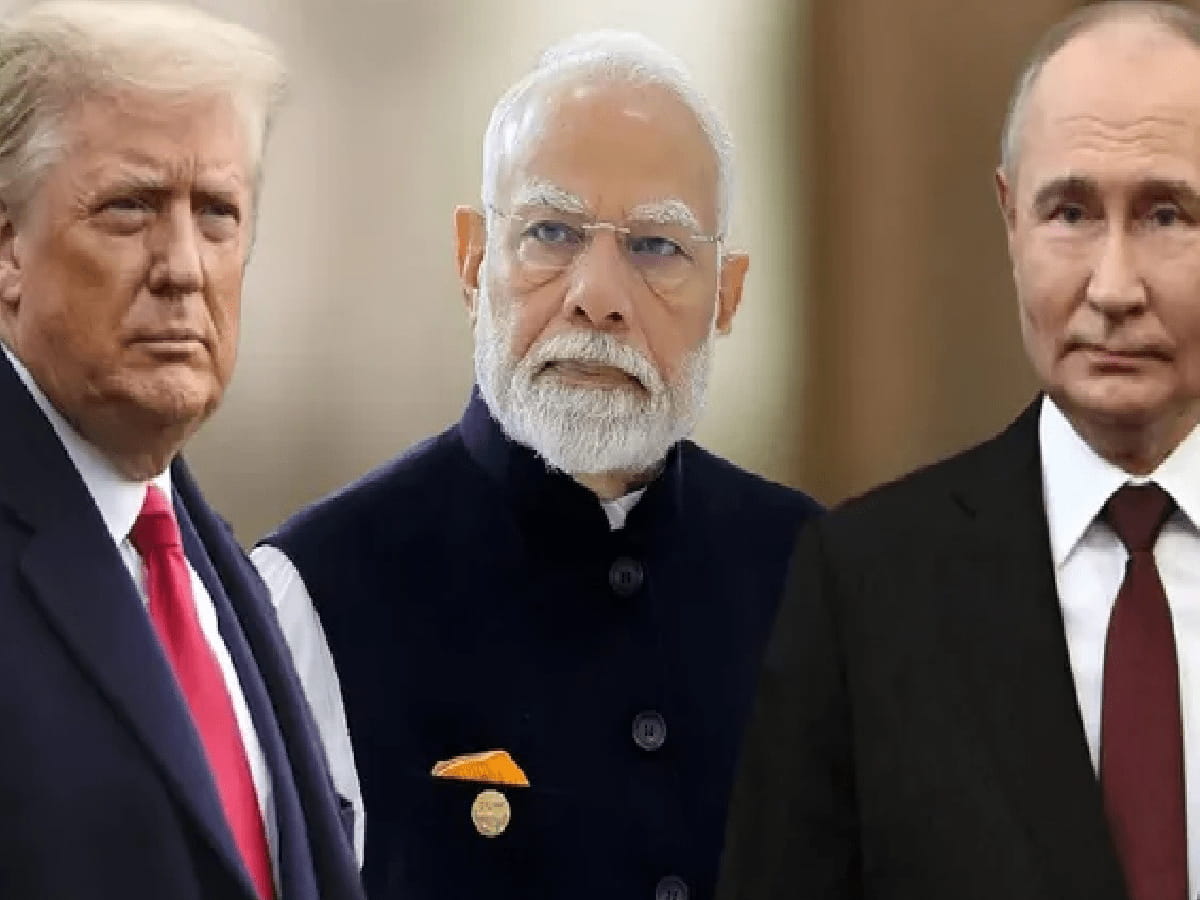
Trump Administration Grants 60-Day Tariff Waiver on India's Russian Oil Imports
In a significant diplomatic and economic recalibration, the United States has dialed back its immediate threat of punitive secondary tariffs against New Delhi, with US Secretary of State Marco Rubio confirming that President Donald Trump has approved a 60-day temporary waiver on energy-related penalties. Speaking to reporters ahead of an official diplomatic mission to Uzbekistan and India, Rubio conceded that it is practically unfeasible for an indispensable strategic partner like India to dismantle its deep dependence on Russian crude oil overnight. Invoking the national interest waiver clause under the sweeping Lindsey O. Graham Sanctioning Russia and Iran Act, the Trump administration has opted to pause secondary sanctions to thoroughly assess their potential shockwaves across both the American domestic economy and vulnerable international energy corridors.
The 60-Day Review Window: Assessing Spillover on Global Oil Markets and US Inflation
The executive decision reflects Washington’s pragmatic acknowledgment of fragile global supply chains:
-
Scope of the Graham Sanctions Act: The legislative framework passed by the US Congress is designed not only to squeeze Moscow's sovereign coffers but also to enforce secondary sanctions and steep tariffs on third-party nations that continue procuring Russian hydrocarbons.
-
Economic Assessment Interval: Explaining the rationale behind the suspension, Secretary Rubio emphasized that President Trump is taking 60 days to evaluate the cascading financial repercussions that immediate blanket tariffs would trigger on global trade flows and domestic US consumer pricing.
-
Protecting Broader Stability: By activating the statutory waiver provision, the White House aims to prevent abrupt supply shocks in the crude market that could inadvertently push pump prices higher ahead of major domestic economic benchmarks.
Strained Global Energy Basins: Why Washington Is Balancing Alliances Over Coercion
The US State Department underscored that current geopolitical flashpoints have left the international petroleum supply architecture under persistent strain:
-
Cascading Global Pressures: Rubio cited compounding supply risks across multiple theaters—ranging from heightened US-Iran military friction and Houthi strikes targeting Saudi Arabian energy assets to the grinding war between Russia and Ukraine—which have driven volatility in Brent crude pricing.
-
Acknowledging India's Energy Diversification: While New Delhi has made conscious efforts to diversify its import basket by sourcing from alternative global suppliers, Rubio noted that Russian barrels remain central to meeting India's vast domestic fuel appetite.
-
Preserving Strategic Partnership: Emphasizing that India stands as a cornerstone partner and security ally of the United States in the Indo-Pacific, Rubio asserted that Washington must strike a delicate, calculated balance rather than imposing sudden, adversarial economic penalties.
From 2% to 35%: The Economics Behind India's Strategic Russian Oil Sourcing
India's reliance on discounted Russian seaborne barrels has fundamentally rewritten global maritime trade routes over the past four years:
-
Post-2022 Transformation: Prior to the outbreak of the Ukraine conflict in February 2022, Russian crude accounted for less than 2 percent of India's total petroleum imports.
-
Refining Advantage and Top Supplier Status: Aggressive discounts offered by Moscow following Western price caps prompted Indian public and private refiners to ramp up intake, catapulting Russia to India's single largest crude supplier.
-
Current Volume Trajectory: Demonstrating the scale of the trade, Russian shipments still represented roughly 35 percent of India's total crude oil imports as recently as last month.
New Delhi’s Firm Stance: Uncompromising Commitment to National Energy Security
India’s Ministry of External Affairs (MEA) has consistently articulated an autonomous, national-interest-driven energy doctrine in its diplomatic engagements with Washington:
-
Prioritizing 1.4 Billion Citizens: Reacting to the passage of restrictive legislation on Capitol Hill, New Delhi reaffirmed that its foremost obligation remains safeguarding affordable, uninterrupted energy security for its 1.4 billion people.
-
Market-Driven Commercial Decisions: Indian negotiators have conveyed that domestic oil refiners will continue making purchasing choices guided by market economics, pricing differentials, and source diversification.
-
Protecting Economic Sovereignty: New Delhi has made it unequivocally clear to US interlocutors that India will deploy all sovereign diplomatic and commercial instruments necessary to defend its trade autonomy, resisting unilateral external mandates.




