







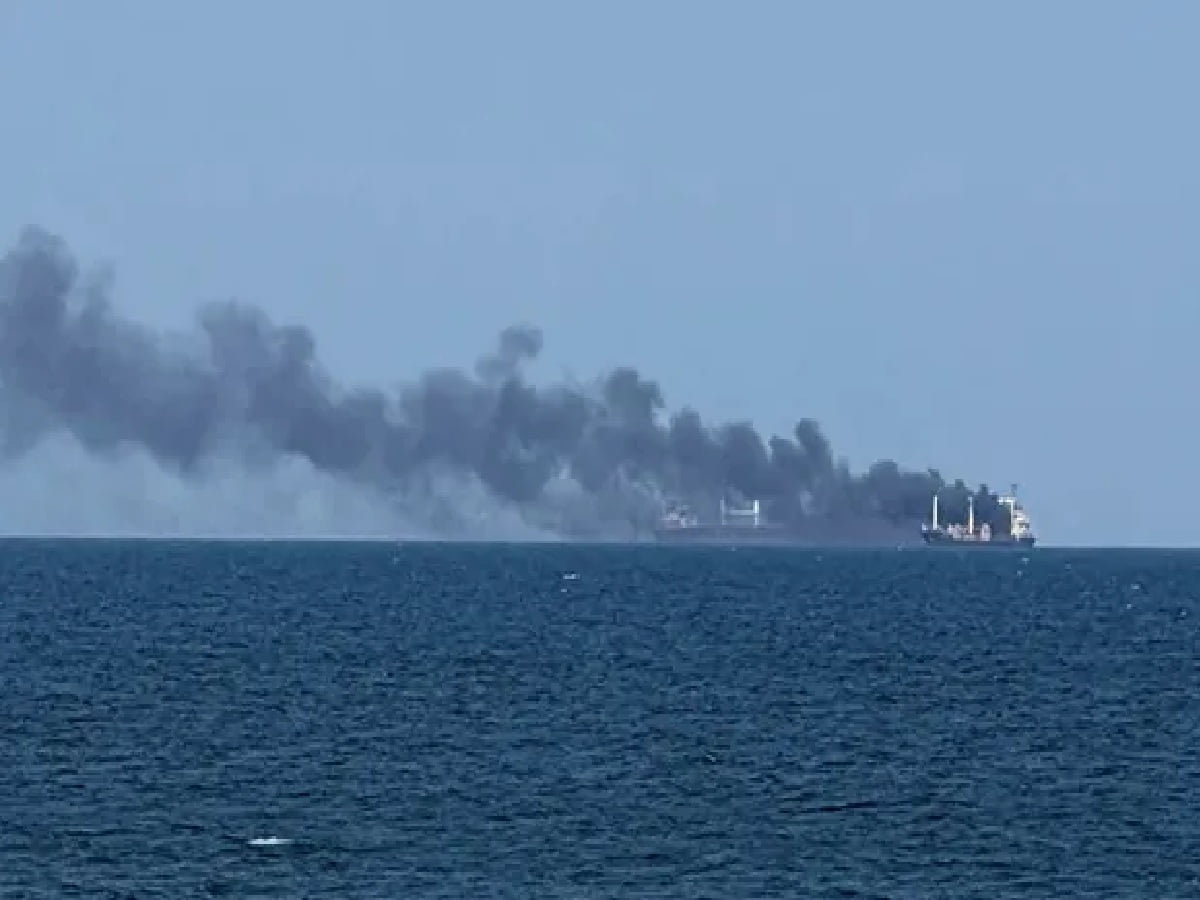
Russia Hits Two Grain Ships Carrying 100,000 Tonnes Near Odesa
Maritime food corridors in the Black Sea and urban centers across Ukraine came under renewed pressure after overnight missile and drone strikes targeted commercial shipping and city infrastructure. Highlighted across international conflict, shipping, and food-security desks on Friday, November 27, 2026, Ukrainian Prime Minister Sergiy Koretskyi (Serhiy Koretsky) announced on Thursday that Russian forces attacked two foreign cargo vessels carrying more than 100,000 metric tons of grain near Ukraine's southern Black Sea port of Odesa during overnight strikes. While Koretskyi did not immediately disclose where the grain had been loaded or whether the vessels were sunk or remained afloat, the incident adds fresh risk to a maritime route where bulk shipments from the three Greater Odesa ports—which handled roughly 90% of Ukraine's agricultural and metallurgical exports before the full-scale conflict—have slowed sharply since late July due to repeated strikes on port terminals and merchant hulls. On land, a Russian ballistic missile strike on Kyiv on Thursday injured seven people and damaged civilian sites including a shopping center, while a separate drone strike in the Russian-controlled part of Zaporizhzhia killed five people. Moscow maintained that its military does not target civilian infrastructure or agricultural supplies, even as Russian officials accused Kyiv of widening naval hostilities toward the Mediterranean and Baltic Seas following reported Ukrainian strikes involving a Russian vessel off Libya and a cargo ship in the Gulf of Finland across Kyiv, Odesa, Moscow, Brussels, New Delhi, Mumbai, and London.
Overnight Black Sea & Kyiv Strikes: Shipping Impact, Casualties & Claims
To bring together the reported strikes on two grain-carrying foreign merchant vessels near Odesa and urban targets in Kyiv and Zaporizhzhia, how Ukraine has rerouted agricultural exports via railways, Danube ports, and neighboring European hubs since late July 2026, and the competing military claims from Kyiv and Moscow over maritime escalation, the tables below organize verified details:
Key Developments From the November 26 Overnight & Daytime Strikes
| Front / Sector | Reported Incident & Figures | Strategic & Humanitarian Significance |
| Black Sea Near Odesa (Maritime Grain Corridor) | Ukrainian PM Sergiy Koretskyi reported Russian overnight attacks on two foreign cargo ships carrying over 100,000 metric tons of grain near Odesa; loading origin and exact hull damage were not immediately detailed. | Highlights acute security and insurance risks for commercial bulk carriers operating near Greater Odesa ports. |
| Kyiv & Zaporizhzhia (Urban & Regional Strikes) | A ballistic missile attack on Kyiv injured seven people and struck a shopping center and other locations; a drone strike in Russian-controlled Zaporizhzhia killed five people. | Underscores continued civilian vulnerability across both front-line regions and major urban centers. |
| Moscow's Official Position | Russia's Defense Ministry asserted its forces do not strike civilian targets and accused Ukraine of trying to widen maritime conflict into the Mediterranean and Baltic Seas after incidents off Libya and in the Gulf of Finland. | Signals widening geographic friction over commercial and naval shipping well beyond the Black Sea. |
How Ukraine's Grain Export Routes Have Shifted Under Maritime Pressure
| Export Channel | Pre-War & Earlier Benchmark | Current Operational Reality |
| Greater Odesa Seaports (Odesa, Chornomorsk, Pivdennyi) | Handled roughly 90% of Ukraine's agricultural and metal exports prior to the conflict. | Regular bulk grain departures largely stalled after late July 2026 due to repeated strikes on terminals and ships, soaring war-risk insurance, and vessel avoidance. |
| Railways & Neighboring Ports | Served as secondary inland corridors. | Ukraine relies heavily on freight rail networks to move grain toward Black Sea loading points, Danube River ports, and neighboring European countries for onward export. |
| 2026/27 Season Export Volume | Reached 11.5 million metric tons at the comparable stage of the prior marketing year. | Official data indicates cumulative grain exports stand near 7.6 million metric tons so far in the 2026/27 season, reflecting logistics bottlenecks. |
Why Black Sea Shipping Security Matters for Global Food Supply and India
Trade and agricultural economists across New Delhi, Mumbai, London, and Brussels point out that Ukraine remains a major supplier of wheat, corn, and sunflower oil to buyers across West Asia, North Africa, and Europe. Even when global grain markets absorb localized shocks, repeated strikes near Odesa drive up freight rates and war-risk insurance premiums—rippling through global edible-oil and grain benchmarks watched closely by importers and policymakers in India.
What Diplomatic and Maritime Watchers Are Monitoring Next
Following Prime Minister Sergiy Koretskyi's disclosure on the two 100,000-tonne grain vessels and the seven injuries in Kyiv, international maritime insurers, shipping registries, and diplomatic desks across Kyiv, Odesa, Moscow, Brussels, and New Delhi will watch for flag-state statements on the targeted ships, damage assessments at Black Sea terminals, and whether air-defense and winter grid protections hold amid escalating long-range exchanges.




