







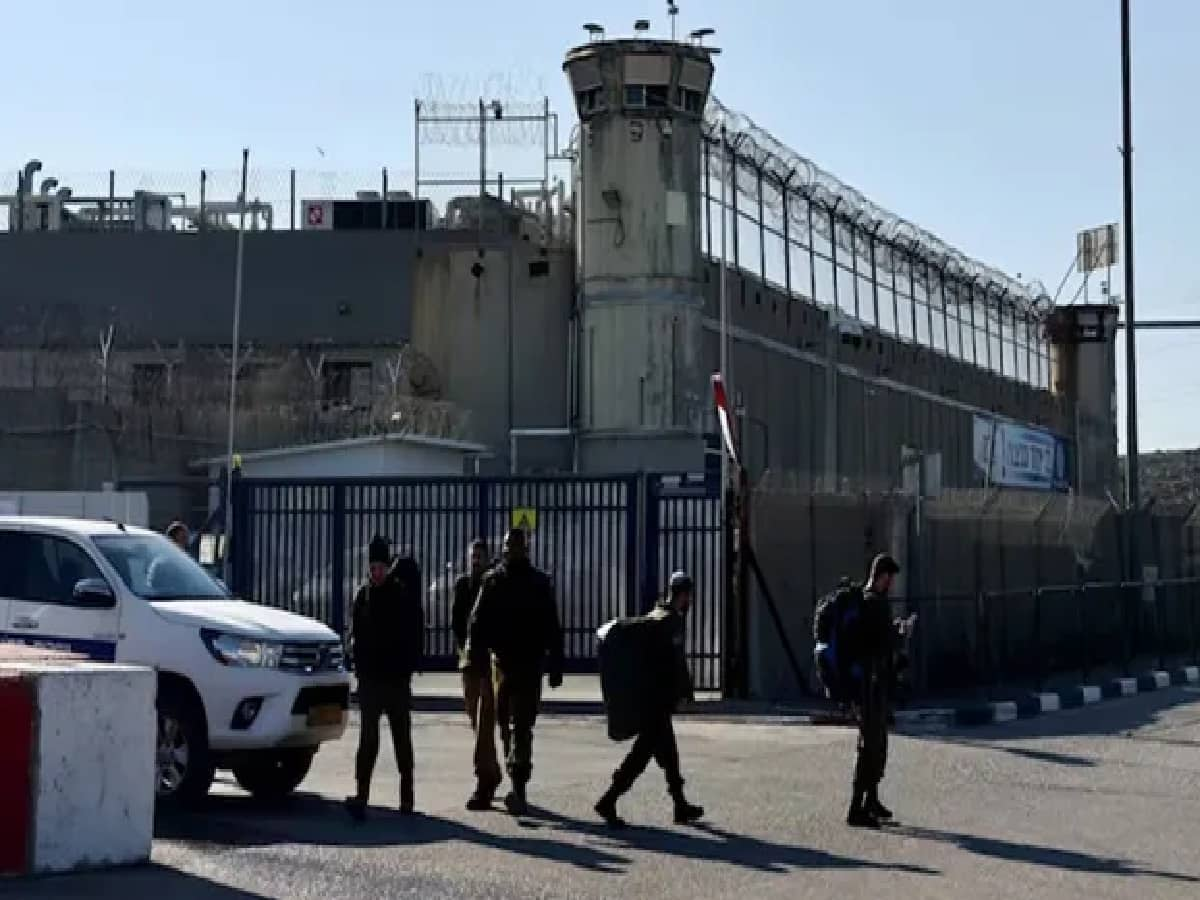
Israel Accused of Institutionalising Torture to Force Confessions
Human rights and legal institutions across West Asia and international capitals are confronting sharp scrutiny over interrogation practices in Israeli security facilities following a sweeping dossier released by a domestic rights watchdog. Highlighted across international legal, diplomatic, and human rights desks on Friday, November 27, 2026, a new report published by the Public Committee Against Torture in Israel (PCATI) concludes that Israeli security authorities have effectively given institutional and legal cover to abusive interrogation methods used to extract confessions from Palestinian detainees. Reviewing 42 formal complaints filed against investigators of Israel's internal security agency, the Shin Bet, between 2016 and 2026, PCATI found that detainees confessed in 33 of those cases—more than three-quarters of the sample—after enduring severe techniques such as extreme sleep deprivation (documented in 35 cases), physical assaults (24 cases), painful stress postures (23 cases), threats, and sexual violence. Among the most stark examples cited in the dossier is a Palestinian lawyer arrested in February 2019 who was questioned for more than 552 hours over 27.5 days—an average of roughly 20 hours daily, including a single continuous session lasting nearly 48 hours—yet the Justice Ministry's oversight inspectorate, Mavtan, ruled that the questioning complied with established procedures. Despite the Israeli Supreme Court's landmark 1999 ruling prohibiting routine physical coercion and deliberate sleep deprivation, PCATI reported that interrogators routinely invoke the narrow "necessity defense" exception while judicial and oversight bodies fail to intervene, noting that none of the more than 1,680 complaints filed with Mavtan between 2001 and 2024 resulted in a criminal indictment. PCATI Executive Director Sari Bashi warned that reliance on coerced statements poses acute, irreversible dangers following the Knesset's March 2026 passage of death penalty legislation targeting Palestinians convicted of deadly terrorism offenses, whereas Israel's Justice Ministry rejected the report's conclusions, asserting that complaints against Shin Bet interrogators are thoroughly examined and lead to disciplinary measures and procedural updates where warranted across Jerusalem, Ramallah, Tel Aviv, New Delhi, Lucknow, Geneva, and London.
PCATI Report on Shin Bet Interrogations: Key Data, Cases & Legal Stakes
To bring together the statistical findings from PCATI's review of 42 Shin Bet interrogation complaints and two decades of Mavtan oversight data, the documented interrogation methods, court outcomes, and the March 2026 death penalty context, and the official rebuttal from Israel's Justice Ministry, the tables below organize verified report details:
Key Findings From the Public Committee Against Torture in Israel (PCATI) Dossier
| Report Metric / Case Detail | Verified Figures & Findings | Legal & Human Rights Significance |
| Sample Examined (2016–2026) | 42 complaints filed on behalf of detainees alleging torture by Shin Bet interrogators; confessions occurred in 33 cases (over 78%), and out of 29 resolved legal proceedings, 25 ended in convictions. | Indicates that statements obtained during disputed interrogations frequently serve as decisive prosecution evidence in military and civilian courts. |
| Prevalence of Alleged Techniques | Sleep deprivation recorded in 35 of 42 cases, physical violence in 24 cases, and painful stress positions in 23 cases, alongside threats and sexual violence. | Directly conflicts with the Israeli Supreme Court's 1999 prohibition on routine physical pressure and deliberate sleep deprivation. |
| 552-Hour Lawyer Interrogation Case | A Palestinian lawyer detained in February 2019 underwent 552+ hours of questioning across 27.5 days (~20 hours/day, including one session near 48 hours); later convicted on shooting-attack charges based on extracted statements. | Oversight unit Mavtan concluded the interrogation followed authorized procedures and declined a criminal probe. |
| False Confessions & Wrongful Detention | In four of the 33 confession cases (spanning two incidents), courts later recognized confessions were false or charges were dropped—including a detainee proven not to have been at the crime scene. | Demonstrates how physical and psychological coercion can produce unreliable admissions of guilt. |
| 2001–2024 Mavtan Oversight Record | Out of more than 1,680 complaints filed with the Justice Ministry's Mavtan unit between 2001 and 2024, criminal probes were recommended in only five cases and zero resulted in indictments. | Underscores what rights advocates describe as near-total institutional impunity for security interrogators. |
Institutional Positions & The March 2026 Capital Punishment Context
| Institutional Voice / Legal Factor | Stated Position or Statutory Context | Broader International & Judicial Impact |
| PCATI & Executive Director Sari Bashi | Stated that official pre-approvals, broad use of the "necessity defense", judicial deference, and Mavtan closures have institutionalized torture; warned of irreversible harm under the March 2026 death penalty law. | Calls for strict enforcement of the 1999 Supreme Court ban, exclusion of coerced evidence, and independent criminal accountability. |
| Israel's Ministry of Justice | Rejected PCATI's report, stating that suspects in security investigations are often accused of serious terror offenses with an incentive to complain, and maintained that Mavtan examines allegations and triggers disciplinary steps and rule revisions when justified. | Frames interrogation rules around preventing imminent attacks while denying systemic sanctioning of abuse. |
| International Law Benchmarks | Under the UN Convention Against Torture (to which Israel is a state party), no exceptional circumstances or security emergencies justify torture, and statements extracted through torture are inadmissible as evidence. | Renews diplomatic and legal scrutiny in Geneva, European capitals, and global human rights forums. |
Why Coerced Confessions and Capital Punishment Raise Acute Legal Alarms
Legal scholars across Jerusalem, London, Geneva, and New Delhi emphasize that every justice system faces grave peril when interrogation rooms become the primary site for generating convictions rather than independent physical or forensic evidence. When courts rarely exclude disputed statements and oversight bodies close more than 1,680 complaints without a single indictment, the risk of convicting innocent individuals rises sharply—a concern magnified many times over once capital punishment enters the statute book.
What Human Rights Monitors and Legal Observers Will Watch Next
Following the release of PCATI's report and the Justice Ministry's rebuttal, international legal bodies, UN special rapporteurs, and defense lawyers across Jerusalem, Ramallah, Tel Aviv, Geneva, and London will watch whether Israeli courts tighten evidentiary scrutiny of Shin Bet interrogation logs, whether judicial challenges target the March 2026 death penalty law, and whether independent oversight reforms are introduced.




