







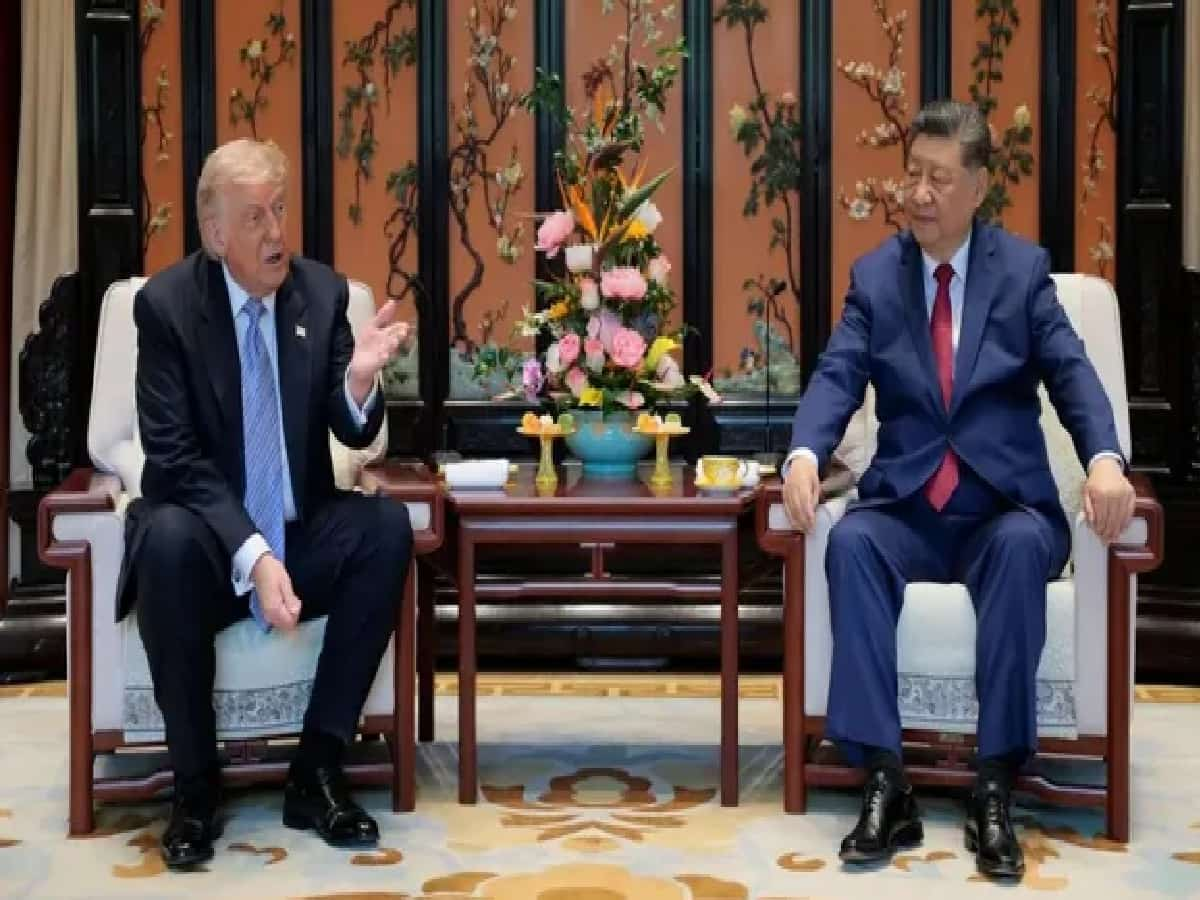
Nvidia Spy Row & Midterm Loss: Why Trump's Xi Meeting in Shenzhen Matters
United States President Donald Trump has embarked on a high-stakes diplomatic tour to Manila and Shenzhen, setting the stage for crucial bilateral talks with Chinese President Xi Jinping and an unprecedented trilateral summit alongside Russian President Vladimir Putin on Thursday, November 19, 2026, on the sidelines of the Asia-Pacific Economic Cooperation (APEC) Economic Leaders' Week. According to White House press briefings and international news reports, President Trump's Asia itinerary carries extraordinary geopolitical weight because it unfolds immediately after heavy Republican defeats in the US midterm elections—in which Democrats won control of both chambers of Congress—and amid the political fallout from the Nvidia espionage scandal that forced longtime CEO Jensen Huang to resign on November 12 following revelations of an affair with a woman suspected by US intelligence of ties to Chinese intelligence. Departing the White House on Monday, November 16, Trump told reporters that during his upcoming meetings in Shenzhen he plans to prioritize nuclear arms control, the Iran conflict, trade, and rare-earth supply chains, while leaving open the possibility of an unscheduled encounter with North Korean leader Kim Jong Un—remarking that whether Kim travels to China is "up to President Xi Jinping". Meanwhile, Chinese officials have dismissed the Nvidia espionage claims as "groundless speculation" and a smear campaign, while European and Ukrainian observers have voiced unease over comparisons between the upcoming Trump–Xi–Putin gathering and the 1945 Yalta Conference. For citizens, investors, and foreign policy watchers across Washington, Beijing, Moscow, Taipei, New Delhi, Lucknow, Mumbai, Bengaluru, London, and Tokyo, the Shenzhen summits represent a pivotal test of whether shifting domestic politics in Washington will reshape superpower bargaining over technology, Taiwan, and global security.
How the US Midterm Defeat and Nvidia Spying Scandal Shape Trump's Leverage
Foreign policy analysts cited by international media outlets remain divided over how domestic turbulence in Washington affects President Trump's negotiating position in Shenzhen. In the November midterm elections, the Democratic sweep of both the House and Senate ended the White House's ability to steer trade and technology policy without heightened congressional oversight. Simultaneously, the resignation of Nvidia CEO Jensen Huang—who had successfully lobbied the administration earlier this year to ease certain AI chip export restrictions before disclosures regarding his relationship with former Megaspeed executive Alice Huang—has prompted congressional Democrats and "China hawks" in both parties to demand stricter semiconductor export controls.
While some political analysts argue that Beijing views Trump as domestically constrained following the midterms, other regional experts—including Drew Thompson of Singapore's S. Rajaratnam School of International Studies—contend that Trump's transactional leverage in foreign policy remains intact. Departing Washington on Monday, Trump suggested he "may" raise the Nvidia allegations with Xi while also signaling openness to Huang eventually returning to Nvidia, even as administration officials indicated the bilateral working lunch on November 19 will center primarily on implementing the US–China trade truce (extended until January 10, 2027) and securing rare-earth mineral supplies. Chinese Foreign Ministry spokesperson Mao Ning has warned Washington against using fabricated "Chinese spy" narratives as a pretext for new technology restrictions.
Nuclear Arms Control, Kim Jong Un, and Why Shenzhen Draws 'Yalta' Comparisons
Beyond bilateral trade, global attention is fixed on Thursday's first-ever trilateral summit among Trump, Xi Jinping, and Vladimir Putin in Shenzhen—a meeting taking place nine months after the New START nuclear treaty between Washington and Moscow expired in February 2026, leaving the world's two largest nuclear powers without binding arsenal limits for the first time in over five decades:
| Key Issue on Shenzhen Agenda | United States Position (White House / Trump) | China & Russia Perspectives / Analyst Assessments |
| Trump–Xi–Putin Trilateral (Nov 19, 2026) | Trump aims to jump-start nuclear disarmament dialogue and seek diplomatic leverage on the Iran conflict, downplaying Ukraine in the three-way format | Kremlin welcomes equal great-power symbolism ahead of December's Miami G20; Beijing has resisted putting Ukraine on the trilateral agenda |
| Nuclear Arms Reduction | Trump views a three-way US–China–Russia framework as essential to curbing global nuclear proliferation | Chinese analysts note Beijing possesses far fewer nuclear warheads (estimated over 600) than Washington or Moscow and is reluctant to join caps |
| Taiwan & $14 Billion Arms Package | Trump has held back final approval of a $14 billion US arms package for Taiwan as negotiating leverage with Beijing | Securing a continued freeze or delay on the Taiwan arms sale and softer chip enforcement is a top strategic priority for Xi Jinping |
| Nvidia Spy Row & Trade Truce | Trump signaled bilateral talks will focus on trade implementation and rare earths, while lawmakers push tougher AI chip curbs | Chinese Foreign Ministry dismissed espionage claims as "groundless speculation" and warned against new tech curbs |
| Possible Kim Jong Un Appearance | Trump said he would welcome meeting Kim Jong Un in China, noting it depends on President Xi | Pyongyang has publicly stated Kim has no current intention of meeting Trump; White House officials say no meeting is expected |
Analysts in Europe and Ukraine have compared the optics of the three leaders conferring without European or Ukrainian participation to the 1945 Yalta Conference, warning against great-power bargains over spheres of influence.
Taiwan's $14 Billion Arms Package Remains Beijing's Core Priority
For Chinese President Xi Jinping, hosting both Trump and Putin in Shenzhen—China's premier technology hub—offers a powerful diplomatic showcase, alongside concrete strategic goals. Foremost among Beijing's priorities is ensuring that President Trump continues holding back a $14 billion US arms package for Taiwan, which Trump has openly treated as a bargaining chip in broader trade and rare-earth negotiations with China. How Washington balances Taipei's defense needs, congressional demands for tougher AI chip controls, and Trump's pursuit of a headline diplomatic breakthrough with Xi and Putin will define the outcome of Thursday's summit.




