







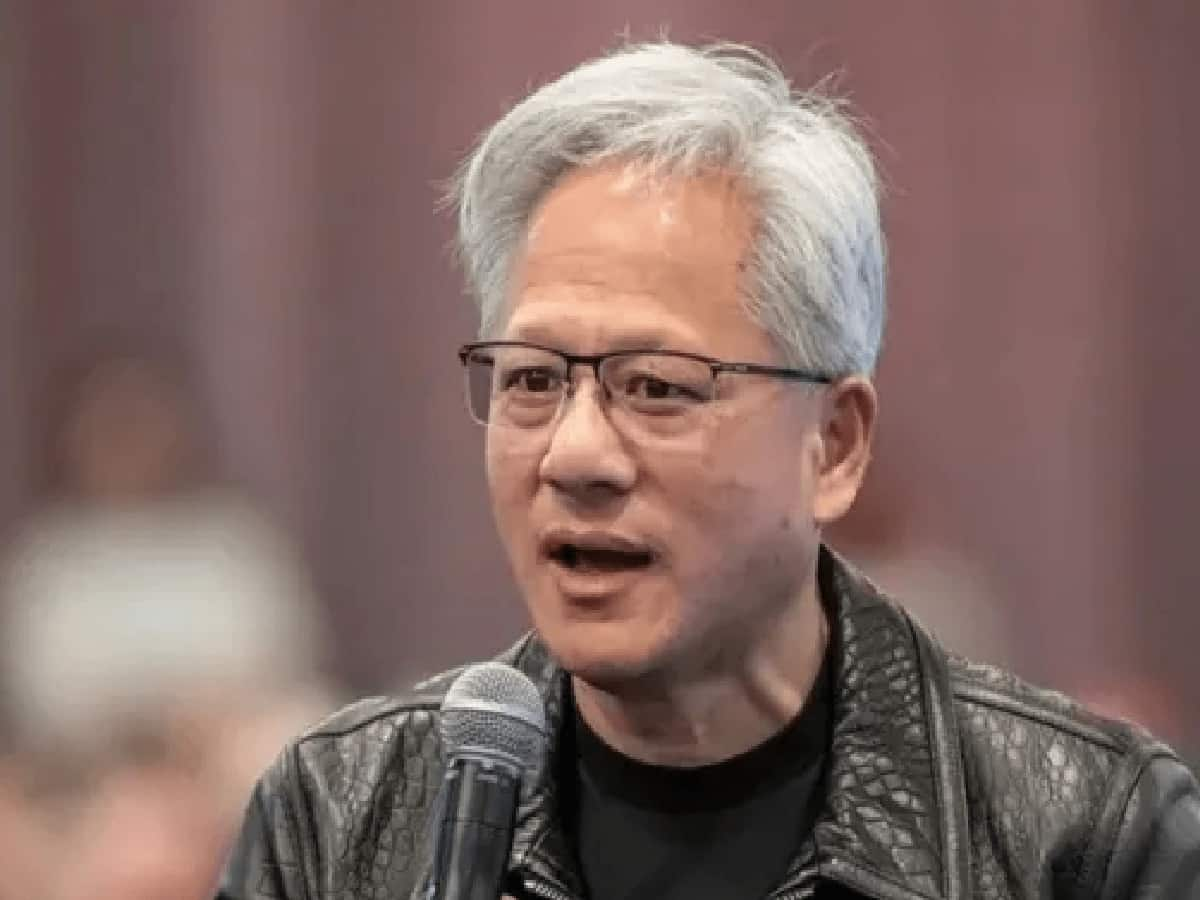
Nvidia CEO Jensen Huang Admits Affair With Suspected Chinese Spy
In a corporate and national security shockwave reverberating across the global semiconductor landscape, Jensen Huang, the co-founder and chief executive officer of Nvidia Corporation, has formally admitted to an extramarital affair with Alice Huang, a former executive of Singapore-based cloud firm Megaspeed who has been identified by United States intelligence agencies as an operative working on behalf of Beijing. The disclosure, confirmed by Huang in an emotional memo addressed to the company's global workforce titled "A Message to the Company," landed amid growing media revelations and regulatory investigations concerning potential breaches of American technological hegemony. As the head of the world's most valuable artificial intelligence hardware giant, Huang issued an unreserved personal apology to his family and colleagues, stating that he takes total responsibility for his personal conduct. In response, Nvidia's board of directors announced an independent investigation spearheaded by outside legal counsel to determine whether corporate proprietary assets, cutting-edge semiconductor intellectual property, or United States national security secrets were compromised.
Jensen Huang’s Confession: A Personal Apology to Family and Colleagues
The controversy escalated when details surfaced from a comprehensive investigative dossier published by The New York Times, reporting that federal counterintelligence agencies had tracked interactions between the 63-year-old chipmaker chief and Alice Huang. Conceding the reality of the relationship, Jensen Huang addressed his global workforce directly, offering a candid admission of infidelity and personal lapse in judgment. In his internal letter, Huang wrote: "I owe my family and all of you an apology. I was unfaithful to my wife. My actions hurt her and our children. There is no excuse for what I did. I am deeply sorry."
Huang emphasized that throughout his life, his family had offered unconditional support, and he acknowledged that his personal missteps had severely strained that domestic foundation. He reiterated that he fully accepts the personal and public criticism resulting from the affair, pleading with external observers and media organizations to protect the privacy of his wife, Lori Huang, and their adult children, Spencer and Madison, who bear no responsibility for his choices. Addressing the professional implications, Huang stated that steering Nvidia remains the privilege of his life and reaffirmed his steadfast loyalty to the United States. "I am committed to protecting Nvidia and supporting America's national security," he stated, assuring all stakeholders of his total transparency and complete cooperation with the board's newly commissioned inquiry.
Board Initiates Independent Probe: Evaluating Security and Trade Integrity
Following Huang’s disclosures and subsequent intelligence briefings, Nvidia’s board of directors issued an official statement confirming the immediate commencement of a formal, independent investigation. The review is being overseen by a special committee of independent directors who have engaged outside independent legal counsel and technical forensic experts. The mandate of the inquiry is to examine all communications, supply contracts, and executive engagements involving Alice Huang and her affiliated business ventures to verify whether foreign intelligence entities gained unauthorized insights into Nvidia’s hardware blueprints or high-performance computing roadmaps.
Despite the gravity of the allegations, the board stated that preliminary assessments have provided no evidence or basis to indicate that American national security was breached or that Nvidia's proprietary graphics processing unit (GPU) designs were compromised. The board explicitly reaffirmed its confidence in Huang’s corporate stewardship, confirming that he will continue executing his executive responsibilities without interruption while the investigation proceeds. Meanwhile, on Capitol Hill and within the executive branch, officials have adopted a measured stance; US Secretary of State Marco Rubio declined to offer direct commentary during his departure for diplomatic engagements in Europe, characterizing the ongoing inquiry as an internal corporate matter currently under review.
The Megaspeed Axis: Sanctions, Server Farms, and Supply Chain Audits
At the structural center of the controversy sits Megaspeed, an expanding Singapore-headquartered cloud infrastructure and data center firm where Alice Huang—also known in regional enterprise registries as Huang Le—previously served in senior leadership capacities. The firm had already attracted scrutiny from the United States Department of Commerce's Bureau of Industry and Security (BIS), which has been probing whether third-party procurement entities in Southeast Asia served as conduit hubs for rerouting advanced computing hardware into mainland China to evade US export prohibitions.
US intelligence assessments allege that China's Ministry of State Security cultivated Alice Huang to establish access to semiconductor leadership and monitor technical developments surrounding next-generation AI accelerators. Addressing these geopolitical concerns, Jensen Huang clarified that Nvidia’s institutional interactions with Megaspeed conformed to standard industry procurement practices. He affirmed that Nvidia maintains an exhaustive, end-to-end accounting of every advanced GPU shipped and deployed across global server installations, asserting that his professional interactions with Alice Huang did not deviate from standard executive dialogues held with international enterprise clients. He also noted that Alice Huang is no longer associated with Megaspeed and that federal authorities had not issued prior notices to Nvidia regarding counterintelligence concerns surrounding her commercial activities.
Geopolitical Stakes: The Battle Over Advanced Semiconductor Dominance
The unfolding corporate inquiry lands at a sensitive moment in international technology policy. Under both the Biden and Trump administrations, Washington has erected high regulatory barriers to prevent Beijing from obtaining cutting-edge microchips capable of training advanced large language models or powering sophisticated military simulations. High-performance processors—spanning Nvidia's Hopper, Blackwell, and custom enterprise architectures—remain tightly controlled, turning AI compute into an essential instrument of national security.
The prospect of foreign intelligence operations directly targeting the executive leadership of premier Silicon Valley firms underscores the vulnerabilities confronting global technology supply chains. While Wall Street analysts have closely monitored market reactions to the news, tech sector observers note that Nvidia’s near-monopoly on advanced AI accelerators places an unprecedented level of national responsibility upon its executive suite. As independent investigators analyze communication logs and procurement documents, the outcome of the probe will test not only the governance structure of the world’s most influential chipmaker, but also the effectiveness of corporate defenses against modern state-sponsored industrial espionage.




