







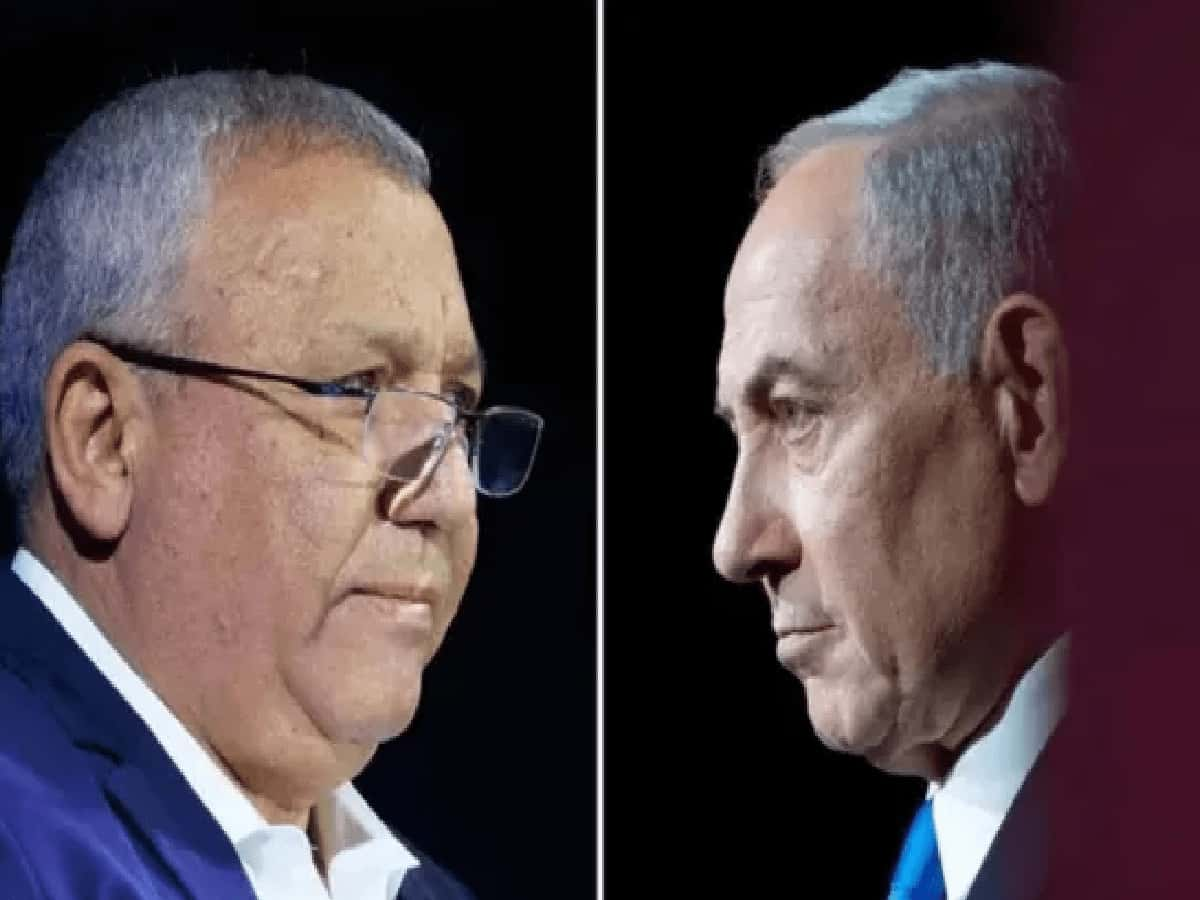
Is Netanyahu's Era Ending? Eisenkot Mandated to Form Government
In a political turning point that could mark the end of Prime Minister Benjamin Netanyahu’s record-setting tenure in power, Israeli President Isaac Herzog has formally tasked opposition figure and former Israel Defense Forces (IDF) Chief of Staff Gadi Eisenkot with assembling the nation's next governing coalition. The consequential mandate follows the inconclusive national election of October 27, 2026, which left the 120-seat Knesset deeply fractured without a clear single-party majority. During extensive consultations held at the President's Residence in Jerusalem, Eisenkot, leader of the centrist Yashar party, secured official recommendations from 67 lawmakers—comfortably surpassing the critical 61-seat threshold required for a legislative majority. By contrast, Netanyahu received endorsements from just 46 lawmakers after long-standing religious allies distanced themselves from his bid. While the mandate represents the opposition’s most formidable opportunity to unseat the incumbent premier in years, assembling a functioning cabinet across ideological fault lines spanning Arab factions, secular nationalists, and ultra-Orthodox parties presents a formidable political gauntlet. Here are the ten crucial takeaways defining Israel’s high-stakes race to build a new government.
1. Eisenkot Granted Up to Six Weeks to Assemble a Governing Majority
Under basic Israeli constitutional law governing executive power transitions, President Herzog’s formal mandate grants Gadi Eisenkot an initial statutory window of 28 days to conclude negotiations with prospective alliance partners. Should ongoing talks demonstrate credible momentum, the president holds the legal authority to grant a single 14-day extension, providing Eisenkot a maximum of 42 calendar days to secure formal confirmation before the Knesset. The decision deals a sharp tactical blow to Netanyahu, whose uninterrupted hold on the premiership since late 2022 faced unprecedented headwinds following the trauma of the October 7, 2023 war and lingering regional escalations. Accepting the presidential assignment, Eisenkot declared on social media platform X: "The time has arrived to establish a broad national emergency government. I will do everything humanly possible to ensure that we prove worthy of this national mission".
2. How the Opposition Secured 67 Lawmaker Recommendations
The arithmetic underlying Eisenkot's unexpected initial triumph stems from an unprecedented convergence of disparate political blocs determined to bring political change to Jerusalem. Of the 120 parliamentarians in the new Knesset, recommendations for Eisenkot were delivered by factions representing 67 seats: the mainstream Jewish-led opposition "Change Bloc" holding 48 seats (comprising Yashar with 21 seats, the centrist Together party with 12, the left-wing Democrats with 8, and the right-wing Yisrael Beiteinu with 7), joined by Arab-led parties Ra'am with 8 seats and the Joint List with 11 seats. The unified decision by the 11 lawmakers of Ahmad Tibi’s Joint List to endorse Eisenkot provided the decisive boost pushing him past the 61-seat line. Meanwhile, Netanyahu’s camp managed just 46 recommendations, while seven ultra-Orthodox lawmakers pointedly abstained from backing either candidate. However, constitutional experts caution that preliminary recommendations to the president do not automatically translate into a ratified coalition agreement, leaving Eisenkot with the task of bridging diametrically opposed policy platforms.
3. Arab Factions Hold Key Leverage Amid Fragile Compromises
With 19 collective seats in the new parliament, Arab-led parties Ra'am and the Joint List wield unprecedented parliamentary leverage in determining whether Eisenkot can successfully form a viable administration. Modern Israeli history records only a single instance of an Arab faction participating directly in an executive coalition—when Mansour Abbas’s Ra'am joined Naftali Bennett and Yair Lapid’s government in 2021, an experiment that collapsed after 18 months under intense ideological pressure over security and settlement regulations in the West Bank. Eisenkot could theoretically assemble a minority cabinet comprising his 48 core Zionist allies while relying on outside confidence-and-supply agreements from Arab lawmakers to command a 67-seat working majority. Yet, that pathway faces steep domestic friction: Avigdor Lieberman’s right-wing Yisrael Beiteinu has repeatedly ruled out serving in any cabinet dependent on Arab votes, while Yair Golan’s Democrats have argued that integrating Arab citizens into formal democratic governance is essential for societal cohesion.
4. Ultra-Orthodox Factions Offer Alternative Route to Power
To bypass reliance on non-Zionist Arab parties, Eisenkot’s strategic team has opened discreet communication channels with Israel’s two prominent ultra-Orthodox (Haredi) factions, which collectively control 13 Knesset seats. Securing their backing would elevate the opposition bloc comfortably above the 61-seat threshold without triggering a walkout from hawkish allies like Lieberman. However, any prospective alliance with Haredi parties faces fierce contention over the universal military conscription debate. Both Eisenkot and Lieberman have been vocal advocates for ending blanket military draft exemptions for ultra-Orthodox yeshiva scholars, arguing that the burden of national defense cannot rest solely on secular and modern Orthodox citizens. While Sephardic ultra-Orthodox party Shas initially supported Netanyahu, Ashkenazi faction United Torah Judaism (UTJ) broke ranks by refusing to recommend the incumbent premier to President Herzog, creating an opening for difficult compromises on religious education funding and phased military enlistment frameworks.
5. Four Foundational Pillars Anchor Eisenkot’s Proposed Emergency Government
Outlining his blueprint for political renewal, Gadi Eisenkot announced that his administration will operate strictly under four non-negotiable governance principles designed to stabilize democratic institutions. These pillars include: full statutory recognition of Israel as an explicitly Jewish and democratic state; uncompromising adherence to the democratic ideals enshrined in Israel’s 1948 Declaration of Independence; the implementation of equitable and universal national or military service obligations for all domestic demographics; and an unyielding commitment to dismantling the military, administrative, and governing wings of Hamas. Eisenkot’s Yashar party affirmed that ministerial portfolios will be extended exclusively to parties aligned with these core standards, while urging moderate Likud lawmakers to abandon their alliances with ultranationalist factions.
6. Likud Remains Largest Single Party as Religious-Nationalist Coalition Shrinks
Despite the setback of losing the first crack at government formation, Benjamin Netanyahu remains an influential force within Israeli domestic politics. His Likud party emerged from the October 27 ballot as the single largest party in the Knesset, capturing 27 seats. Nevertheless, the broader religious-nationalist coalition that sustained Netanyahu in office suffered substantial electoral attrition, shrinking from 64 seats down to 53—falling well short of the 61-seat governing threshold. The decision by United Torah Judaism to withhold its endorsement during consultations with President Herzog marked a major crack in Netanyahu’s traditional coalition, underscoring growing doubts regarding his ability to guarantee legislative stability.
7. Netanyahu Pushes National Unity Framework to Counter Mandate
Seeking to wrest the political initiative back from his rival, Netanyahu delivered a televised national address proposing the immediate establishment of a broad-based national unity government encompassing all Zionist factions in the Knesset. Framing his initiative around existential foreign policy challenges, Netanyahu argued that confronting nuclear ambitions in Iran and countering regional hostility requires unified political direction. He maintained that a broad coalition under his leadership would focus on neutralizing regional security threats, preserving democratic unity, and reinforcing sovereign borders. However, opposition figures promptly rebuffed the proposal as a tactical maneuver to avoid leaving office; Democrats leader Yair Golan insisted that only a clean break from Netanyahu's administration can restore public trust, ensure shared conscription, and safeguard Israel's democratic foundations.
8. Polarization Over Arab Party Endorsements Intensifies
A central plank of Netanyahu’s public relations and political counter-offensive has focused on portraying any prospective collaboration between Eisenkot and Arab-led parties as an unacceptable national security hazard. Ahead of President Herzog’s formal announcement, the prime minister publicly warned against constructing an administration reliant on factions he characterized as hostile to state defense, claiming without substantiated evidence that Arab turnout skewed the electoral mandate. In response, Eisenkot reiterated that his talks with Arab representatives are bound by strict conditions, including the recognition of Hamas as a terror organization that must be dismantled. The debate over Arab party participation has emerged as one of the most polarizing challenges in Eisenkot’s negotiation timeline.
9. Netanyahu Awaits Another Chance Should Negotiations Falter
If Gadi Eisenkot fails to cobble together a 61-seat majority within his designated 42-day window, constitutional precedent dictates that President Herzog could reassign the governing mandate to Benjamin Netanyahu. Should that occur, the incumbent prime minister would likely employ aggressive legislative maneuvers, attempting to peel away individual lawmakers or splinter factions from the opposition bloc through lucrative committee appointments and policy pledges. Netanyahu has successfully executed similar strategies in the past, destabilizing the fragile Bennett-Lapid coalition ahead of the 2022 elections to engineer his return to power. However, with the opposition alliance maintaining wide public backing, orchestrating widespread defections across the political aisle will prove considerably more challenging this time.
10. The Shadow of Fresh Elections Looms Over Impasse
Should both Eisenkot and Netanyahu fail to secure a parliamentary majority, the mandate enters a 21-day window where any Knesset member who collects 61 signatures can be tasked with forming a government. If no candidate succeeds within that timeframe, the Knesset will automatically dissolve, triggering Israel's sixth general election in under eight years. Alternatively, an eleventh-hour unity coalition between Eisenkot’s bloc and the Likud party remains a mathematical possibility commanding 67 seats, though it would require Eisenkot to abandon his central campaign pledge of unseating Netanyahu, while requiring Likud to distance itself from far-right allies.




