







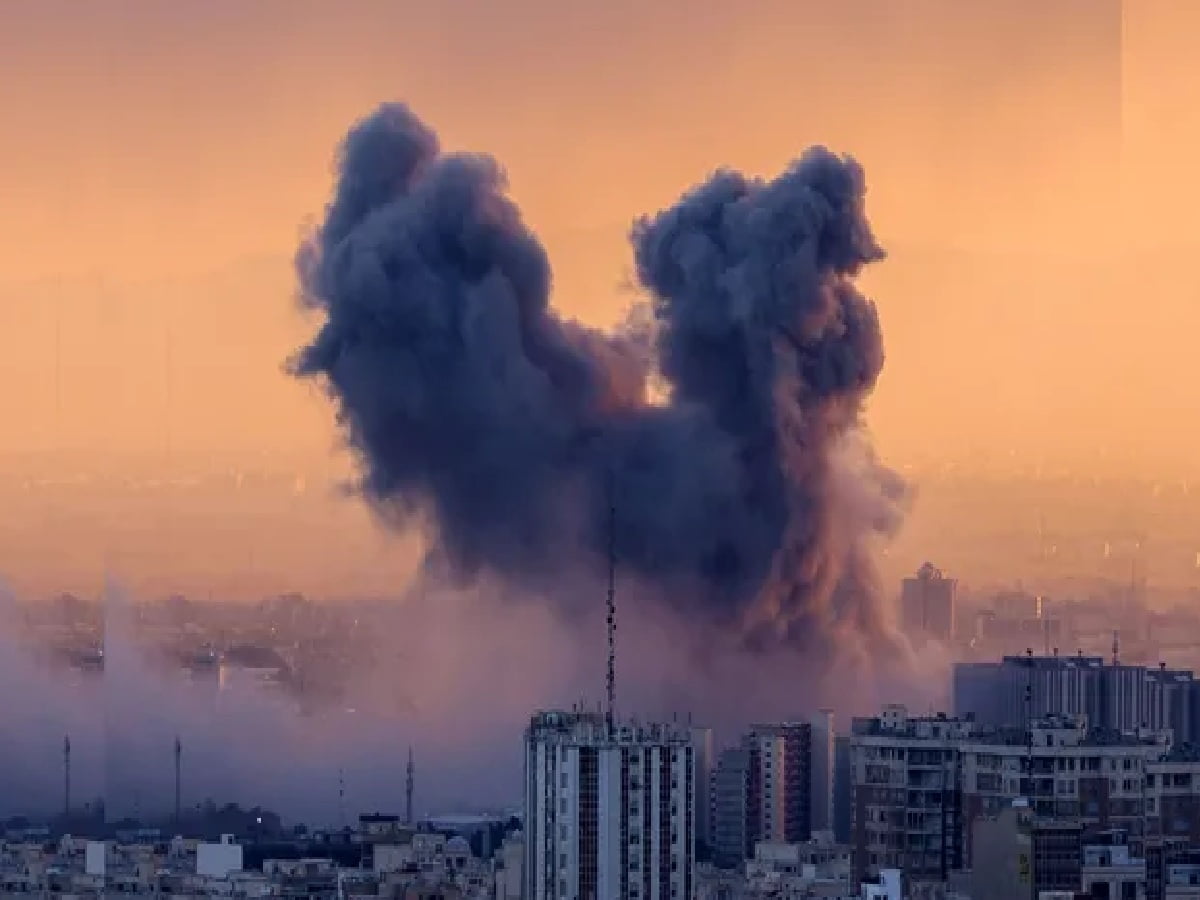
Gulf Crisis: Two Italians Killed in Kuwait Drone Strike, Iran Denies
Escalating security tensions across West Asia claimed civilian lives in the Persian Gulf after falling shrapnel from intercepted unmanned aerial vehicles struck a defense-linked site in Kuwait, triggering swift diplomatic reactions from Kuwait City, Rome, Tehran, Brussels, and Washington. Highlighted across international, defense, and Indian diplomatic desks on Friday, November 27, 2026, Kuwait's Defense Ministry spokesperson Colonel Saud Abdulaziz Al Atwan confirmed that air defense units intercepted several hostile drones targeting a vital site on Thursday, November 26, 2026, but falling debris killed two Italian citizens and injured two others—one Kuwaiti and one Pakistani national. In Rome, Italian Foreign Minister Antonio Tajani informed the Senate that the two deceased civilians were technicians employed by the Italian subsidiary of German defense group Rheinmetall and stationed at an air defense surveillance facility in Kuwait, while European Commission President Ursula von der Leyen urged stronger pressure on Tehran. Tehran firmly rejected responsibility: senior Iranian military spokesperson General Abolfazl Shekarchi stated that Iranian forces had carried out no military or offensive operations in the Gulf, while Iranian Foreign Minister Abbas Araghchi wrote on Telegram that the incident appeared to be a "precooked recipe for war" and offered joint investigation with Kuwait to identify those responsible. Parallel developments underscored wider regional and maritime strains—from Iranian President Masoud Pezeshkian calling for domestic unity while inaugurating the first phase of an urban rail project in Khorasan province, to US President Donald Trump rebuking New York Times correspondent David E. Sanger on Truth Social while defending his administration's naval blockade against Iran, and Union Shipping Minister Sarbananda Sonowal confirming that all eight Indian seafarers aboard the tanker MT Med Amre (carrying 7,000 metric tonnes of diesel) were safely evacuated to a hospital in Spain before the vessel sank near Ibiza, tracking closely across Kuwait City, Rome, Tehran, New Delhi, Lucknow, Mumbai, and Madrid.
Kuwait Drone Strike, Tehran's Denial & Parallel Global Developments
To bring together the verified casualty, technical, and diplomatic details from the November 26 drone interception incident in Kuwait, how Iran, Italy, the EU, and the United States responded across diplomatic and political channels, and the maritime update on Indian seafarers rescued from the sunken tanker MT Med Amre near Spain, the tables below organize key facts:
Kuwait Air-Defense Incident & Diplomatic Responses (Nov 26 – 27, 2026)
| Institutional Actor | Verified Statement / Action | Strategic & Diplomatic Context |
| Kuwait Ministry of Defence (Spokesperson Col. Saud Abdulaziz Al Atwan) | Confirmed air defenses intercepted several hostile drones targeting a vital facility on November 26, 2026; falling shrapnel killed two Italian citizens and injured one Kuwaiti and one Pakistani worker. | Kuwait's Foreign Ministry condemned what it termed continued aggression and maintained armed forces on high alert. |
| Italy & European Union (FM Antonio Tajani & EU Chief Ursula von der Leyen) | Antonio Tajani confirmed to the Italian Senate that both victims were technicians with Rheinmetall's Italian unit posted at an air-defense surveillance site; Ursula von der Leyen called for added pressure on Tehran. | Marks rare European civilian contractor fatalities in Gulf air-defense infrastructure during ongoing regional friction. |
| Iran (Gen. Abolfazl Shekarchi, FM Abbas Araghchi & President Masoud Pezeshkian) | Gen. Shekarchi denied any Iranian offensive operation in the Gulf; FM Araghchi called the claim a "precooked recipe for war" on Telegram and proposed a joint probe with Kuwait; President Pezeshkian inaugurated phase one of a Khorasan urban train line and urged national solidarity. | Tehran sought to distance itself from the Kuwait strike while projecting domestic resilience under sanctions and external pressure. |
| United States (President Donald Trump) | Criticized New York Times journalist David E. Sanger on Truth Social over coverage of US policy, highlighting the US naval blockade against Iran and recent operations in Venezuela as major administration achievements. | Reflects intense political messaging in Washington surrounding maritime enforcement and regional deterrence. |
Maritime Update: Tanker MT Med Amre Sinks Off Spain, Eight Indians Safe
| Maritime Parameter | Verified Details | Official Indian Government Response |
| Vessel & Incident Location | Tanker MT Med Amre (carrying 7,000 metric tonnes of diesel) sank off Spain near Ibiza after crew abandoned ship. | Spanish maritime authorities reported no immediate oil leak from the sunken hull while investigating the cause. |
| Crew & Indian Seafarers | All eight Indian crew members on board were rescued safely and taken to a nearby hospital in Spain for medical evaluation; among the wider 17-member crew, one non-Indian seafarer later died en route to hospital. | Union Shipping Minister Sarbananda Sonowal confirmed on X that all eight Indians are safe and that Indian authorities remain in close contact with the crew manager. |
Why Gulf Air-Defense Incidents and Maritime Safety Matter for India
For millions of Indian expatriates living across Kuwait, Saudi Arabia, the UAE, and neighboring Gulf states—including large communities from Uttar Pradesh (Lucknow, Gorakhpur, Varanasi, Prayagraj), Kerala, Tamil Nadu, and Maharashtra—any aerial escalation in the Persian Gulf carries direct personal and economic stakes. At the same time, with Indian seafarers making up roughly 10% to 12% of the global maritime workforce, rapid diplomatic and shipping-ministry coordination during incidents like the MT Med Amre sinking off Spain remains vital for crew welfare.
What Diplomatic and Maritime Observers Are Watching Next
Across Kuwait City, Rome, Tehran, New Delhi, Lucknow, and Madrid, attention now turns to whether Kuwait and Iran pursue any technical verification channel over the drone debris, how Italy and European Union partners calibrate diplomatic responses, and formal maritime inquiry findings into the sinking of MT Med Amre off Spain.




