







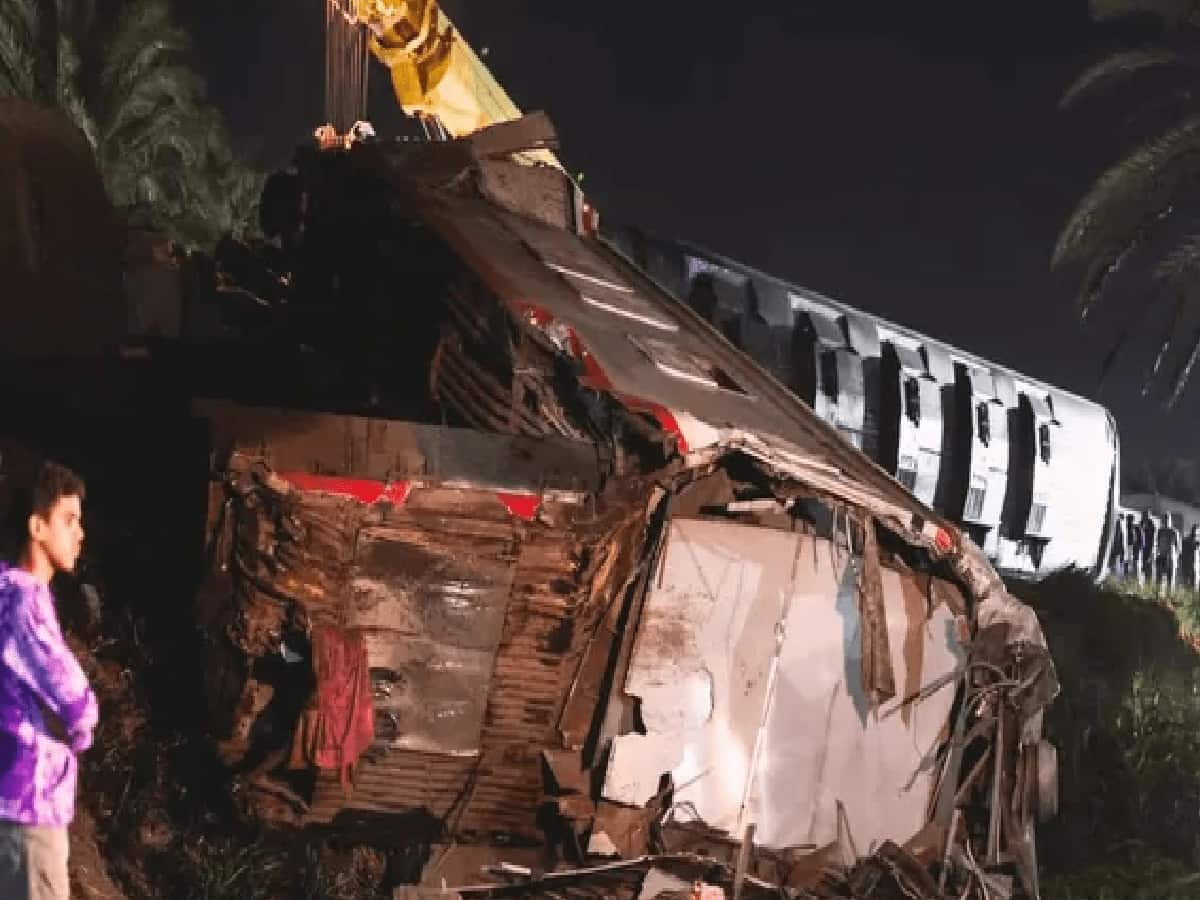
Egypt Train Crash: 7 Dead, 125 Injured in Fatal Giza Rail Collision
In a devastating rail disaster south of the Egyptian capital, at least seven people were killed and 125 others sustained injuries when two passenger trains collided along the Nile Valley rail corridor on Sunday, November 8, 2026. The fatal incident occurred in the rural Al-Ayyat district of Giza Governorate, approximately 52 kilometers south of central Cairo, when a northbound train traveling from Giza toward the southwestern oasis province of Fayoum slammed into the rear carriage of a stationary passenger service bound for the southern historic hub of Aswan. The impact of the collision sent several passenger coaches hurtling off the tracks, crushing structural steel frames, trapping commuters in mangled compartments, and triggering emergency rescue operations through the night. As local villagers rushed to pull survivors from beneath the twisted wreckage before fleet ambulances arrived, Egypt's Ministry of Health and Population declared a high state of emergency across neighboring referral hospitals, while the Chief Prosecutor’s Office and railway authorities launched inquiries to establish why two trains were routed onto the same track.
Midnight Wreckage in Al-Ayyat: How the Fatal Rear-End Collision Occurred
The accident unfolded during the late afternoon as passenger services operated on peak festive schedules across northern and Upper Egypt. Preliminary investigations conducted by Egypt's Ministry of Transport and regional rail engineers indicate that the Cairo-to-Aswan passenger express was traversing the main southern arterial trunk line when it came to a halt or was traveling at minimal speed along the track within the Al-Ayyat perimeter. Minutes later, a second passenger train originating from Giza and heading toward Fayoum approached the same track block in the identical direction, failing to brake before colliding into the rear carriage of the train ahead.
The force of the rear-end impact crushed the final passenger carriage of the Aswan-bound train, causing several carriages to derail and plunge down the earthen track embankment. Eyewitnesses reported a deafening crash followed by plumes of kicked-up dust, twisted iron, and the shrieks of trapped passengers struggling in darkness. A train conductor was confirmed among the seven fatalities, while more than 125 passengers suffered blunt trauma injuries, fractures, and internal contusions.
Local Villagers Act as First Responders Amid Rescue Scramble
Long before official disaster management teams and specialized heavy lifting equipment arrived on the scene, rural residents living in the adjacent hamlet of Kafr Girja and neighboring villages along the canal bank mobilized to mount rescue efforts. Hearing the impact from their homes, hundreds of villagers rushed to the tracks with hand tools, flashlights, and ladders to assist survivors.
Eyewitness accounts detail the rescue operations:
-
Pulling Victims from Debris: Local resident Ayman Jamal recounted that neighbors climbed through shattered carriage windows, pulling dazed passengers from the wreckage and carrying over 80 injured individuals onto agricultural fields while awaiting medical response.
-
Tending to Critical Trauma: Villagers applied makeshift tourniquets using scarves and clothing to stop bleeding, though several severely crushed victims had succumbed to their injuries before they could be extricated from collapsed compartments.
-
Survivor Accounts: Passengers aboard the Fayoum-bound train, including survivor Farha Gamal, described chaotic scenes inside derailed cars, where passengers choked on airborne dust and navigated mangled seating fixtures to escape onto the embankment.
Emergency Response: 72 Ambulances Mobilized Across Giza and Beni Suef
Following notification of the mass-casualty incident, the Egyptian Ambulance Authority dispatched a fleet of 72 fully equipped emergency response vehicles to the Al-Ayyat district. Paramedics triaged the wounded on-site before transferring casualties to three major medical facilities, including Al-Ayyat Central Hospital, Hawamdia General Hospital, and Al-Wasta Central Hospital in the neighboring Beni Suef Governorate.
The Ministry of Health confirmed that of the 125 injured passengers admitted for emergency care, over 70 patients suffering from minor cuts and superficial bruises were stabilized and discharged by Monday morning. However, health officials noted that at least 12 individuals remain in critical condition within intensive care units, undergoing urgent orthopedic and neurological surgeries. To facilitate recovery efforts, Egyptian National Railways deployed heavy breakdown cranes and hydraulic jacks to the rural crash corridor, working under floodlights to clear derailed rolling stock and inspect railway infrastructure.
High-Level Probes Launched: President Sisi Vows Full Accountability
Addressing the nation following the disaster, Egyptian President Abdel Fattah el-Sisi expressed his condolences to the bereaved families and issued directives to state agencies to ensure comprehensive medical care for all survivors. The presidency ordered the Ministry of Transport, the Egyptian Railway Authority, and military technical inspectors to conduct a probe into the crash, instructing judicial authorities to determine operational culpability and hold anyone found negligent fully accountable.
Investigators from the Chief Prosecutor’s Office arrived at the site overnight to examine signaling equipment, track interlocks, and automated braking telemetry. Inquiries are focusing on whether electronic signaling failures, dispatch communication breakdowns, human operational errors, or a failure of onboard automatic train protection systems permitted two passenger services onto the identical track section without adequate safety clearance. Diplomatic condolences were conveyed by regional nations, including Saudi Arabia and Iran, while civic groups called for systemic rail safety audits.
Chronic Safety Challenges Across Egypt's Historic Rail Network
Egypt's railway system, serving an estimated population of over 110 million people, represents one of the oldest and most extensive transportation networks in Africa and the Arab world. Over the past decade, the Egyptian government has committed billions of dollars toward overhauling national transportation infrastructure, constructing multi-lane desert highways, monorail systems, and high-speed passenger corridors. However, modernizing the legacy conventional rail grid—beset by vintage rolling stock, aging tracks, and manual signaling junctions—remains an ongoing challenge.
The Al-Ayyat district holds painful historical significance in Egypt's transportation annals. The area was the site of the nation’s deadliest rail disaster in 2002, when a fire ripped through an overcrowded holiday passenger train traveling to Luxor and Aswan, claiming more than 370 lives. Another crash in the same locality in 2009 left dozens dead. As technical investigators analyze telemetry boxes and recovery cranes clear damaged carriages, this latest tragedy highlights the critical need to expedite modern automated safety infrastructure across Egypt's conventional transit network.




