







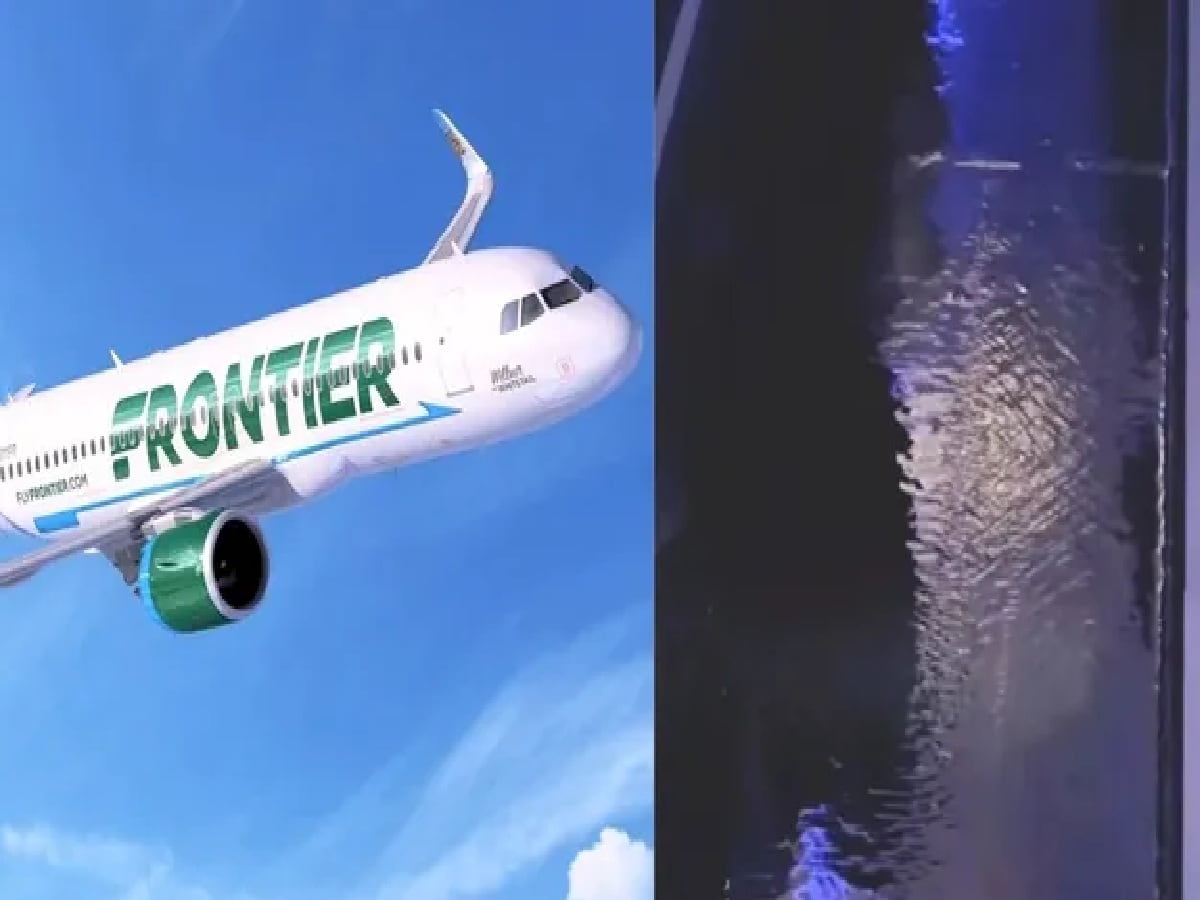
Cabin Flood Forces Frontier Flight 'Mayday' Landing in Chicago
A routine mid-morning domestic flight across the United States turned into a tense mid-air emergency when a malfunctioning bathroom faucet sent water pouring across a passenger cabin at cruising altitude, forcing the cockpit crew to broadcast an urgent distress call. Frontier Airlines Flight 3566, traveling from Denver International Airport to Detroit Metro Airport on Wednesday, November 11, 2026, was compelled to make an unscheduled emergency landing at Chicago O'Hare International Airport after a burst sink in the forward lavatory flooded the main aisle. As water spread rapidly along the cabin floor toward the rear rows, the pilots alerted air traffic controllers with a "Mayday, Mayday, Mayday" transmission, citing serious concerns that standing water could seep beneath the floorboards and damage vital onboard electronics. Although an off-duty plumber traveling on the flight helped crew members shut off the water supply, the sheer volume of water already pooled inside the aircraft left no margin for risk. Guided swiftly onto the runway at Chicago O'Hare, the airliner touched down safely and was directed to Gate M40 for urgent maintenance inspection, with Frontier Airlines confirming that all passengers and crew members escaped without injury.
Mid-Air Chaos on Flight 3566: How a Lavatory Sink Flooded the Cabin
The unexpected ordeal began shortly after Frontier Airlines Flight 3566 departed Denver International Airport just past 10:15 a.m. local time on its scheduled journey to Detroit. Operating on a relatively new aircraft delivered to the carrier in September 2026, the flight initially climbed smoothly before an unusual plumbing failure struck the forward restroom located just behind the flight deck. According to airline officials and passenger accounts, the faucet in the forward lavatory abruptly sprang a major leak, spraying water under pressure faster than the sink basin could drain.
Within moments, water spilled over the lavatory threshold and began streaming down the center aisle between rows of startled travelers. Video footage recorded by passengers inside the cabin and shared widely across social media captured clear water sloshing across the carpeted floor as flyers hurriedly lifted backpacks, shopping bags, and their feet off the ground. While an overflowing sink is a manageable household annoyance on solid ground, inside a pressurized commercial jet flying thousands of feet above the Midwest with nowhere to channel escaping water, the spreading flood quickly sparked alarm among passengers and cabin crew alike.
'Mayday, Mayday, Mayday': Why the Pilot Declared a Full Emergency
Recognizing that water flowing unchecked through the cabin posed far more than a housekeeping inconvenience, the flight crew immediately initiated emergency diversion procedures. In air traffic control audio recordings captured by LiveATC.net, the pilot is heard declaring a top-priority distress call—"Mayday, Mayday, Mayday"—before outlining the severity of the situation to controllers. "We'd like to declare an emergency, our forward lav sink has sprung a leak, and it's spraying so much water that it's flooding the entire cabin area in the back, and we are worried about electronics," the pilot radioed, requesting immediate clearance to divert to Chicago O'Hare instead of continuing onward to Detroit.
In international aviation protocols, a "Mayday" call represents the highest level of distress communication, signaling that an aircraft faces an immediate threat to flight safety and granting the crew absolute landing priority over surrounding air traffic. Aviation safety specialists note that the captain's concern over onboard electronics was entirely well-founded. On modern narrow-body airliners, the aircraft's main avionics bay—which houses critical flight-control computers, navigation systems, communication transceivers, and high-voltage electrical wiring—is situated directly underneath the forward cabin floor just ahead of the cockpit door. Even modest quantities of water seeping through floor seams into the subfloor electronics compartment can trigger electrical short-circuits, sensor malfunctions, or instrument failures, making an immediate descent and landing the safest course of action.
An Off-Duty Plumber Steps In Before a Safe Touchdown at Chicago O'Hare
Amid the commotion in the forward cabin, the crew received unexpected assistance from one of the passengers on board. According to travelers interviewed after landing, a licensed plumber who happened to be flying on Flight 3566 stepped forward to help flight attendants locate and shut off the water isolation valve beneath the malfunctioning forward lavatory sink. Although the passenger's timely intervention successfully halted additional water from gushing out of the burst tap, a substantial amount of water had already pooled across the main cabin floor and soaked interior carpets.
Because the crew could not verify on the ground whether moisture had already penetrated beneath the cabin deck toward sensitive wiring harnesses, the pilots maintained their emergency priority into Chicago O'Hare International Airport. Emergency ground vehicles stood by as routine precaution while the aircraft landed smoothly without further incident and taxied to Gate M40. In an official statement confirming the diversion, a Frontier Airlines spokesperson noted that the leak originated from the forward lavatory faucet and caused water to flow along part of the aircraft floor, prompting the captain to request an emergency landing. The carrier confirmed that zero injuries were reported among passengers or crew and arranged a replacement aircraft at O'Hare to transport stranded travelers onward to Detroit while maintenance technicians inspected the affected jet.
Aviation Safety Takeaways and What Flyers Should Know During Diversions
For frequent flyers worldwide—whether traveling on domestic routes in the United States or connecting through major international gateways from hubs such as New Delhi, Mumbai, and Bengaluru—the Chicago diversion highlights how strictly modern aviation prioritizes preventive safety. Even when a mechanical or plumbing malfunction appears non-structural to casual observers, pilots are trained to treat any fluid intrusion near electrical systems as a potential flight-control hazard and put the aircraft on the ground at the nearest suitable airport.
Travelers caught in an unexpected safety diversion are advised to follow crew instructions calmly, keep seatbelts fastened during rapid descents, and retain boarding passes and baggage tags so airline ground staff can swiftly transfer luggage onto replacement aircraft. Thanks to decisive cockpit judgment, seamless air traffic control coordination at Chicago O'Hare, and a helpful passenger with plumbing expertise, what began as a frightening mid-air flood ended safely on the tarmac without a single injury.




