







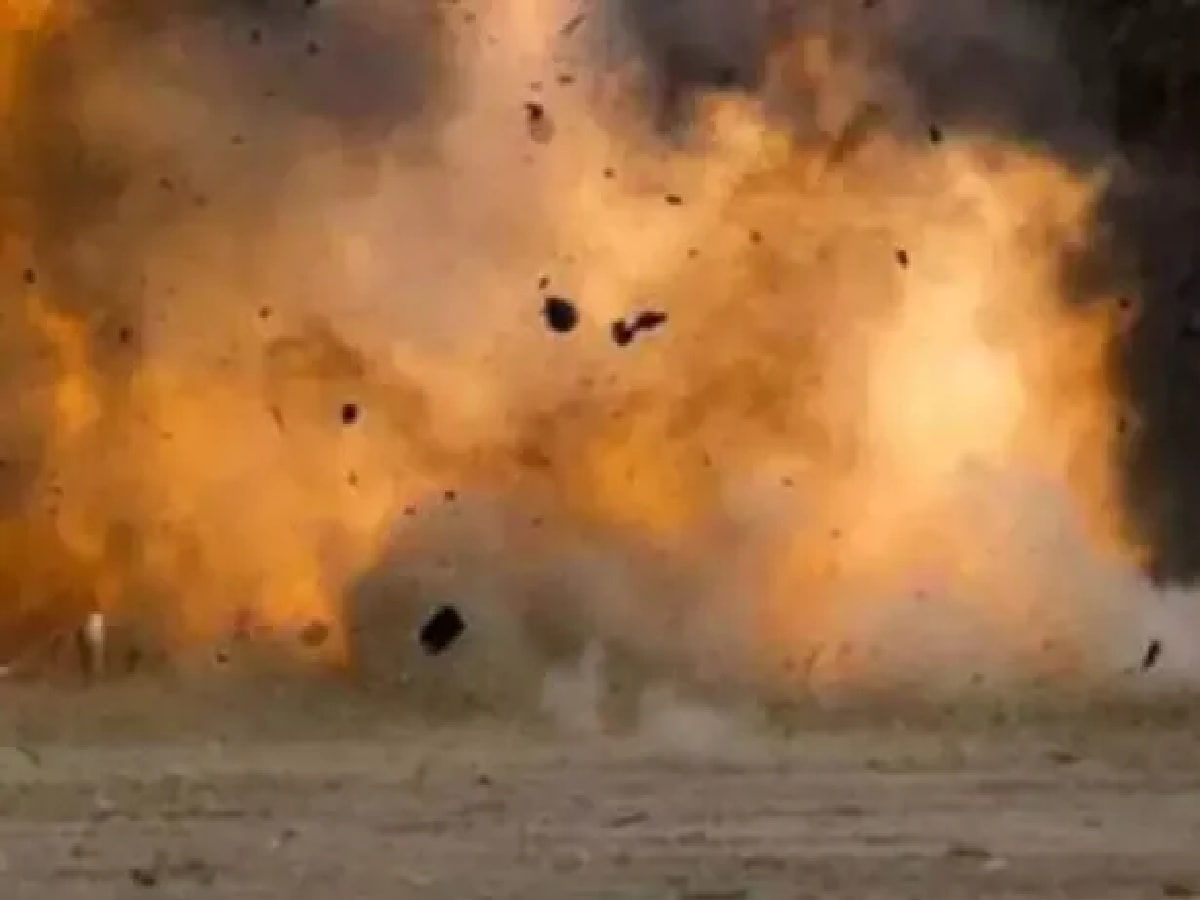
Pak Army Camp Hit by Truck Blast in Balochistan; Dozens Dead
A devastating suicide truck bombing has struck a Pakistani military installation in the restive Balochistan province, reportedly killing dozens of army personnel—including senior officers—and inflicting heavy structural damage on the fortified compound. The massive explosion occurred in the Kanak area of Mastung district, located south of the provincial capital Quetta, when an attacker drove a vehicle packed with explosives directly into the army base. According to local accounts and regional security reports, the force of the detonation was so immense that its deafening roar echoed several kilometers away, shattering glass windows in nearby civilian homes and sending thick plumes of smoke rising over the valley. While Pakistani military authorities have yet to issue an official statement detailing the exact casualty count or extent of structural destruction, heavily armed security reinforcements swiftly cordoned off the entire perimeter and restricted civilian movement around Kanak. For security observers across South Asia—including strategic analysts in New Delhi, Lucknow, and Jammu and Kashmir closely tracking instability along Pakistan’s western frontier—the Mastung strike underscores a sharp escalation in coordinated attacks targeting Pakistan’s security apparatus.
How the Truck Bombing Unfolded in Mastung's Kanak Area
Initial ground reports indicate that the assault was carefully timed to inflict maximum losses inside the military facility. According to security disclosures, the explosives-laden mini-truck rammed straight into the main entrance gate of the camp at a moment when a meeting of senior Pakistan Army personnel, including colonel-rank officials, was underway inside the premises. Bypassing outer checkpoints at high speed, the vehicle detonated upon impact near the camp’s administrative and residential blocks, collapsing sections of reinforced perimeter walls and triggering secondary blasts inside the compound.
Residents living in villages several kilometers from the Kanak base reported feeling tremors akin to an earthquake as shockwaves blew out windowpanes and rattled doors across the neighborhood. Immediately following the blast, sirens wailed across Mastung as military ambulances, bomb disposal squads, and rapid-reaction convoys converged on the scene. Approach highways linking Mastung to Quetta and neighboring districts were sealed off to facilitate emergency evacuations, with critically wounded personnel reportedly airlifted to military medical facilities in Quetta under tight aerial and ground surveillance.
Casualties, Official Silence, and Claim of Responsibility
In the immediate aftermath of the explosion, local media and regional sources reported that dozens of Pakistani security personnel had lost their lives, with senior officers counted among the fatalities. Subsequently, the separatist Baloch Liberation Army (BLA)—specifically its specialized suicide wing, the Majeed Brigade—claimed responsibility for the Kanak assault, asserting in a statement that at least 18 Pakistani military personnel were killed when its operative breached the camp’s main gate. Despite widespread reports of severe losses and extensive damage to barracks and military vehicles inside the base, Pakistan’s Inter-Services Public Relations (ISPR) and provincial authorities have maintained official silence, neither confirming the death toll nor releasing details of the security breach.
Defense analysts note that prolonged official silence following major attacks in Balochistan has become a recurring pattern whenever high-ranking officers or fortified garrison bases sustain heavy casualties. While forensic investigators and intelligence teams comb through the wreckage in Kanak to determine how an explosives-laden commercial truck reached the camp perimeter undetected, local hospitals in Mastung were placed on high emergency alert.
Surge in Drone and IED Strikes Across Mastung, Kalat, and Kachhi
The Kanak truck bombing is the latest and deadliest flashpoint in a week-long wave of intensified insurgent operations targeting Pakistani military and police forces across central Balochistan. Just days earlier on Monday, November 9, 2026, at least two explosive-laden drones struck the main Pakistani military camp in the Khadkocha area of Mastung, causing casualties among stationed personnel and damaging camp infrastructure. Around the same period, an improvised explosive device (IED) planted along a patrol route in neighboring Kalat district’s Marjan area detonated beneath a security forces vehicle, completely destroying the transport.
Further east in Kachhi district’s Bolan belt, armed fighters affiliated with the Baloch Republican Guards (BRG) also claimed responsibility for a coordinated drone strike and heavy-weapons ambush on a military convoy, stating that five security personnel were killed and several others wounded. Security experts point out that Baloch militant factions have noticeably evolved their battlefield tactics in recent months—establishing dedicated drone warfare units alongside traditional IED ambushes and vehicle-borne suicide attacks to overcome fortified checkpoints and surveillance towers.
Widening Security Crisis Across Pakistan's Western Frontier
The turmoil in Balochistan coincides with mounting violence across Pakistan’s northwestern province of Khyber Pakhtunkhwa, stretching the country’s military and law enforcement agencies across two volatile fronts. On Wednesday, fighters belonging to the Tehreek-e-Taliban Pakistan (TTP) launched a major ambush on mobile police units in Khyber Pakhtunkhwa, killing 13 police personnel including a Deputy Superintendent of Police. Taken together, the back-to-back assaults in Khyber Pakhtunkhwa and Mastung highlight deepening internal security vulnerabilities across Pakistan’s resource-rich western provinces. As troops remain on maximum alert across Quetta, Mastung, Kalat, and Khuzdar, the Kanak camp explosion stands as a stark reminder of the persistent insurgency challenging Islamabad’s writ in Balochistan.




