







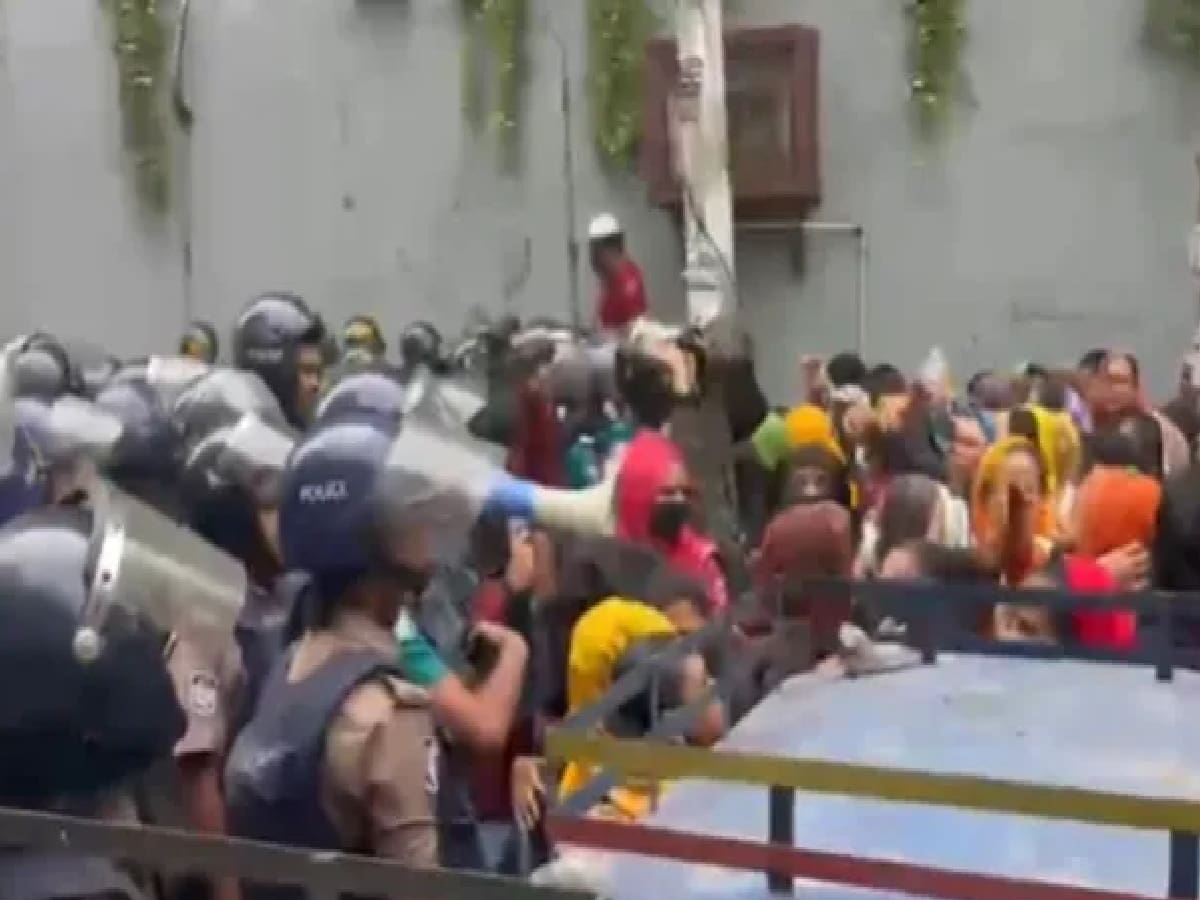
Bangladesh Garment Workers Protest for 30,000 Taka Wage; 40 Units Shut
Protests by ready-made garment (RMG) workers demanding an immediate hike in their minimum monthly wage to 30,000 Bangladeshi taka continued to disrupt manufacturing hubs around Dhaka on Monday and Tuesday, November 16–17, 2026, keeping at least 40 garment factories closed across the Savar and Ashulia industrial belt and prompting heightened police deployment in Mirpur. According to police officials and news agency ANI, demonstrators gathered in Dhaka's Mirpur neighborhood and attempted to block main thoroughfares before law enforcement personnel intervened to clear traffic and restore order. Hours earlier, on Monday afternoon around 3:00 PM, a group of textile workers assembled at Padmar Mor in Hemayetpur, Savar, dispersing peacefully only after industrial police urged them to vacate the roadway. Providing an official breakdown of the production impact across the Savar–Ashulia industrial zone, Ashulia Industrial Police-1 Superintendent of Police Mohammad Mominul Islam Bhuiyan confirmed that 27 factories were shut down under Section 13(1) of the Bangladesh Labour Act ("no work, no pay" provisions), nine units were closed indefinitely, and four factories declared a general holiday. The labour unrest—driven by soaring living costs as workers demand more than double the existing minimum monthly wage—coincides with the postponement of the Minimum Wage Board's third scheduled meeting on Monday, where factory owners were expected to submit their formal wage proposal. Simultaneously, security forces across Bangladesh remain on high alert on Tuesday, November 17, marking one year since the International Crimes Tribunal-1 delivered a death sentence against ousted Prime Minister Sheikh Hasina in connection with the July 2024 uprising. In Hasina's home district of Gopalganj, authorities deployed 10 platoons of Border Guard Bangladesh (BGB) backed by armored personnel carriers, surveillance drones, and body-worn cameras following street demonstrations by Awami League supporters ahead of reports of her planned return in December. For global apparel buyers, trade observers, and readers across Dhaka, Savar, Ashulia, Gazipur, Gopalganj, Chattogram, Kolkata, New Delhi, Lucknow, Mumbai, and London, the twin pressures of industrial wage disputes and political security clampdowns highlight a volatile week for South Asia's second-largest apparel exporter.
Why 40 Garment Factories Remained Closed Across Savar and Ashulia
Industrial police officers monitoring the Savar–Ashulia manufacturing corridor reported that while operations proceeded smoothly across the majority of plants, localized sit-ins and walkouts kept 40 ready-made garment factories shuttered. According to Superintendent of Police Mohammad Mominul Islam Bhuiyan, workers at one factory refused to resume duties after the Monday lunch break and staged a sit-in inside the premises, compelling management to declare a general holiday, while workers at two neighboring units also halted production to protest indoors.
| Industrial / Security Zone | Key Developments (November 16–17, 2026) | Official Action & Current Status |
| Mirpur (Dhaka) | Garment workers rallied demanding a 30,000 taka minimum monthly wage and attempted to block roads | Police intervened to prevent traffic gridlock and dispersed protesters |
| Savar & Ashulia Industrial Belt | Workers gathered at Padmar Mor (Hemayetpur) at 3:00 PM Monday; sit-ins reported inside three units | 40 factories closed: 27 under Section 13(1) of Bangladesh Labour Act, 9 indefinitely, and 4 on general holiday |
| Minimum Wage Board Talks | Workers demand Tk 30,000/month amid inflation; owners warn of factory security and export headwinds | Third Minimum Wage Board meeting scheduled for November 16 was postponed amid ongoing unrest |
| Gopalganj District Security | Awami League supporters staged protests ahead of Sheikh Hasina's reported December return; Nov 17 marks 1 year since ICT-1 verdict | 10 platoons of Border Guard Bangladesh (BGB) deployed with armored carriers, drones, and body-worn cameras |
Inflation, Wage Board Delays, and Stakes for Bangladesh's $38 Billion RMG Sector
Bangladesh's ready-made garment sector—valued at over $38 billion in annual exports and ranking second globally behind China—employs roughly four million workers, predominantly women. Labor unions and factory workers say persistent food and housing inflation has eroded purchasing power, making their demand for a 30,000 taka ($241–$243) monthly minimum wage urgent. Although the government constituted a six-member Minimum Wage Board earlier this month following highway blockades and clashes in Mirpur and Gazipur, Monday's postponement of the board's third sitting has prolonged uncertainty for both workers and factory owners.
Heightened BGB Deployment in Gopalganj on November 17 Anniversary
Alongside industrial policing around Dhaka, security agencies significantly reinforced deployments in Gopalganj, the ancestral home district of former Prime Minister Sheikh Hasina. In an official statement, Border Guard Bangladesh (BGB) confirmed that 10 platoons equipped with armored personnel carriers (APCs), aerial drones, and body-worn cameras have been stationed across sensitive intersections to prevent any breakdown in law and order. The security clampdown follows renewed street demonstrations by Awami League activists in Gopalganj after reports circulated regarding Hasina's possible return to Bangladesh in December, coinciding with the first anniversary of the November 17, 2025 International Crimes Tribunal-1 verdict that sentenced her to death over the July 2024 uprising.




