







11 Contenders for Nvidia CEO: 3 Indian-Origin Leaders in Race
Global technology markets and artificial intelligence hubs—from Silicon Valley to major Indian engineering centers in Bengaluru, Hyderabad, Pune, and New Delhi-NCR—are closely watching an extraordinary leadership transition at Nvidia. Following the abrupt resignation of co-founder and longtime Chief Executive Officer Jensen Huang on Thursday, November 12, 2026, amid intensifying scrutiny over multiple alleged extramarital affairs, the world’s most consequential AI chipmaker has launched a formal search for a permanent successor. Huang, who co-founded the company in 1993 and steered its transformation from a graphics-card supplier into a multi-trillion-dollar AI powerhouse, stepped down with immediate effect as president, CEO, and board director. To steady operations during the transition, Nvidia’s board appointed Executive Vice President and Chief Financial Officer Colette Kress as Interim CEO and named longtime director Harvey C. Jones as its first-ever independent Board Chair. As the board evaluates internal executives alongside external industry heavyweights, 11 prominent names have emerged in succession discussions—including three accomplished Indian-origin chief executives.
Three Indian-Origin Tech Titans in the Race to Lead Nvidia
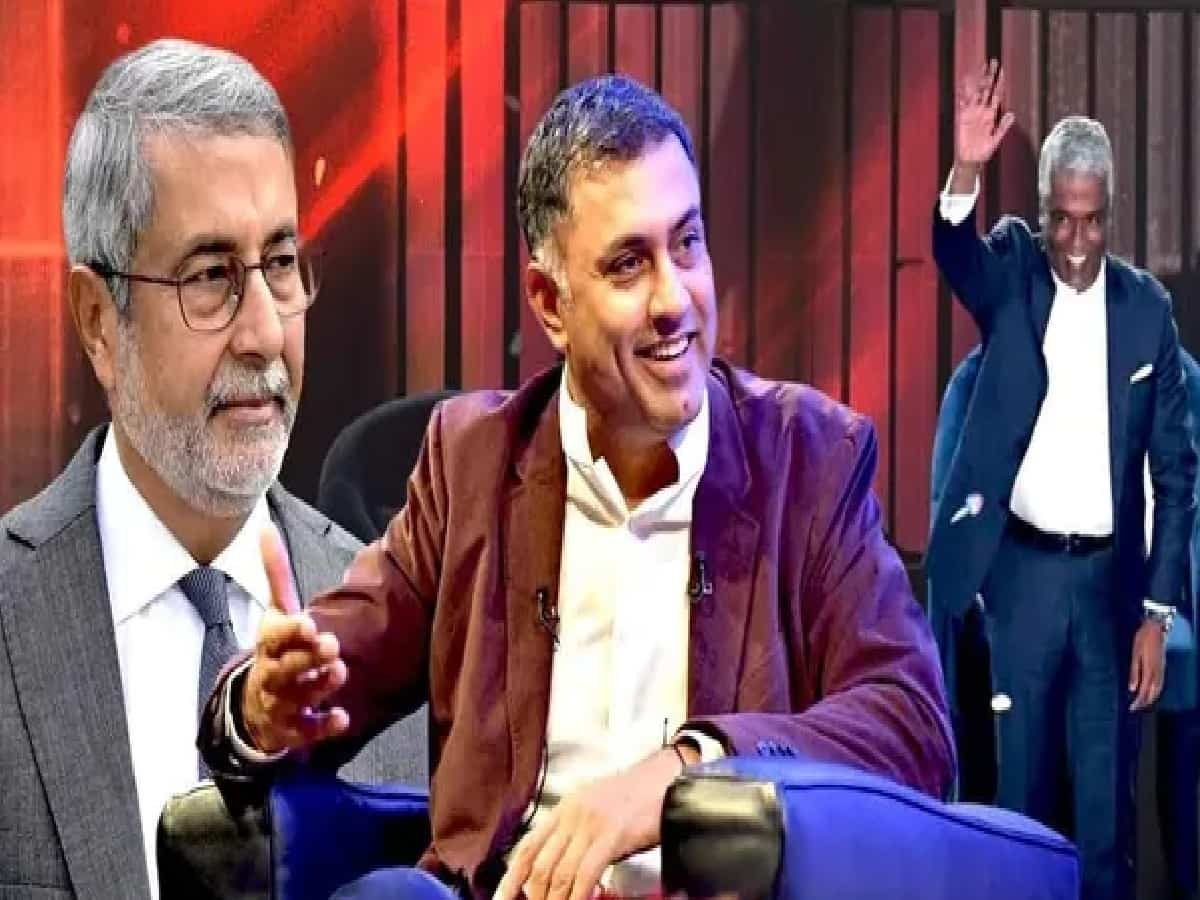
Among the external candidates drawing serious attention from Wall Street investors and semiconductor analysts are three Indian-origin leaders heading major global technology enterprises. Topping the semiconductor-focused contenders is Sanjay Mehrotra, Chief Executive Officer of US memory chip giant Micron Technology. Bringing over four decades of semiconductor experience, Mehrotra co-founded flash-memory pioneer SanDisk in 1988 and served as its CEO from 2011 until its sale in 2016 before taking the helm at Micron in 2017. Under his leadership, Micron pivoted aggressively toward high-bandwidth memory (HBM) chips essential for AI data-center servers, deepening its strategic partnership with Nvidia and propelling Micron’s valuation toward the $1 trillion mark amid the AI infrastructure surge.
A second Indian-origin executive floated by institutional investors is Nikesh Arora, Chairman and CEO of cybersecurity leader Palo Alto Networks since 2018. Having previously served as President and Chief Operating Officer of SoftBank Group and spent a decade in senior leadership at Google, Arora brings vast global dealmaking experience and a track record of scaling AI-driven enterprise cybersecurity, though analysts note his background centers on software and security rather than silicon design. Rounding out the Indian-origin trio is Thomas Kurian, CEO of Google Cloud. Overseeing Google’s cloud infrastructure, enterprise software, and AI platforms, Kurian possesses deep relationships with the hyperscale cloud customers that purchase the majority of Nvidia’s AI processors, even though his resume lacks direct semiconductor engineering experience.
Internal Contenders: Colette Kress and CUDA Architect Ian Buck
Within Nvidia’s own executive ranks, two veteran insiders stand out as natural frontrunners capable of preserving organizational continuity. Colette Kress, currently serving as Interim CEO, has functioned as Nvidia’s Chief Financial Officer since 2013 after holding senior finance roles at Microsoft, Cisco, and chipmaker Texas Instruments. Renowned for her command over financial discipline and strong credibility on Wall Street, Kress provides immediate stability during a sensitive governance period, though observers question who would champion Nvidia’s long-term technical vision if she assumes the permanent role.
Complementing Kress’s financial stewardship is Ian Buck, Nvidia’s Vice President of Hyperscale and High-Performance Computing. Having joined Nvidia in 2004, Buck played a foundational role in architecting CUDA, the proprietary parallel-computing software platform that unlocked general-purpose AI computing on Nvidia’s graphics processing units and built the company’s widest competitive moat. Managing Nvidia’s flagship AI hardware and software stack while working directly with major cloud customers, Buck embodies the deep technical leadership many analysts view as indispensable.
Semiconductor Rivals and Silicon Valley Heavyweights on the List
Beyond internal leaders and Indian-origin executives, six powerhouse figures from across the global semiconductor and consumer-tech ecosystem round out the 11-person shortlist. Rene Haas, CEO of British chip-architecture firm Arm since 2022, brings intimate familiarity with Nvidia’s culture after spending seven years there earlier in his career as Vice President and General Manager of computing products. Having guided Arm through its 2023 Nasdaq listing and expanded its footprint from mobile processors into data centers and PCs, Haas understands chip licensing intimately, albeit at a smaller revenue scale than Nvidia. Another seasoned silicon veteran on the radar is Pat Gelsinger, the former Intel CEO who departed in 2024 after leading an ambitious manufacturing turnaround. A 30-year Intel veteran who became its first Chief Technology Officer and later led VMware for nearly a decade, Gelsinger possesses rare dual mastery over chip design and foundry fabrication—critical knowledge given Nvidia’s reliance on external manufacturing partners.
Speculation has also swirled around Lisa Su, the acclaimed CEO of Nvidia’s fiercest rival, AMD. Born in Taiwan like Huang—and widely noted as his distant relative—Su has engineered one of Silicon Valley’s greatest comebacks while maintaining a calm, understated executive style and strong diplomatic rapport across crucial Asian supply chains, including China. Any move to recruit her, however, would trigger seismic reverberations across the chip industry. Alongside Su is Matt Murphy, CEO of Marvell Technology since 2016. A former 20-year veteran of Maxim Integrated, Murphy transformed Marvell into a premier supplier of data-center networking and custom AI accelerators, working closely with both cloud giants and Nvidia’s ecosystem.
Rounding out the 11 contenders are two iconic figures linked to Apple. Johny Srouji, Apple’s Senior Vice President of Hardware Technologies, oversees all custom silicon, modems, and hardware engineering at the tech giant, reporting to CEO John Ternus, who succeeded Tim Cook in September 2026. Having spearheaded the creation of Apple Silicon since joining Apple in 2008 after engineering roles at Intel and IBM, Srouji shares Nvidia’s vital manufacturing reliance on Taiwan Semiconductor Manufacturing Company (TSMC). Finally, former Apple CEO Tim Cook—who transitioned to Executive Chairman in September 2026 after growing Apple’s market capitalization from $350 billion to $4.5 trillion over 15 years—has reportedly emerged as US President Donald Trump’s favored choice for the role. Cook’s proven experience succeeding a legendary founder, managing complex Asian supply chains, and navigating Washington geopolitics gives him unique credentials.
What Nvidia's Board Needs Most in Its Next Permanent CEO
With Nvidia’s third-quarter fiscal 2027 financial results scheduled for release on Tuesday, November 17, 2026, the company’s board faces a delicate balancing act. While Nvidia’s multi-year product roadmap remains firmly established, portfolio managers emphasize that the real risk lies in operational execution—coordinating TSMC wafer capacity, navigating US export restrictions on advanced AI chips, and defending market share against custom silicon from hyperscalers. Whether the board ultimately selects a proven semiconductor operator like Sanjay Mehrotra or Rene Haas, a software-hardware insider like Ian Buck, or a seasoned corporate statesman, the chosen leader will inherit the daunting task of steering the AI revolution’s most vital company into its post-Huang era.




