







Yogi Adityanath's Silent Mahabharata Verse on Mother's Passing Explained
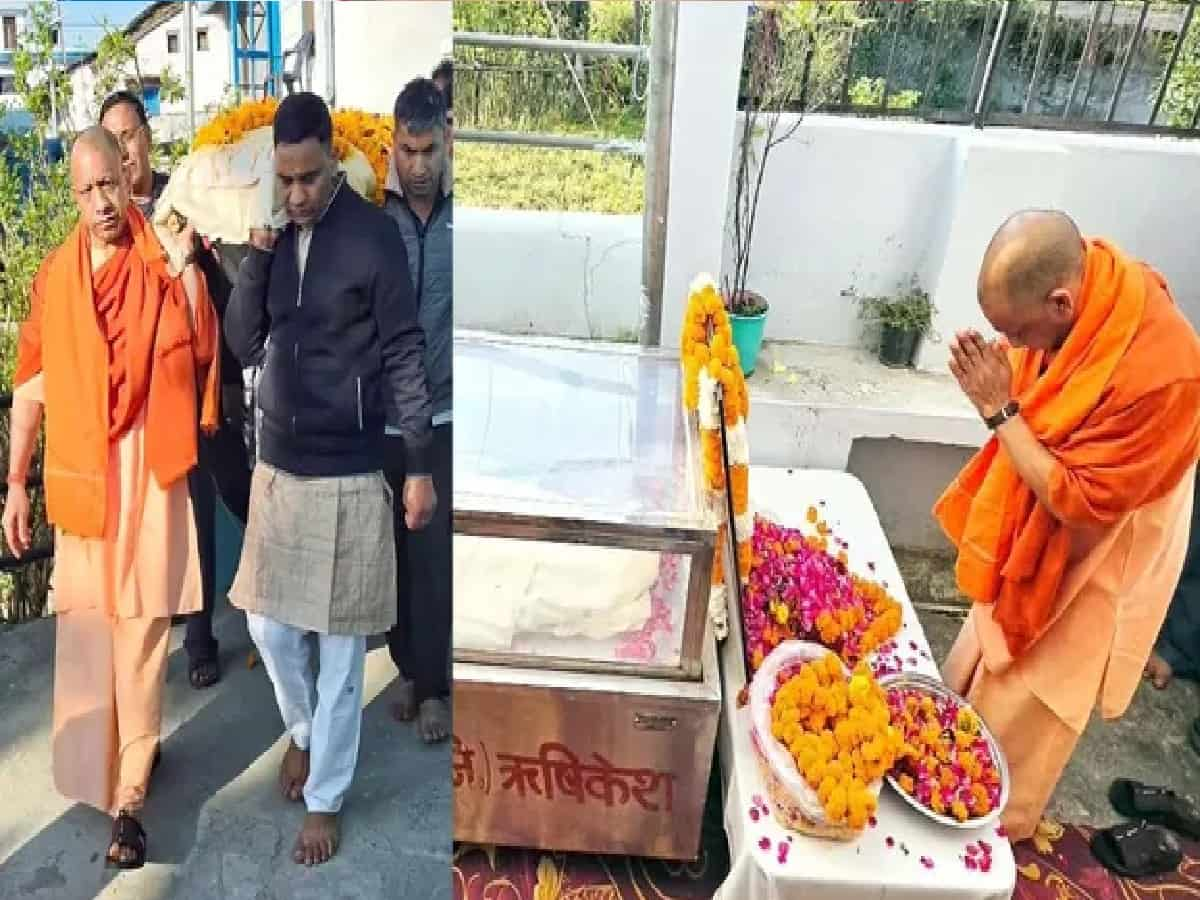
Some grief is far too vast for ordinary speeches or lengthy statements—and when sorrow touches the heart of a lifelong ascetic, silence often speaks louder than thousands of words. In the wake of the demise of his 91-year-old mother, Savitri Devi, and her solemn farewell in Panchur and Haridwar on Saturday, Uttar Pradesh Chief Minister Yogi Adityanath moved millions across the country by posting a single, deeply evocative Sanskrit shloka from the Mahabharata on his official social media handle without adding a single word of personal commentary. Reported across regional and cultural desks on Sunday, November 22, 2026, the post—shared alongside images from his mother's final journey—carried four timeless lines that instantly resonated with readers across India: "Nasti matrisama chhaya, nasti matrisama gatih; nasti matrisamam tranam, nasti matrisama priya" ("There is no shade like a mother, no refuge like a mother, no protector like a mother, and no one as dear as a mother"). Offering neither political rhetoric nor elaborate explanation, each syllable of the couplet conveyed the quiet reverence of a son honoring the supreme place of a mother in human life, sparking widespread curiosity among citizens and students about where the verse originates in Indian scripture and what episode inspired it. Providing authoritative scholarly insight, Dr. Suryakant Tripathi, Assistant Professor in the Department of Sanskrit at Deen Dayal Upadhyaya Gorakhpur University, explained that this profound verse is drawn from the Shanti Parva of the Mahabharata, where Yudhishthira reminds his brothers of the incomparable debt they owe their mother, Kunti, after losing their father King Pandu during their years of hardship and exile. Just as Yudhishthira affirmed that in a father's absence a mother becomes both mother and father—serving as her children's foremost shelter, strength, and sanctuary—Yogi Adityanath's choice of this exact verse mirrored that timeless filial devotion in his own moment of bereavement. For readers, scholars, and citizens across Gorakhpur, Lucknow, Unnao, Kanpur, Ayodhya, Varanasi, Haridwar, and New Delhi, the Chief Minister's silent scriptural tribute stands as a poignant reminder of Sanatana Dharma's enduring ethos of "Matru Devo Bhava."
Yogi Adityanath's Mahabharata Verse on Savitri Devi's Passing: Text, Origin & Meaning
To bring together the exact Sanskrit verse shared by Chief Minister Yogi Adityanath, its line-by-line English translation, and the scriptural context from the Shanti Parva of the Mahabharata as explained by Dr. Suryakant Tripathi of Gorakhpur University, the tables below summarize the core facts:
Line-by-Line Meaning of the Sanskrit Shloka Shared by CM Yogi Adityanath
| Sanskrit Line (Transliteration) | Literal English Translation | Deeper Spiritual & Emotional Meaning |
| Nasti matrisama chhaya | There is no shade like a mother. | A mother's presence shields her children from life's harshest heat, trials, and adversities like a cool, protective canopy. |
| Nasti matrisama gatih | There is no refuge or path like a mother. | When every worldly door feels uncertain, a mother remains the ultimate sanctuary and guiding light. |
| Nasti matrisamam tranam | There is no protector or savior like a mother. | Her prayers, sacrifices, and selfless care safeguard her children against fear and distress. |
| Nasti matrisama priya | There is no beloved or dear one like a mother. | No affection in the universe rivals the unconditional, pure love a mother holds for her child. |
Scriptural Context & Scholarly Explanation From Gorakhpur University
| Aspect | Verified Details | Cultural & Philosophical Parallel |
| Scriptural Source | Shanti Parva of the Mahabharata (interpreted by Dr. Suryakant Tripathi, Assistant Professor, Sanskrit Department, Gorakhpur University). | Anchors the Chief Minister's brief social media tribute in classical Indian philosophy ("Matru Devo Bhava"). |
| Mahabharata Episode | Spoken by Yudhishthira to the Pandava brothers regarding their mother Kunti after the death of King Pandu. | Yudhishthira reminds his brothers that in their father's absence, Kunti fulfilled the duties of both mother and father as their greatest support. |
| Connection to Yogi Adityanath | Shared on X on November 21, 2026 alongside "Maa… Om Shanti" following the passing of Savitri Devi. | Echoes the loss of his father Anand Singh Bisht in April 2020 and honors Savitri Devi's quiet lifelong role as the family's pillar. |
How Yudhishthira's Tribute to Kunti in the Shanti Parva Mirrors a Yogi's Grief
According to Dr. Suryakant Tripathi of Gorakhpur University, the verse "Nasti matrisama chhaya..." arises in the Shanti Parva of the Mahabharata during a deeply moving moment when Yudhishthira counsels his brothers—who felt vulnerable and bereft without their father Pandu—by reminding them that Mother Kunti had single-handedly shielded, guided, and nurtured them through every ordeal. That scriptural parallel carries special poignancy for Yogi Adityanath, whose father Anand Singh Bisht passed away in April 2020 and whose mother Savitri Devi remained the quiet moral anchor of the household in Panchur until her final days.
Why a Single Sanskrit Verse Conveys What Prose Cannot
In Indian spiritual heritage, where a mother is revered as the first living deity ("Matru Devo Bhava"), choosing silence over a lengthy eulogy allowed Yogi Adityanath to honor both his vows of sanyas and his timeless gratitude as a son. By letting the Mahabharata's four immortal lines speak on his behalf, the Chief Minister offered a universal expression of filial reverence that resonated far beyond politics—reminding every reader of the irreplaceable grace of a mother's love.




