







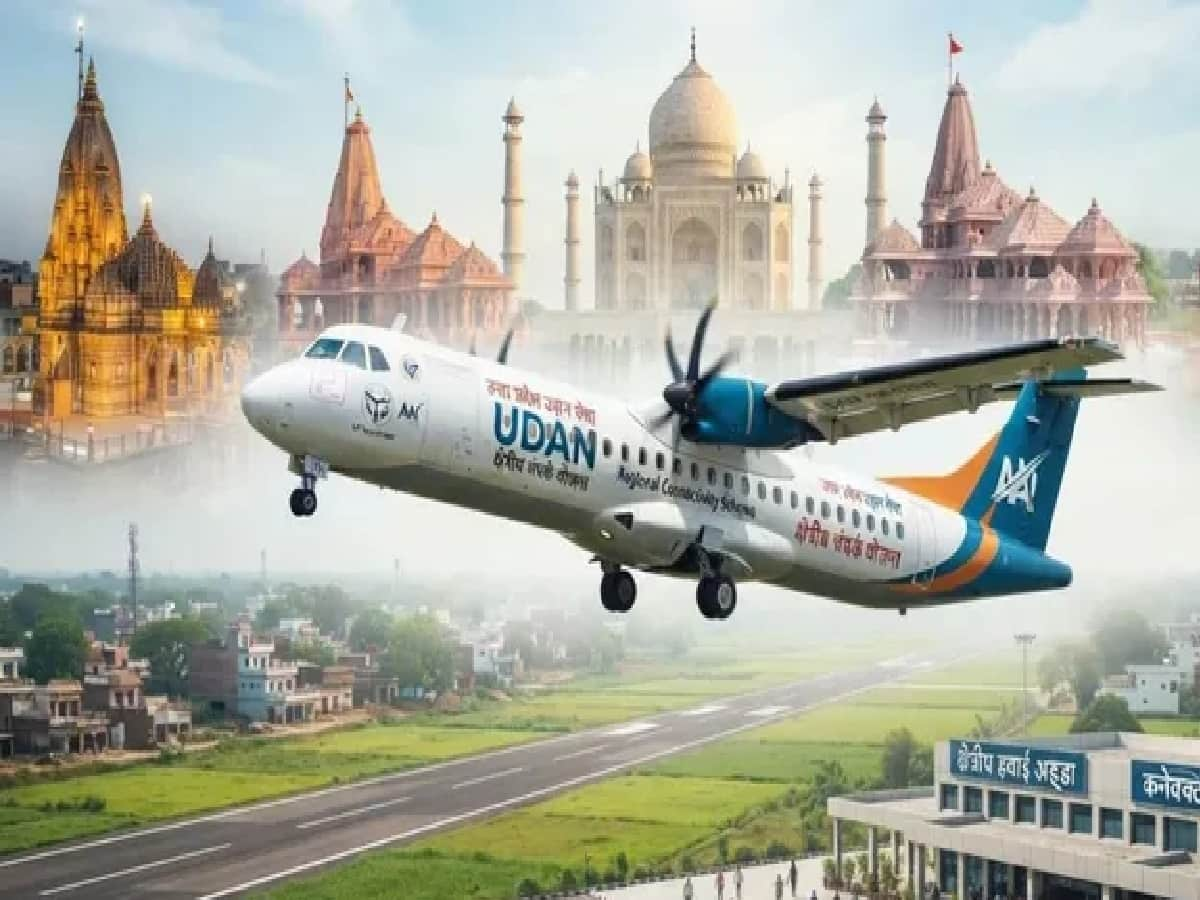
UP Approves Modified UDAN MoU to Boost Flights to Small Towns & Shrines
Air travel to smaller towns, pilgrimage circuits, and heritage destinations across Uttar Pradesh is set for a decisive expansion after the Uttar Pradesh Cabinet, chaired by Chief Minister Yogi Adityanath in Lucknow on Wednesday, November 18, 2026, approved a tripartite Memorandum of Understanding (MoU) between the Central Government, the Uttar Pradesh Government, and the Airports Authority of India (AAI) under the Regional Connectivity Scheme – Modified UDAN. Under the agreed cost-sharing structure, 80 percent of Viability Gap Funding (VGF) expenditure will be borne by the Centre and 20 percent by the state government, lowering financial barriers for airlines launching routes to underserved regional airports. Briefing reporters following the Cabinet meeting, Finance Minister Suresh Kumar Khanna noted that the Modified UDAN framework—part of the Centre's 10-year regional aviation push spanning FY 2026–27 to FY 2035–36—is designed to bring Tier-2 and Tier-3 cities as well as major religious, historical, and tourist hubs onto India's active aviation map. To make regional routes commercially attractive for carriers and airport operators, the state government will extend a comprehensive package of operational concessions at RCS concession airports, including capping Value Added Tax (VAT) on Aviation Turbine Fuel (ATF) at 1 percent or less, providing firefighting and security services free of charge, supplying electricity, water, and essential utilities at subsidized rates, and facilitating land and last-mile connectivity wherever needed. For travelers, pilgrims, entrepreneurs, and readers across Unnao, Lucknow, Kanpur, Ayodhya, Varanasi, Prayagraj, Gorakhpur, Jhansi, Bareilly, Agra, and New Delhi, the decision sets the institutional framework for faster, more affordable regional flying across the state.
UP Modified UDAN Cabinet Decision: Funding, Concessions & Governance
To bring together the financial split, airline incentives, administrative authorizations, and broader national context behind the November 18 Cabinet approval, the table below summarizes the key details:
| Policy & Implementation Area | Approved Terms & Provisions (November 2026) | Impact on Regional Aviation & Economy |
| Tripartite MoU Parties | Agreement among the Government of India (Ministry of Civil Aviation), Government of Uttar Pradesh, and Airports Authority of India (AAI) under Modified UDAN. | Creates a binding operational and funding framework for launching new regional routes across UP. |
| 80:20 Viability Gap Funding | 80% expenditure borne by the Centre and 20% contributed by the Uttar Pradesh Government through Viability Gap Funding (VGF). | Reduces airline operating losses during route incubation so carriers can serve smaller cities. |
| Airline & Airport Concessions | ATF VAT capped at 1% or below; free firefighting and security services; subsidized electricity, water, and utilities; plus land and connectivity support as required at RCS airports. | Lowers fixed and fuel costs at regional aerodromes, improving commercial viability. |
| Administrative Authorizations | Director, Civil Aviation (UP) authorized to sign the MoU; Additional Chief Secretary, Civil Aviation authorized to designate two nodal officers; CM Yogi Adityanath empowered for any further decisions or modifications. | Ensures swift execution and single-point coordination between state departments and AAI. |
| National Modified UDAN Scope | 10-year central programme (FY 2026–27 to FY 2035–36) backed by a ₹28,840 crore outlay to develop 100 airports from unserved airstrips and 200 modern helipads nationwide. | Aligns Uttar Pradesh's regional airport expansion with India's decade-long aviation roadmap. |
How State Concessions Lower Costs for Regional Airlines and Airports
One of the biggest hurdles in operating flights to smaller districts has historically been thin early passenger volume paired with high fuel taxes and airport overhead. By committing 20 percent VGF support alongside ATF VAT of 1 percent or less, zero-cost firefighting and security cover, and concessional power and water tariffs, Uttar Pradesh directly tackles the core cost drivers that often deter carriers from bidding on Tier-2 and Tier-3 routes. Coupling these incentives with state assistance on land availability and road connectivity ensures that upgraded airstrips and regional terminals can transition smoothly into scheduled commercial operations.
Boosting Pilgrimage Tourism, Trade, and Local Jobs Across Uttar Pradesh
Beyond faster point-to-point travel for residents, the state government views regional aviation as a direct multiplier for tourism, religious travel, and local enterprise. Easier air access to pilgrimage centers, historical circuits, and emerging industrial clusters reduces multi-hour road or rail journeys for domestic and international visitors alike. As new routes open up, downstream demand across hotels, local transport, tour operators, hospitality services, and retail is expected to expand—generating fresh employment and self-employment opportunities for youth and small businesses across smaller towns in Uttar Pradesh.




