







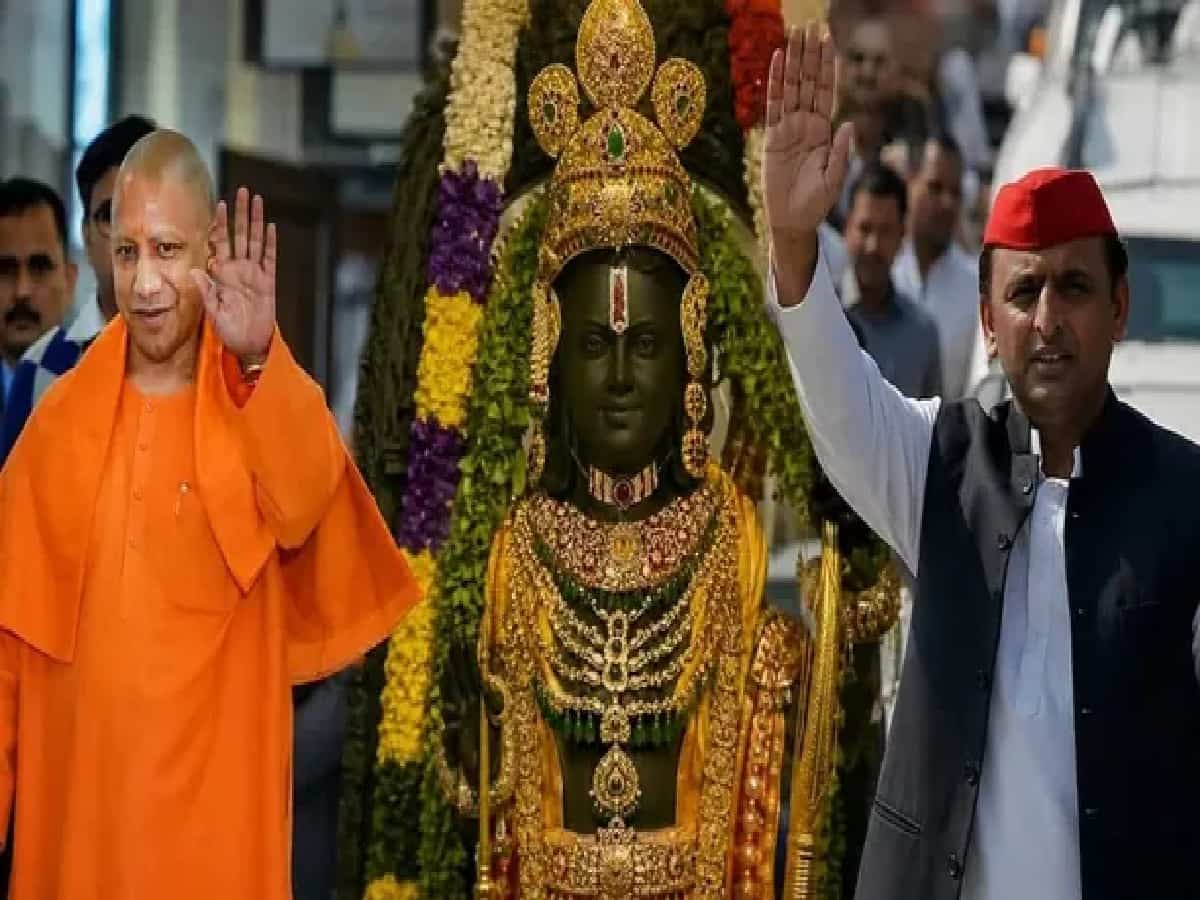
Ayodhya Gears Up for 2027 Assembly 'Mahabharata' Between BJP & SP
Few districts in Indian politics carry as much symbolic weight ahead of the 2027 Uttar Pradesh Assembly elections as Ayodhya, where rapid temple-driven economic transformation sits side by side with an intense contest over political prestige between the Bharatiya Janata Party (BJP) and the Samajwadi Party (SP). The construction of the Ram Temple has reshaped Ayodhya's global profile, bringing surging pilgrim footfalls, expanded hospitality and trade, and a visible sense of civic pride across the temple town. Yet for local residents and political strategists alike, that pride coexists with memories of the 2024 Lok Sabha election in Faizabad, when SP veteran Awadhesh Prasad defeated two-term BJP MP Lallu Singh by 54,567 votes—an upset the opposition projected nationwide as a counter-narrative on reservations and the Constitution, while leaving many BJP supporters determined to reclaim moral and electoral ground. That momentum shifted once more in February 2025, when BJP candidate Chandrabhanu Paswan captured the Milkipur Assembly by-election—vacated after Awadhesh Prasad's parliamentary win—by defeating Prasad's son Ajit Prasad by 61,710 votes. Now, across all five Assembly constituencies in Ayodhya district—Ayodhya Sadar, Bikapur, Rudauli, Milkipur, and Gosaiganj—both camps are preparing for a defining 2027 showdown. For voters, political analysts, and readers across Unnao, Lucknow, Kanpur, Ayodhya, Faizabad, Varanasi, Prayagraj, Gorakhpur, and New Delhi, Ayodhya's electoral battlefield blends temple-town economics, caste arithmetic, defections, and national narrative stakes.
Ayodhya's Five Assembly Seats: 2027 Equations & Prestige Battle Snapshot
To bring together the political history, recent electoral swings, and constituency-by-constituency dynamics shaping Ayodhya district ahead of 2027, the table below summarizes the key battlegrounds:
| Constituency | Recent Electoral Trajectory | Key 2027 Dynamics & Challenges |
| Ayodhya Sadar | Held by the BJP in both 2017 and 2022, and saw the BJP maintain a lead in the 2024 Lok Sabha segment despite losing Faizabad overall. | Sitting MLA Ved Prakash Gupta won by 19,990 votes in 2022; the BJP seeks a strong candidate combining ideological appeal and local reach, while SP has signaled early momentum behind former MLA Tej Narain (Pawan) Pandey. |
| Bikapur | Won narrowly by the BJP in 2022 after intense multi-cornered competition. | The BJP must consolidate its core base while managing internal factionalism; the SP aims to convert its 2024 parliamentary segment lead into an Assembly gain. |
| Rudauli | Held by the BJP across the 2017 and 2022 Assembly elections. | In 2022, discontent over SP fielding Anandsen Yadav led Rushdi Mian to contest on a BSP ticket, leaving a narrow ~1,000-vote gap between SP and BSP; with Rushdi back in the SP fold, the BJP faces a tighter defense. |
| Milkipur (SC) | Won by SP's Awadhesh Prasad in 2022, then flipped decisively by BJP's Chandrabhanu Paswan by 61,710 votes in the February 2025 by-poll against Ajit Prasad. | Tests whether the BJP can sustain its by-election outreach among Pasi and wider Dalit-OBC voters or whether SP can rebuild its traditional bastion. |
| Gosaiganj | Won by Abhay Singh on an SP ticket in 2022, who has since aligned with the BJP, alongside influential former BJP MLA Indra Pratap (Khabbu) Tiwari. | Candidate selection and local coordination are decisive: the BJP must balance Abhay Singh and Khabbu Tiwari's camps, while the SP needs a formidable new nominee. |
On the Ground in Ayodhya: Temple Prosperity Meets Electoral Debate
Walking from the bustling approach road near Hanumangarhi to tea stalls in Civil Lines and busy crossings at Rikabganj, conversations reveal how layered voter sentiment has become in Ayodhya. Longtime shopkeepers such as Rampyare Shukla and vendors like Neeraj Yadav point out that the Ram Temple has brought global recognition, steady pilgrim traffic, and visibly higher incomes and jobs—yet neighbors like Dinesh Nishad still recall the pointed questions locals faced outside the district after the 2024 parliamentary loss. At the same time, residents such as Shailesh Jaiswal and Anoop Shukla note that elections are rarely decided by temple pride alone; local grievances around land acquisition, demolitions, and municipal execution—voiced by commuters like Vikrant Yadav and Suresh Pasi—also shape voter moods, even as Akhilesh Yadav's Ram Lalla Darshan outreach draws mixed reactions from locals like Virendra, who question whether opposition interest is driven by faith or election-cycle strategy.
Why Repeating 2017 vs. Scaling 2024 Defines the 2027 Narrative
For the BJP, which swept all five Assembly seats in Ayodhya in 2017 and won three in 2022, reclaiming complete dominance in the district is vital to erasing the symbolic sting of its 2024 Faizabad Lok Sabha defeat and building on Chandrabhanu Paswan's emphatic Milkipur by-election triumph. For the Samajwadi Party, which led in four Assembly segments during the 2024 parliamentary contest before stumbling in Milkipur, holding and expanding that footprint—backed by Akhilesh Yadav's high-profile Ayodhya messaging and temple outreach—is central to proving its 2024 breakthrough was no one-off wave. With seat-by-seat equations tightening across Ayodhya Sadar, Bikapur, Rudauli, Milkipur, and Gosaiganj, the 2027 contest promises to be one of Uttar Pradesh's most closely watched political battles.




