







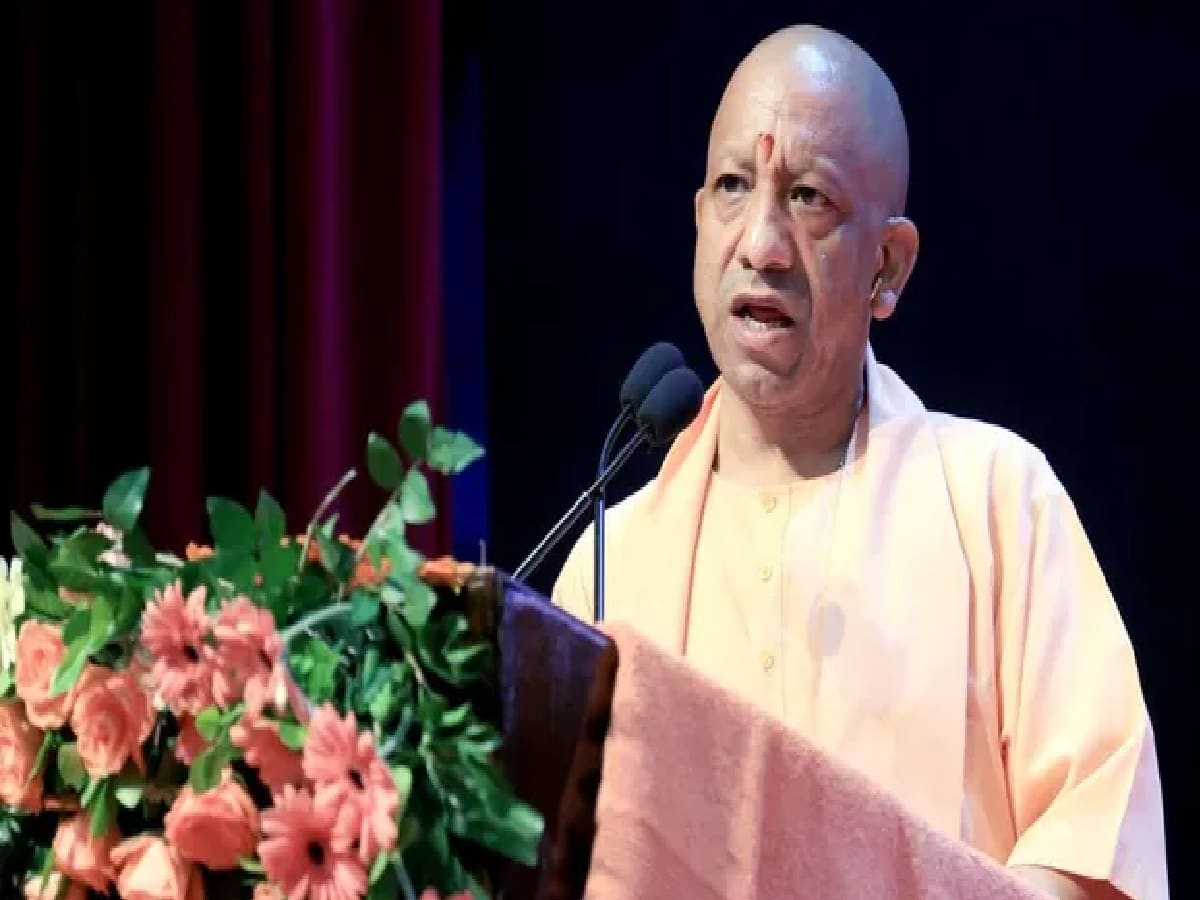
No One Should Be Left Out of Census 2027: CM Yogi Launches 2nd Phase in UP
Uttar Pradesh Chief Minister Yogi Adityanath formally inaugurated the second phase of Census 2027 across the state on Monday, November 16, 2026, rolling out India's first-ever online self-enumeration facility alongside preparations for comprehensive door-to-door population counting at a launch ceremony in the Lok Bhavan Auditorium in Lucknow. Addressing senior administrative officials, public representatives, and census functionaries, the Chief Minister underscored that accurate demographic data will determine Uttar Pradesh's development trajectory for the next decade—warning that if even a single citizen is left uncounted, welfare planning remains incomplete and vulnerable families risk losing access to vital government schemes. Emphasizing that modern governance must rely on verified ground realities rather than guesswork, CM Yogi pointed to the historical deprivation suffered by marginalized communities such as the Musahar population, noting that if their lack of permanent housing and ration cards had been accurately documented in earlier decades, targeted relief could have reached them during the very first Five-Year Plan rather than waiting until special welfare schemes were launched after 2017. With the online self-enumeration portal open from November 16 to November 30, 2026, followed by door-to-door enumeration from December 1, 2026, to January 4, 2027—and a dedicated helpline number (1855) activated for citizen assistance—the state government is mobilizing roughly 5.60 lakh enumerators and supervisors across all 75 districts to record responses to 40 structured questions. For residents, students, teachers, municipal workers, and families across Lucknow, Kanpur, Varanasi, Prayagraj, Gorakhpur, Ayodhya, Agra, Meerut, Bareilly, Ghaziabad, Noida, and Jhansi, this digital-first exercise marks a decisive step toward building an inclusive, data-driven roadmap for schools, hospitals, roads, and social security.
Why Accurate Census 2027 Data Is Vital for Uttar Pradesh's Development
Speaking at Lok Bhavan, Chief Minister Yogi Adityanath described the census not merely as a routine administrative exercise, but as a national responsibility that shapes healthcare, education, housing, and infrastructure allocation for ten years. Only when every household—including residents in remote forest settlements, urban slums, rented accommodations, migrant workers, senior citizens, single individuals, and nomadic tribes—is accurately recorded can the administration identify precisely where new schools, hospitals, and roads are needed.
Uttar Pradesh Finance and Parliamentary Affairs Minister Suresh Khanna noted that the decennial census could not be conducted in 2021 due to the COVID-19 pandemic, making full citizen cooperation in the 2027 exercise all the more critical. Calling upon young people to take the lead, CM Yogi urged youth across the state to assist their parents, elders, and neighbors in registering online during the November 16–30 self-enumeration window and safely preserving the generated Self-Enumeration ID for verification when enumerators visit their homes.
Key Timelines, Digital Process, and Scale of Census 2027 in Uttar Pradesh
Director and Chief Census Officer Sheetal Verma outlined the digital architecture and operational scale of the second phase, noting that the first phase of houselisting was successfully completed across Uttar Pradesh earlier this year between May 22 and June 20:
| Census 2027 Parameter (Uttar Pradesh) | Verified Timeline, Scale & Operational Details |
| Phase 2 Online Self-Enumeration Window | November 16 to November 30, 2026 (citizens can submit details online across 40 questions and generate a Self-Enumeration ID) |
| Door-to-Door Population Enumeration | December 1, 2026, to January 4, 2027 (enumeration of houseless population on the night of January 4, 2027; reference date January 5, 2027, at 00:00 hours, followed by revisional round Jan 5–9) |
| Geographical Coverage Across UP | All 75 districts, 350 tehsils, 783 statutory towns, and 104,004 villages divided into roughly 4,80,000 Enumeration Blocks (EBs) |
| Field Workforce & Citizen Helpline | Approximately 5,60,000 enumerators and supervisors (each covering ~800–850 residents or 180–200 houses); citizen assistance Helpline: 1855 |
| Data Confidentiality & Legal Guarantee | Strictly confidential under Section 15 of the Census Act, 1948; no documents or OTPs required during enumeration, and data has no link to citizenship or tax assessment |
Daily Monitoring by District Magistrates and Strict Confidentiality Assurance
To ensure seamless execution across rural blocks and urban municipal wards, Chief Minister Yogi Adityanath directed every District Magistrate (DM) to personally lead the campaign and conduct daily 30-minute progress reviews. Addressing public apprehensions, officials reiterated that all individual household details collected across the 40 enumeration questions—covering demographic, educational, occupational, housing, and socio-economic indicators—are protected under Section 15 of the Census Act, 1948, cannot be shared with any tax or enforcement agency, and require zero physical documents or OTPs during household visits. Enumerators have been instructed to approach every family with humility and patience, explaining how truthful participation directly strengthens future public welfare across Uttar Pradesh.




