







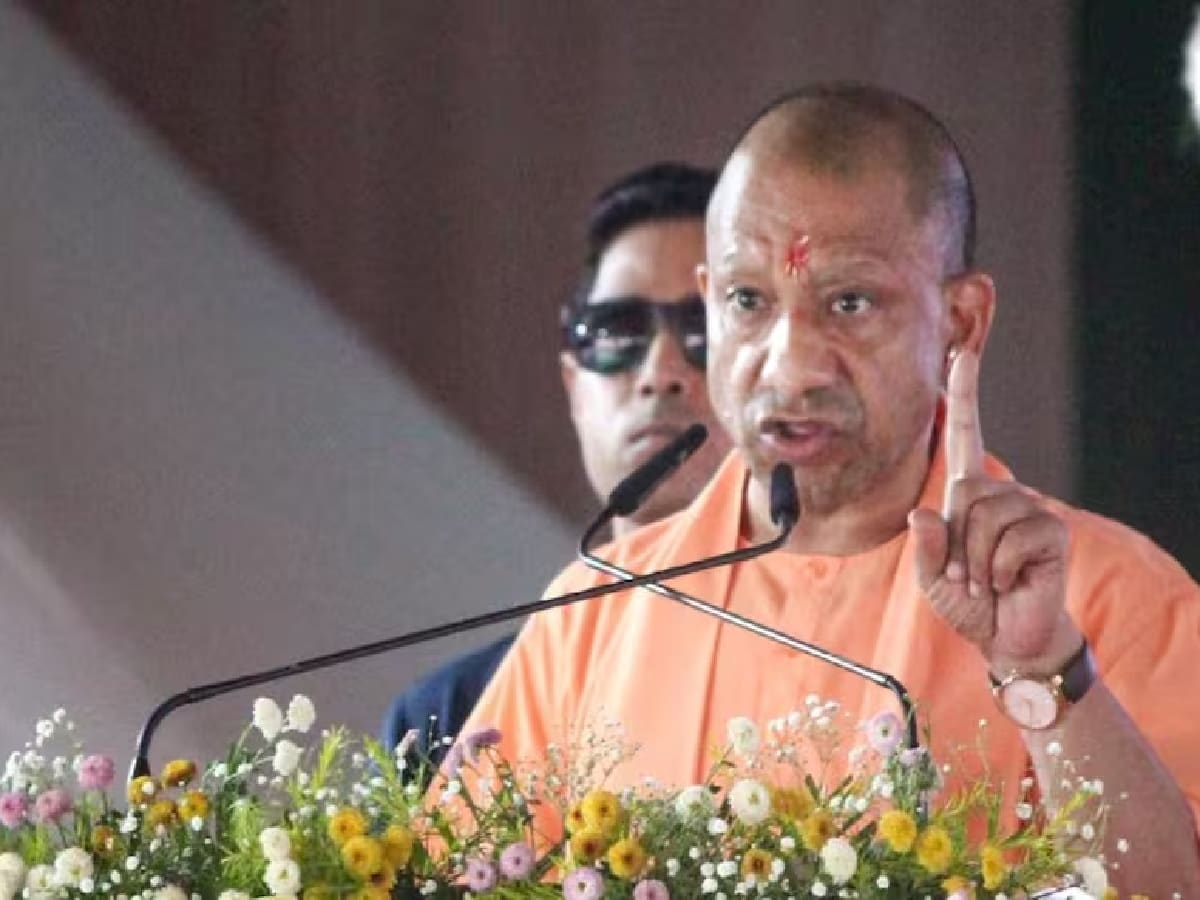
How Vantangiyas Became Nomads on Their Own Land: CM Yogi Shares Story
Addressing the unveiling of the 50th-edition coffee table book of 'Yogi Ki Paati' and the virtual inauguration of the 'Samvad Yatra' exhibition in Lucknow on Monday, November 16, 2026, Uttar Pradesh Chief Minister Yogi Adityanath delivered an emotional, deeply personal account of how the Vantangiya community—a forest-dwelling population whose ancestors planted and nurtured North India's sal and teak forests—spent more than a century living as stateless nomads without basic citizenship rights, schools, or permanent homes. Reflecting on why he launched Yogi Ki Paati to foster direct dialogue with ordinary citizens about overlooked social realities, CM Yogi explained that 120 years ago, during the British colonial era, widespread deforestation was carried out across eastern Uttar Pradesh to manufacture wooden sleepers for laying railway lines. To regenerate those denuded forests, colonial authorities brought landless laborers into the woods under the taungya agroforestry system, promising them plots of land and livelihoods in exchange for planting and guarding young saplings. Yet once the trees matured, the very families who raised those forests were abandoned—first neglected by British administrators and then left without revenue village recognition, voting rights, roads, or electricity even after India gained Independence in 1947. Simultaneously, the Chief Minister recalled his early days as a newly elected Member of Parliament in 1998, recounting how he fought to secure legal amendments to the Forest Rights Act during the tenure of then Prime Minister Dr. Manmohan Singh in 2007–08 and confronted severe overcrowding and power outages inside the pediatric encephalitis ward of BRD Medical College in Gorakhpur. Meanwhile, opposition leaders—including Samajwadi Party chief Akhilesh Yadav—have countered the state government's narrative by raising questions over nursing and paramedical vacancies and healthcare infrastructure across districts. For citizens, historians, students, and policy observers across Lucknow, Gorakhpur, Maharajganj, Gonda, Bahraich, Shravasti, Balrampur, Varanasi, Prayagraj, Ayodhya, and Kanpur, CM Yogi's remarks shed vivid light on a century-long journey from marginalization to civic inclusion.
How the Vantangiya Community Became Nomads on the Land They Nurtured
Narrating the historical origins of the Vantangiya settlements across Gorakhpur and Maharajganj, Chief Minister Yogi Adityanath noted that many urban citizens only heard the community's name in recent years, even though their ancestors played a vital role in preserving Uttar Pradesh's forest cover. Brought into the forests roughly 120 years ago after massive tree felling for colonial railway tracks, Vantangiya families cultivated food crops alongside newly planted sal saplings under the taungya system.
However, as the plantations grew dense, the community found itself trapped in a legal vacuum. Because their settlements were classified strictly as reserved forest land rather than revenue villages, Vantangiya residents could neither build permanent brick houses nor access government schools, clinics, ration cards, or electoral rolls. As CM Yogi observed, prolonged social neglect breeds vulnerability and alienation, leaving these families exposed to harassment by lower-rung forest and police personnel while remaining cut off from mainstream society.
From the 2007–08 Forest Rights Amendment to Revenue Village Status in 2017
Recalling his long parliamentary struggle as Gorakhpur MP to secure legal recognition for the community, CM Yogi Adityanath recounted a pivotal meeting with then Prime Minister Dr. Manmohan Singh regarding the need to amend forest legislation. During that discussion, officials raised technical questions about how authorities could verify whether families had lived in those forests for generations.
| Historical Phase / Milestone | Condition of the Vantangiya Community & Public Health | Key Policy & Ground Turning Points |
| Colonial Era (~120 Years Ago) | Settled inside forests of Gorakhpur & Maharajganj to replant trees cut for British railway sleepers | Promised land and livelihood while tending saplings, but systematically abandoned once forests matured |
| Post-1947 Decades | Lived as nomads without revenue village status, permanent homes, schools, electricity, or voting rights | Faced eviction threats and exploitation; CM Yogi faced a Forest Department lawsuit after opening a makeshift school |
| 2007–2008 Forest Rights Amendment | CM Yogi met then PM Dr. Manmohan Singh; used the 75–100 year lifespan of planted trees as proof of ancestral settlement | Led to key provisions in the Forest Rights Act (2007–08) recognizing traditional forest dwellers |
| Post-2017 Transformation | 54 Vantangiya settlements granted full revenue village status, citizenship rights, pucca houses, schools, and ration cards | Encephalitis deaths eliminated in Purvanchal after upgrading BRD Medical College and district health facilities |
CM Yogi explained how he countered that bureaucratic hurdle using forestry science itself: noting the clear distinction between natural wilderness and planned plantations, he pointed out that since the sal trees stood 75 to 100 years old, their very age proved that the Vantangiyas' ancestors had planted them. That argument helped pave the way for the 2007–08 Forest Rights Act revisions. Upon becoming Chief Minister in 2017, his government granted full revenue village status to Vantangiya settlements—connecting thousands of families to permanent housing, schools, Anganwadi centers, Ayushman Bharat cards, and civic dignity.
Recalling the 1998 BRD Medical College Ward and Victory Over Encephalitis
Transitioning to public health in eastern Uttar Pradesh, CM Yogi Adityanath shared an equally stark memory from 1998, shortly after he first became a Member of Parliament. Receiving an urgent phone call that scores of children were critically ill with encephalitis, he rushed to BRD Medical College in Gorakhpur, where hospital staff initially tried to stop him from entering the third-floor pediatric ward.
Inside, he witnessed scenes that moved him deeply: in the sweltering heat of July, the ward had no electricity and no working fans, with five critically ill children sharing a single bed alongside four or five anxious relatives each, cramming 1,000 to 1,200 patients into a ward built for 100. Across the Devipatan division, countless child fatalities were dismissed merely as an "unknown fever." Starting with immediate efforts to arrange beds, fans, and air conditioners—and later launching a comprehensive statewide campaign combining sanitation, clean drinking water, vaccination, and upgraded pediatric ICUs after 2017—CM Yogi stated that eastern Uttar Pradesh has successfully eradicated the scourge of encephalitis deaths that once devastated families every monsoon.




