







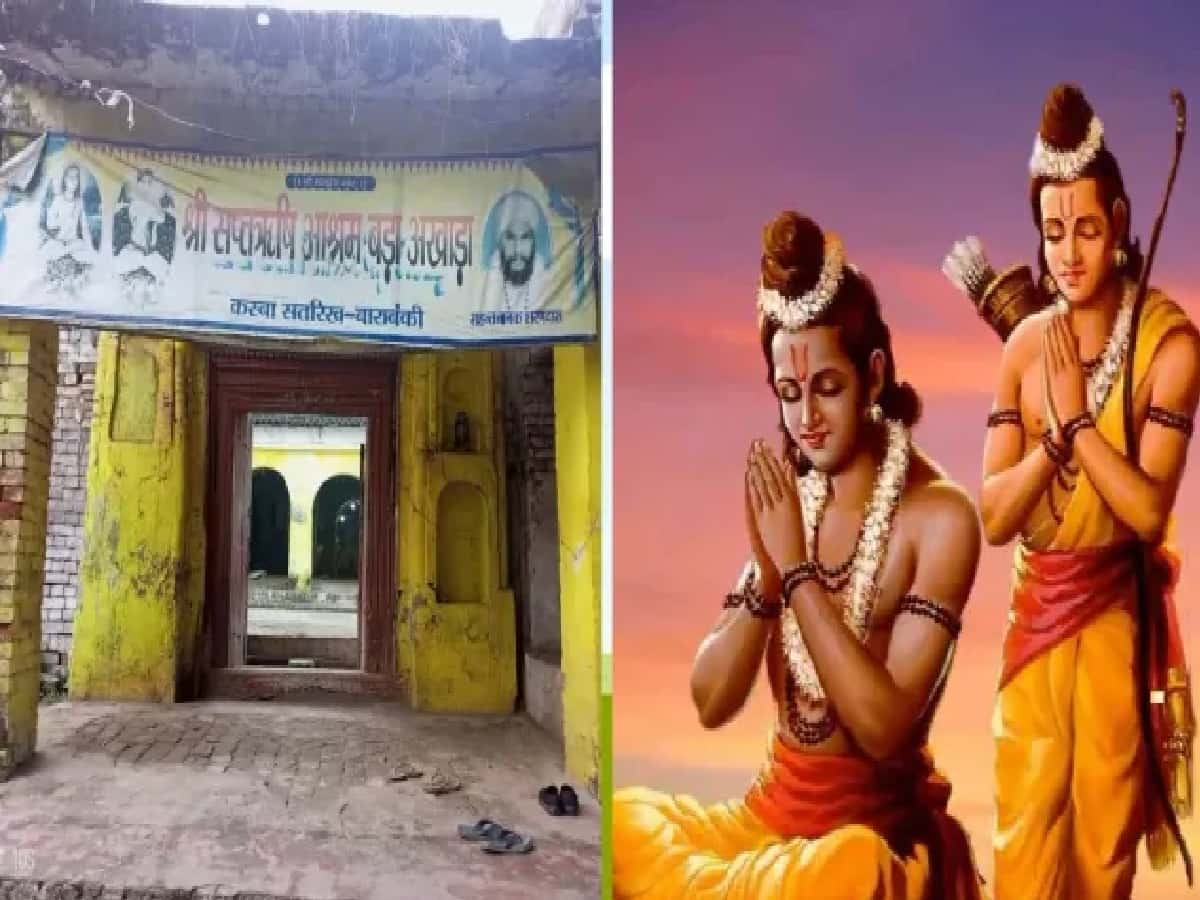
Lord Ram’s Ancient Learning Seat in Barabanki to Become Grand ‘Shri Ram Gurukul Corridor’
Following the landmark construction and global prominence of the Shri Ram Janmabhoomi temple in Ayodhya, the Uttar Pradesh administration has set its sights on reviving another foundational chapter of the Treta Yuga by developing the historic Saptarishi Ashram in Satrikh, Barabanki, into the dedicated "Shri Ram Gurukul Corridor." Located approximately seven kilometers south of the Barabanki district headquarters, the ancient pilgrimage precinct of Satrikh has long been revered in regional folklore and Ramayana lore as the hermitage where Lord Shri Ram, alongside his royal brothers Lakshman, Bharat, and Shatrughna, underwent his formal schooling, sacred scriptures study, and martial instruction under the tutelage of venerable sages. With the state government actively transforming the Ayodhya-Awadh cultural belt into an interconnected pilgrimage circuit, the planned corridor is designed to restore this sacred educational abode to its historical glory.
Resolving the Identity Dilemma: Unifying Five Claimants Under One Comprehensive Heritage Zone
The path to formal restoration gained momentum after overcoming a long-standing territorial dilemma regarding the true historical footprint of the hermitage. The administrative ambiguity surfaced two years ago when then-District Magistrate Satyendra Kumar visited the local Udasin Akhara, where revered seer Sant Nanak Sharan Das identified his premises as the original Saptarishi Ashram. Shortly after, four other historic sites within the immediate vicinity—including the Harvansh dispensary complex, the ancient Devghara Mata Temple, the Shri Ramchandra Mission, and the Makkidas Baba Kuti—simultaneously laid claim to being the authentic monastic seat of the Seven Sages. Because each of these competing locations stood outside the formal administrative boundaries of the Satrikh Nagar Panchayat, proposed restoration works under the state’s flagship Vandan Yojana encountered a procedural deadlock. To resolve the impasse, noted scholar and author Ajay Singh Guru submitted a strategic memorandum to former District Magistrate Shashank Tripathi in April, proposing that the state bypass individual site disputes by acquiring suitable tracts—including land adjacent to the southwestern perimeter of the local police station—to consolidate all five traditional locations into a singular, integrated Shri Ram Gurukul Corridor.
Administrative Approvals and Political Backing: Fresh Site Survey Underway for CM Yogi’s Greenlight
The project has taken concrete shape following an extensive on-ground evaluation led by Joint Magistrate and SDM Sadar Gunjita Agarwal, working in close coordination with the Regional Tourism Officer. Their joint feasibility report confirmed that carving out the Shri Ram Gurukul Corridor is fully viable at the state government level, paving the way for large-scale infrastructure planning, road connectivity, and pilgrim amenities. Current Barabanki District Magistrate Ishan Pratap Singh confirmed that the district administration is conducting a fresh, updated site survey to finalize a detailed project report (DPR) for submission to the state secretariat. The corridor initiative has also received robust advocacy from Uttar Pradesh Minister of State for Food and Civil Supplies Satish Chandra Sharma, who played an instrumental role alongside Chief Minister Yogi Adityanath in greenlighting the multi-crore Shri Lodheshwar Mahadev Corridor in Barabanki. Sharma affirmed that developing the childhood gurukul of Lord Ram stands as a natural cultural extension of the Ayodhya Ram Temple development, confirming plans to brief Chief Minister Yogi Adityanath directly to ensure priority budgetary allocation and project clearance for the heritage site.




